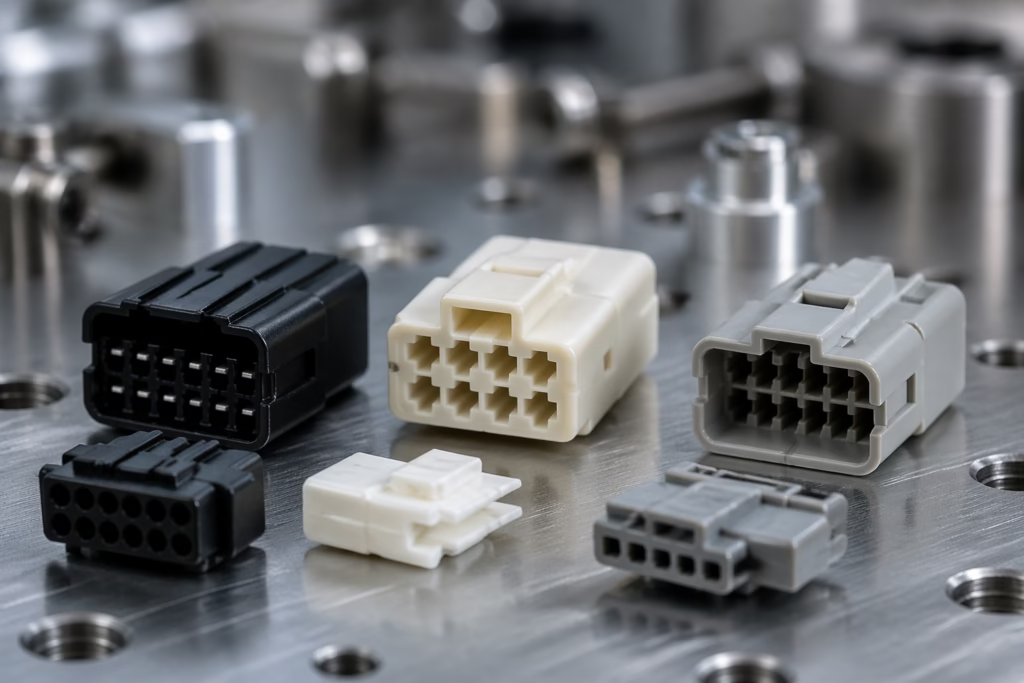
Introduction: Understanding PC/ABS vs ABS for Modern Appliance and Electronics Housing
Choosing the right plastic material for consumer appliances and electronics housing is more than a matter of cost—it’s about finding the optimal balance between mechanical strength, visual appeal, and process efficiency. PC/ABS and ABS are two high-profile contenders in this space, each valued for distinct advantages in industrial applications. Engineers, sourcing managers, and product developers need a clear, practical comparison to ensure that each housing component meets both technical and commercial requirements.
For readers evaluating resin system options, a useful next step is to explore Poly Maro’s material portfolio for plastic housing solutions. This page provides a focused overview of available PC/ABS blends, ABS variants, and other engineering plastics, helping buyers, engineers, and OEMs align performance needs with manufacturer capabilities and processing considerations.
What Drives Material Selection: Key Factors for Appliance and Electronics Housing

Housing materials must deliver strength, dimensional stability, surface finish, and cost efficiency—all while supporting reliable production cycles. This section sets the context for comparing PC/ABS and ABS with a focus on the drivers that shape selection decisions.
Comprehensive Comparison of PC/ABS vs ABS for Appliance and Electronics Housing: Balancing Appearance, Mechanical Strength and Cost
The primary focus of this guide is to dive deeply into the real-world trade-offs between PC/ABS and ABS blends—illuminating how each performs, where it excels, and which pain points it solves or leaves unaddressed.
Overview of PC/ABS and ABS: The Basics
ABS (Acrylonitrile Butadiene Styrene) is a widely used thermoplastic known for its balanced impact resistance, surface quality, and processability. PC/ABS, a blend of Polycarbonate (PC) and ABS, marries the impact toughness and heat resistance of PC with ABS’s ease of processing and appearance, creating a versatile material for demanding applications.
Industrial Relevance: Where Are PC/ABS and ABS Used?
Both materials are prevalent in home appliances, consumer electronics, automotive interiors, and business equipment. Their role is particularly significant in parts requiring aesthetic surfaces and mechanical robustness, such as outer casings and functional housings.
Appearance Expectations: Surface Finish, Color, and Consistency
ABS typically offers a very smooth, glossy finish, ideal for visible components. PC/ABS blends can be engineered for high-quality surface appearance but may require fine-tuning for color stability and gloss uniformity, especially in light shades.
Mechanical Strength: Impact Resistance and Structural Integrity
While ABS provides adequate impact strength for general-purpose housings, PC/ABS excels in environments where higher toughness is required—such as areas prone to drops, bumps, or stress loading. This makes PC/ABS the preferred option in many premium device housings.
Heat Resistance: Operating Temperature Demands
PC/ABS generally outperforms ABS in heat resistance, retaining mechanical properties above 90°C. This is essential for appliances or electronics exposed to higher internal or ambient temperatures.
Cost Comparison: Material, Processing, and Lifecycle Implications
ABS is less expensive both in resin cost and processing overhead, but PC/ABS offers enhanced performance where needed. The final choice often depends on whether premium durability justifies the extra cost at scale.
Processing Ease: Moldability and Cycle Efficiency
ABS is typically easier to mold—lower processing temperatures, longer thermal stability, and predictable shrinkage make it a staple. PC/ABS blends need tighter control of processing parameters, such as melt temperature and mold cooling, to preserve surface quality and avoid warping.
Dimensional Stability: Maintaining Shape Over Time
PC/ABS offers improved resistance to deformation and shrinkage over ABS, particularly under mechanical or thermal stress, making it preferable for tightly engineered housings.
Flame Retardancy: Compliance and Application Risks
PC/ABS blends can be formulated to meet strict flame retardant standards such as UL 94 V-0, which is critical for electronics housings. While ABS can also be made flame-retardant, performance consistency and environmental requirements are often better supported by PC/ABS.
Weather and UV Stability: Service Environment Considerations
PC/ABS and ABS both need UV stabilizers for outdoor exposure; however, PC/ABS tends to offer better long-term weather resistance when properly formulated.
Chemical Resistance: Exposure Challenges in Household and Electronics Use
ABS has moderate resistance to acids, alkalis, and household cleaning agents. PC/ABS blends improve resistance to certain oils and solvents, but both materials require careful selection for environments with aggressive chemical contact.
Recyclability and Sustainability: Circular Economy and Sourcing Decisions
ABS is relatively easier to recycle, but both PC/ABS and ABS can incorporate recycled content. Sourcing teams concerned with eco-design should examine supply chain transparency and post-consumer resin options.
Design Freedom: Wall Thickness, Complexity, and Assembly Methods
PC/ABS enables thin-wall designs and more intricate geometries while sustaining impact strength. ABS is less tolerant of aggressive thinning, favoring more straightforward part architectures.
Color Masterbatch and Customization: Engineering for Brand Identity
ABS accepts color masterbatch and pigment systems readily, yielding highly consistent color across batches. PC/ABS requires more careful formulation to achieve uniform color, especially in deep or bright shades.
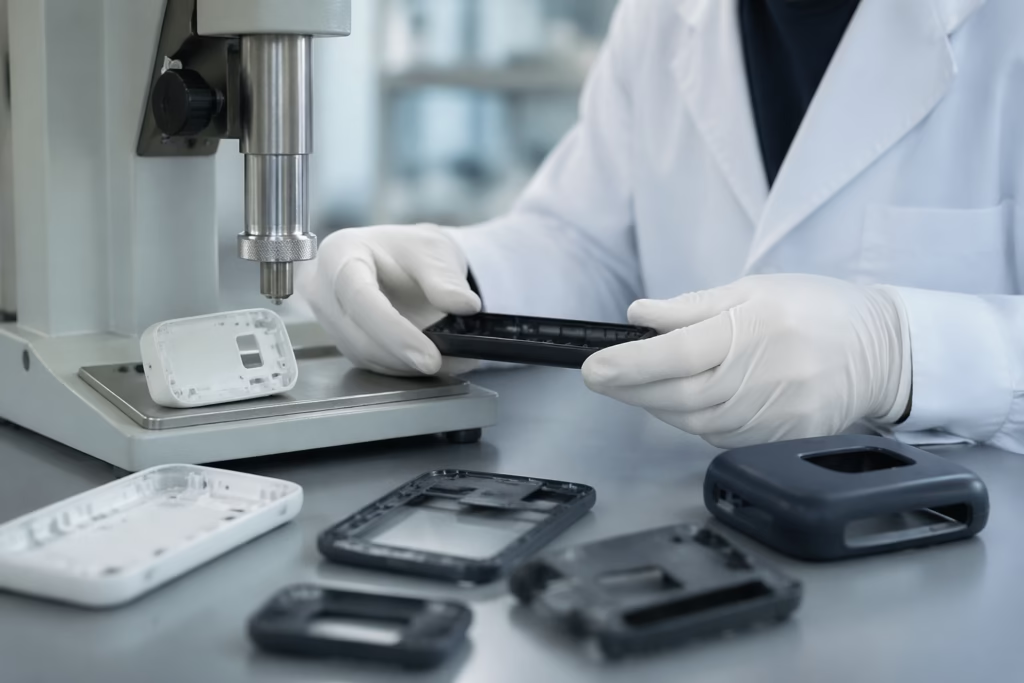
Fit for Electronics: EMI Shielding and Electrical Properties
Both PC/ABS and ABS are electrical insulators. PC/ABS blends are often used as the base for metallization and EMI shielding solutions in electronics housings, supporting complex assembly or regulatory needs.
Quality Control: Inspection Metrics and Tolerance Reliability
ABS parts offer consistent shrinkage and tight tolerances. PC/ABS provides excellent stability but requires more nuanced quality checks, especially during process scale-up or mold transfer.
Lifecycle Performance: Aging, Durability, and Long-Term Appearance
PC/ABS generally maintains mechanical and aesthetic properties longer under thermal cycling and physical stress. ABS is more susceptible to micro-cracking and surface dulling over prolonged use.
Trade-Offs: Common Mistakes in Material Selection
Opting for ABS to save on raw material costs often results in underperforming parts where toughness or temperature resistance is mandatory, leading to field failures or reputational risks. Conversely, using PC/ABS without understanding processing demands can cause surface defects or unexpected warping.
Case Study Insights: Appliance and Electronics Examples
In many washing machines, ABS is used for control panels where surface appearance is key and impact risk is low. PC/ABS is chosen for device covers or internal housings in premium electronics due to higher impact and heat resistance needs.
Alternative Engineering Plastics: Beyond PC/ABS and ABS
For designing apparatus demanding even higher mechanical strength or thermal performance, alternatives like PA6 engineering plastic for high-strength housings may be considered, especially where thin-wall and rigidity are prioritized.
Process Optimization and Technical Support
Successful adoption of PC/ABS or ABS in production requires careful parameter control—melt temperatures, mold cooling, and additive selection. For guidance on process qualification and troubleshooting, access technical support for material processing and optimization to secure stable quality and operational efficiency.
Heat-Resistant Housing Demand: When to Use PBT
In environments where enhanced heat resistance and electrical properties are crucial, evaluating PBT resin solutions for durable, heat-resistant applications is strategic. PBT often complements or outperforms PC/ABS and ABS in connectors and high-temperature appliance housing.
Poly Maro Perspective: Practical Experience in Material Selection
From a manufacturer’s viewpoint, Poly Maro has observed that clear communication between engineering and sourcing teams helps align material selection with real-world application requirements. This minimizes risk and maximizes downstream process efficiency for converters and OEMs.
Choosing Between PC/ABS and ABS: Decision Frameworks for Industrial Users
Assess the required mechanical toughness, heat resistance, surface finish, and cost tolerance for each application. Engineering managers should collaborate closely with suppliers and molders to validate performance in prototype testing before full-scale adoption.
Summary Table: PC/ABS vs ABS Housing Properties
| Property | PC/ABS | ABS |
|---|---|---|
| Impact Strength | High | Moderate |
| Heat Resistance | 90°C–110°C | 80°C–90°C |
| Appearance | Good, customizable | Excellent, high gloss |
| Processing | Requires control | Easy |
| Cost | Higher | Lower |
| Flame Retardant | Easy to formulate | Available |
Direct Comparison: When to Use PC/ABS, When to Use ABS
Use PC/ABS for parts exposed to mechanical or thermal stress, or where flame retardancy and dimensional precision are paramount. Choose ABS where appearance, cost, and straightforward molding dominate.
Managing Performance Expectations and Process Risks
Material selection must account for operational realities—end-user abuse, ambient temperature swings, chemical exposure, and regulatory requirements. Rigorous prototyping and process qualification reduce misalignment and ensure performance longevity.
Conclusion: Making the Confident Choice for Appliance and Electronics Housing
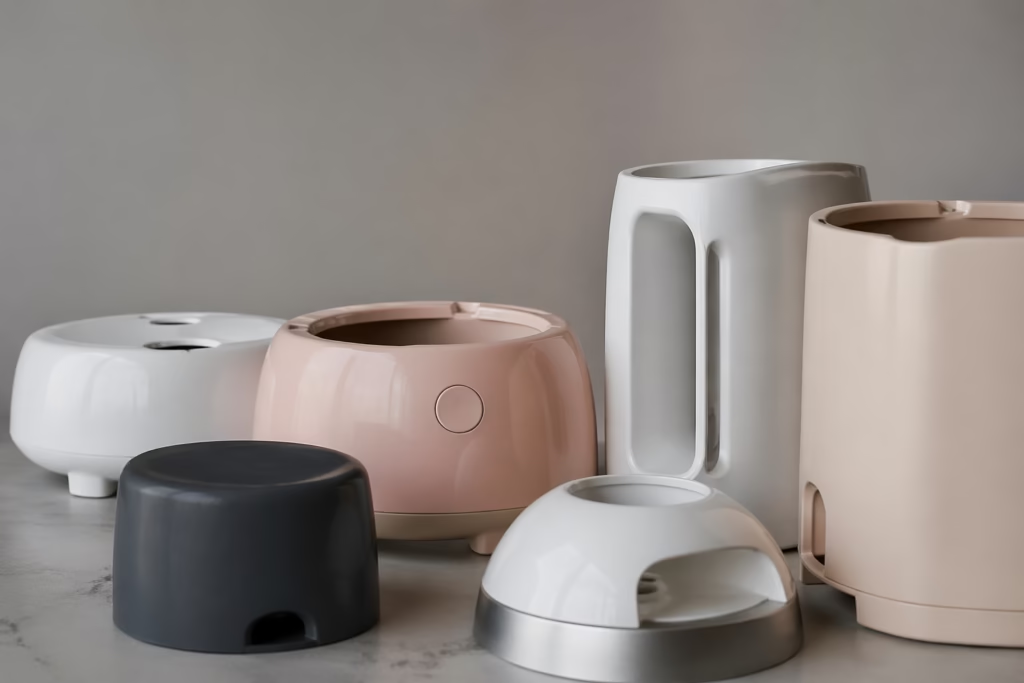
The best housing material is an evidence-driven match between technical demands and commercial realities. PC/ABS brings premium strength and heat resistance; ABS shines in visual, cost-driven, and ease-of-processing scenarios. Engineering clarity and supply chain alignment empower confident, sustainable choices for every housing project.
Frequently Asked Questions
What are the main advantages of PC/ABS blends over pure ABS in appliance and electronics housing?
PC/ABS offers greater impact strength, improved heat resistance, and better dimensional stability than ABS, making it ideal for tougher, premium housing parts.
Is ABS still a strong choice for large-volume consumer appliance applications?
Yes, ABS remains widely used in appliance housings where high-quality surface appearance and cost efficiency are more important than maximum durability.
How do PC/ABS and ABS compare in terms of molding and fabrication processes?
ABS is easier to mold with forgiving processing parameters, while PC/ABS requires more precise temperature and cooling control to avoid defects.
Can both PC/ABS and ABS be made flame retardant for electronics?
Both materials can be engineered for flame retardancy, but PC/ABS often achieves stricter standards more reliably, supporting advanced regulation compliance.
Are recycled PC/ABS and ABS reliably available for sustainability-focused projects?
Recycled options for both materials exist, but supply chain transparency and resin performance must be vetted carefully to ensure consistent quality.
What’s the most common mistake when choosing between PC/ABS vs ABS?
Underestimating needed impact or heat resistance and defaulting to ABS can lead to premature housing failures—always align material to real-world service conditions.