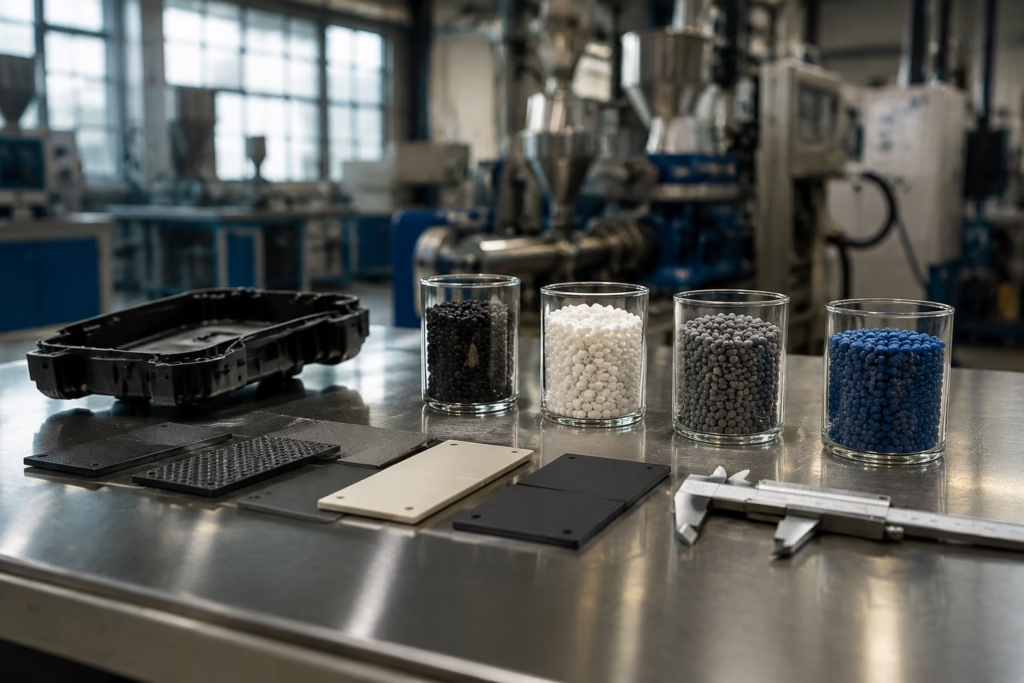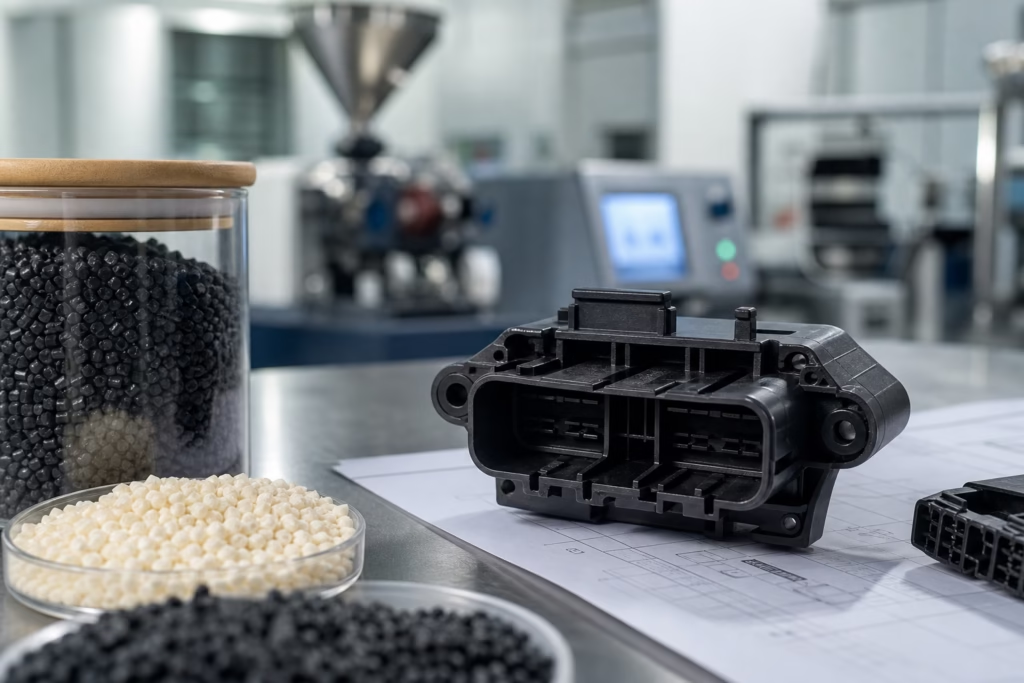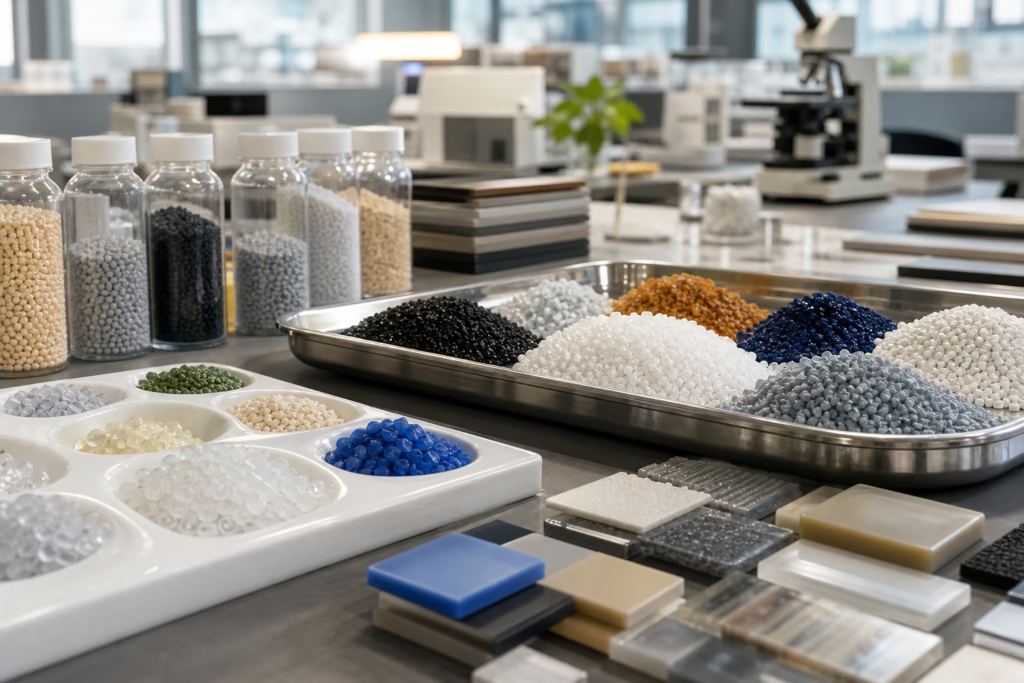
For many B2B projects, the real question is not whether a polymer can survive heat, but whether it can do the job at the lowest acceptable total cost. In that sense, PEEK vs PPS vs high temp nylon, metal replacement resins is a sourcing and manufacturing decision as much as a material selection decision. When the application is over-specified, the budget gets hit in three places at once: resin price, processing complexity, and scrap risk. When the application is under-specified, the hidden cost shows up later in warpage, creep, chemical attack, or field failures.
heat-resistant plastic compound options for cost-focused material upgrades become relevant when a project needs a measured step down from premium engineering polymers without losing the functional performance that actually matters. At Poly Maro, we often approach this kind of substitution by checking the end-use temperature, load, electrical requirement, dimensional tolerance, and molding window first, then matching the resin family, reinforcement level, and drying behavior to the part and production line instead of forcing a one-size-fits-all answer.
This is why a cost discussion around high-temperature polymers should never start with “What is the cheapest resin?” It should start with “Which properties are truly required, which can be traded off, and which resin family gives the best cost-to-risk ratio at the required production scale?”
What PEEK, PPS, and High-Temperature Nylon Are Best Known For
PEEK is usually the benchmark when a part must keep performance at very high temperatures, under chemical exposure, or in demanding mechanical and electrical environments. It is often selected where designers want a very wide operating window, strong creep resistance, and excellent retention of properties after long service. That reputation is real, which is why PEEK often enters the conversation first for aerospace, semiconductor, medical, oil and gas, and high-end industrial applications.
PPS is commonly viewed as the practical high-performance alternative. It has strong heat resistance, excellent chemical resistance, very good dimensional stability, and good electrical properties. In many molded parts, especially electrical, automotive, and industrial components, PPS provides more than enough capability while being easier to justify economically than PEEK. A useful technical overview of PPS families can be found in PPS as a lower-cost high-performance alternative, which shows why PPS is frequently considered when cost and performance need to meet in the middle.
High-temperature nylon, usually referring to reinforced PA6T, PA9T, PA10T, PA6T/66, or similar heat-resistant polyamide systems, sits in a different value zone. It often offers a lower cost than PEEK, and in some applications a lower total cost than PPS as well, especially when good moldability, shorter cycles, or easier part design matter. It is especially attractive where the part must replace metal, but the application can tolerate more moisture sensitivity than PEEK or PPS.
Quick positioning by material family
| Material | Typical strength | Heat capability | Chemical resistance | Processing ease | Cost position |
|---|---|---|---|---|---|
| PEEK | Very high | Very high | Excellent | Challenging | Highest |
| PPS | High | High | Excellent | Moderate | Mid to high |
| High-temperature nylon | High | Moderate to high | Moderate | Often easier | Lower |
That table is not a verdict. It is the starting point for deciding whether the part actually needs PEEK-level margin, or whether PPS or high-temperature nylon can deliver enough performance at a much better cost structure.
When PEEK Is Truly Necessary and When It Is Over-Specified

We see PEEK chosen correctly when the environment combines high temperature, high load, tight dimensional requirements, and harsh media exposure. Typical examples include continuous thermal exposure near the upper end of engineering plastic capability, repeated sterilization, aggressive chemicals, or precision components where creep resistance under load is critical.
But PEEK is sometimes specified because it is the safest-sounding answer rather than the technically right answer. That is common when a design inherits an earlier material choice, or when the team wants to avoid failure risk by choosing the highest-performance resin by default. The problem is that this strategy can inflate part cost beyond what the application can justify. It can also increase molding temperature, tool wear, drying sensitivity, and overall process burden.
In our material development work, we usually ask three questions before accepting PEEK as the right answer: Will the part really see the highest thermal and chemical loads for its full service life? Is dimensional stability under load more important than cost and molding simplicity? And can a reinforced PPS or high-temperature nylon achieve the same function with acceptable safety margin?
For a complex project, our custom plastic compounding support for application-driven cost reduction is often the difference between an over-specified design and a balanced one. We can tune reinforcement, lubricity, flame retardancy, or impact behavior to match the actual working condition instead of paying for performance that never gets used.
Performance Comparison by Application Need
The most useful way to compare these three material families is not by a single headline number, but by the end-use requirement that matters most.
Heat resistance
PEEK generally sits highest in thermal ceiling and retention at elevated temperature. PPS offers strong high-temperature performance for many industrial and electrical parts, while high-temperature nylon can be enough when the part’s peak temperature is lower or the thermal exposure is intermittent rather than continuous. If a component only sees short heat spikes, PPS or HTN may be more sensible than PEEK.
Mechanical strength and creep resistance
PEEK usually provides the strongest high-temperature mechanical retention, especially where long-term load matters. PPS can be very effective when reinforced, particularly in rigid housings, brackets, connectors, and structural parts. High-temperature nylon can be excellent in reinforced grades, but moisture conditioning and long-term creep need closer review than with PPS or PEEK.
Chemical resistance
PEEK is widely respected for chemical durability in aggressive environments. PPS is also strong here and is often good enough for many automotive, electrical, and industrial applications. High-temperature nylon is more application-dependent and should be checked carefully against oils, coolants, fuels, humid conditions, and chemicals in the use environment.
Dimensional stability
For tight-tolerance parts, PPS is often one of the most practical choices because it can combine stiffness, heat resistance, and relatively low shrinkage variation. High-temperature nylon can work well in reinforced form, but moisture absorption can influence final dimensions. PEEK can be excellent, but its cost and process demands must be justified.
Wear resistance and electrical insulation
All three can perform well when formulated correctly, but the right answer depends on whether wear, friction, insulation, or arc resistance is the dominant need. Filled PPS grades can be especially useful in electrical and structural parts where stability matters, and the design tradeoffs are worth reviewing in the Filled PPS grades and design tradeoffs guidance.
PPS vs High-Temperature Nylon: The Practical Cost Balance
For many buyers, the real decision is not PEEK versus something else. It is PPS versus high-temperature nylon. This is where the cost-performance balance often becomes most favorable.
PPS is usually the better choice when the part needs higher chemical resistance, better long-term dimensional stability, lower moisture sensitivity, or a more conservative thermal margin. It is commonly selected for electrical connectors, bobbins, pump components, sensor housings, and structural parts where stability is as important as strength.
High-temperature nylon is often the better choice when the part needs good heat resistance but does not require PPS-level chemical resistance or moisture stability. It can also be attractive when the part benefits from faster molding, better flow in thin walls, or lower resin cost in reinforced metal-replacement designs. In many programs, that translates into a meaningful reduction in total cost of ownership, not just resin purchase cost.
This is also why PPS resin solutions for high-temperature electrical and structural parts are often used as a bridge between premium PEEK and lower-cost nylons. For the right part geometry and service environment, PPS can deliver a very strong balance of heat resistance, electrical performance, and dimensional stability without forcing the project into PEEK’s cost tier.
Where PPS Can Replace PEEK Without Major Performance Loss
PPS can often replace PEEK when the part operates at high temperature but not at the absolute top of engineering polymer demand. This is especially true when the component is rigid, not highly impact-loaded, and benefits from excellent electrical insulation or chemical resistance.
We often see PPS as a good candidate in the following situations:
- electrical housings, connectors, and terminal-related components
- pump and fluid-handling parts exposed to chemicals but not extreme impact
- structural brackets and supports where stiffness matters more than toughness
- sensor covers and precision components needing thermal stability
- automotive under-hood parts with controlled service temperatures
When the design is not overly thin-walled and the load is primarily static or moderately dynamic, PPS can reduce material cost substantially versus PEEK while still providing a production-friendly part. It also often makes the process window easier to manage than PEEK, which can reduce scrap and speed up qualification.
Where High-Temperature Nylon Can Replace More Expensive Materials
High-temperature nylon is often strongest when the project is cost-sensitive and the design can tolerate a little more moisture influence than PPS or PEEK. Reinforced HTN grades can replace metal in many housings, brackets, clips, gears, and structural parts, especially where weight reduction matters.
In these applications, the value of HTN is not only the resin price. It is the chance to reduce machining, simplify assembly, lower shipping weight, and mold the part into shape instead of cutting it from a more expensive substrate. DuPont’s metal-replacement guidance on High-temperature nylon for metal replacement and cost reduction aligns with what we see in practice: when geometry and environment allow it, HTN can create a strong cost advantage without forcing a design into the premium resin range.
High-temperature nylon is commonly used in:
- automotive clips, housings, and brackets
- electrical and appliance structural components
- gears and wear parts with reinforcement or lubrication
- lightweight metal replacements where moderate heat is enough
- parts where moldability and cycle time are important to unit cost
Metal Replacement Scenarios: When Reinforced Plastics Win
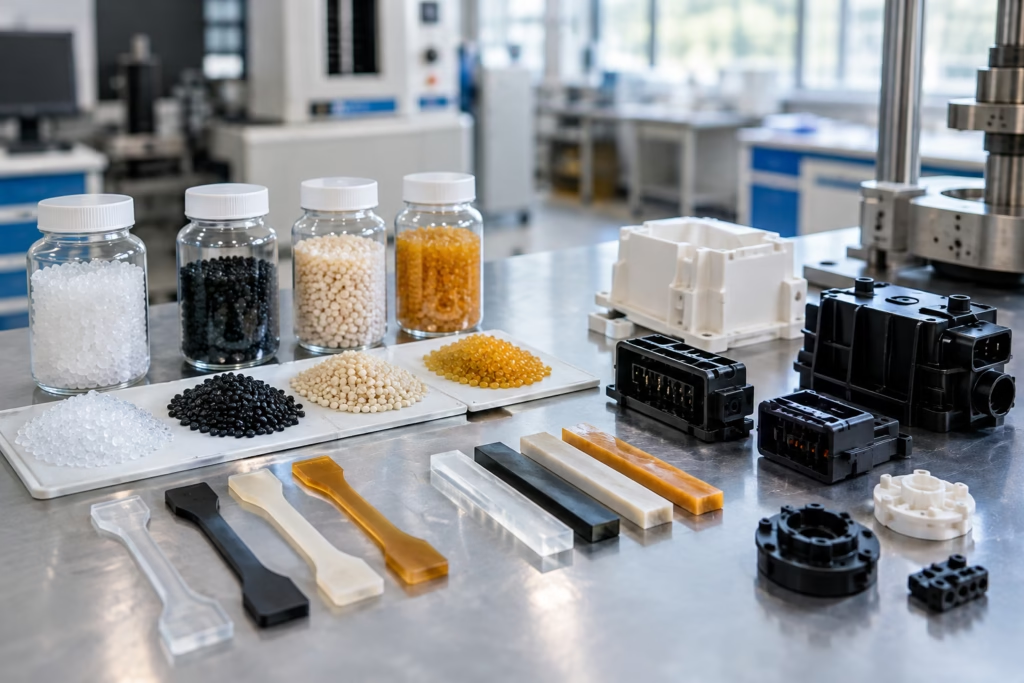
Metal replacement is one of the clearest ways to save money, but only if the plastic can meet the performance requirement consistently. A molded polymer part can reduce weight, remove secondary machining, simplify assembly, and shorten lead time. It can also lower corrosion risk and improve design freedom.
The right material choice depends on the load case. If the metal part sees high heat, chemical exposure, or electrical insulation requirements, PPS may be a better starting point. If the part needs moderate heat resistance with easier processing and lower cost, high-temperature nylon may be more practical. If the application is extremely demanding and the budget can support it, PEEK remains a strong option, but many parts do not actually need that level of performance.
That is where metal replacement plastic compound options for lighter engineered parts become especially useful. From a manufacturer’s perspective, the key is not simply swapping material names. It is checking load path, reinforcement direction, wall thickness, chemical exposure, and service temperature so the molded solution really behaves like a functional replacement, not just a cosmetic one.
How to Judge Whether 50% Cost Savings Is Realistic
The phrase “up to 50% cost savings” is possible in some projects, but it is not automatic. A true savings calculation should include more than resin price per kilogram.
1. Resin price
This is the obvious line item, but it is only the starting point. PEEK can be dramatically more expensive than PPS or HTN on a per-kilogram basis, so the headroom for savings is real. However, if the part weight is very low, the total part cost reduction may be less dramatic than expected.
2. Cycle time
High-temperature nylons can often mold more easily than PEEK, and that may shorten cycle times. PPS may also process more efficiently than PEEK in many cases. Even a modest cycle reduction can matter a lot in high-volume production.
3. Scrap rate
If a material is difficult to dry, sensitive to warpage, or prone to processing instability, scrap can erase the resin-cost advantage. A cheaper resin with a poor molding window may cost more in the end than a more expensive resin that runs consistently.
4. Tooling impact
Material choice affects mold design, venting, gate strategy, wear, and temperature control. A resin that demands less extreme processing can lower tooling risk and maintenance costs.
5. Drying and handling cost
Materials with higher moisture sensitivity need more controlled storage and drying. That creates operational expense and can increase variation if the process is not disciplined. This is one reason why buyers should treat resin selection and process design as one decision.
In practice, we often see the biggest savings where a PEEK part is converted to PPS or reinforced HTN and the rest of the system is adjusted properly: mold, drying, reinforcement, and validation. When that happens, the savings can be substantial. When only the resin is swapped and the process is ignored, the project often fails to capture the expected benefit.
Processing Differences That Affect Real Project Cost
Processing is where many supposedly simple material substitutions become expensive. PEEK generally requires higher melt temperatures, more careful process control, and greater attention to equipment capability. PPS still requires disciplined molding but is often less demanding than PEEK. High-temperature nylon may offer the broadest processing window of the three, but it brings its own drying and dimensional stability concerns.
Drying
Moisture management is critical for polyamides. High-temperature nylon can absorb moisture more than PPS or PEEK, which affects dimensional stability and mechanical consistency. Drying discipline is therefore not optional. For nylon-based projects, this is one of the first process items we verify before recommending a material shift. When a design is already tight on tolerance, moisture control can make or break the result.
Melt temperature and mold temperature
PEEK usually asks for more demanding processing conditions. PPS often sits in a more manageable middle zone. High-temperature nylon can be easier to mold, which may reduce energy use and improve throughput. The actual numbers depend on the grade, reinforcement, and part thickness, but the general rule is that easier processing usually supports lower total cost.
Warpage and shrinkage
Filled PPS and reinforced HTN grades can reduce shrinkage variation and improve stiffness. That can be a major advantage in connectors, housings, and precision molded parts. We often compare shrinkage behavior alongside mechanical data because a material with excellent tensile strength but poor dimensional behavior can still create expensive assembly problems.
Our PA66 material options for demanding heat and strength requirements are sometimes considered in this same cost-control discussion, especially when a project needs a more economical path than PEEK but still wants robust heat and mechanical performance. In the right design, this broader nylon family can provide another useful point on the cost-performance curve.
Reinforcement and Modification Options That Change the Economics
Base resin is only part of the story. Reinforcement and modification often determine whether a material is truly suitable for a cost-sensitive industrial part.
- Glass fiber reinforcement increases stiffness and helps dimensional stability, often making PPS and HTN more competitive in structural parts.
- Mineral filling can improve shrinkage control and reduce warpage, which is valuable in housings and precision assemblies.
- Impact modification can improve toughness, though it may slightly reduce heat or stiffness depending on the formulation.
- Flame retardancy is important for electrical and appliance parts, but the formulation must be balanced so the part does not become overly brittle.
- Lubricity modification can support wear performance in gears and sliding components, reducing the need to over-specify a premium resin.
From a compounding standpoint, there is often more leverage in formulation than in material-family choice alone. That is why custom plastic compounding support for application-driven cost reduction matters so much in practical procurement. A modified PPS or HTN can sometimes outperform a generic premium resin in the real part because it is built for the actual load, not the brochure version of the load.
How to Compare Datasheets Correctly
Many sourcing decisions go wrong because the datasheet is read as a ranking list rather than a design tool. A better comparison looks at how the material will behave under the specific service condition and molding process.
Focus on these fields first
- heat deflection temperature
- creep resistance at temperature
- tensile and flexural retention after heat exposure
- moisture absorption and conditioning behavior
- chemical resistance in the actual media used
- shrinkage and warpage risk in the target geometry
- electrical insulation or flame performance if relevant
In our view, the most underrated line on a datasheet is not peak strength. It is the combination of property retention and process stability. A part that performs slightly lower on paper but molds consistently and holds dimensions can easily beat a more prestigious resin in total program economics.
Selection Framework for Buyers
If you are choosing between PEEK, PPS, and high-temperature nylon, use a decision path like this:
| Project condition | Best starting point | Why |
|---|---|---|
| Extreme heat plus aggressive chemicals | PEEK | Highest margin for harsh service |
| High temperature with electrical or structural needs | PPS | Strong balance of stability and cost |
| Moderate high heat with metal replacement need | High-temperature nylon | Lower cost and easier molding |
| Tight tolerances and low warpage | Filled PPS | Good dimensional control |
| Weight reduction with moderate thermal exposure | Reinforced HTN | Good cost-performance balance |
When a project is still early, we often recommend beginning with the least expensive material that can realistically meet the load and environment, then proving it through sample tests. That approach keeps the design focused on function rather than prestige.
Why PPS Is Often the Most Practical Upgrade Path
For many cost-sensitive high-temperature parts, PPS is the most practical step down from PEEK because it preserves a large part of the performance profile that makes PEEK attractive in the first place. It retains heat resistance, offers very strong chemical resistance, and can be formulated for stable electrical and structural use. At the same time, it usually reduces cost, processing burden, and sourcing pressure compared with PEEK.
That is why we often view PPS as a “sweet spot” material. It is not the cheapest option, but it frequently provides the best balance of performance and manufacturability in applications where absolute maximum performance is unnecessary. For many industrial buyers, that balance is more valuable than chasing the highest specification available.
Sample Testing and Supplier Evaluation Checklist
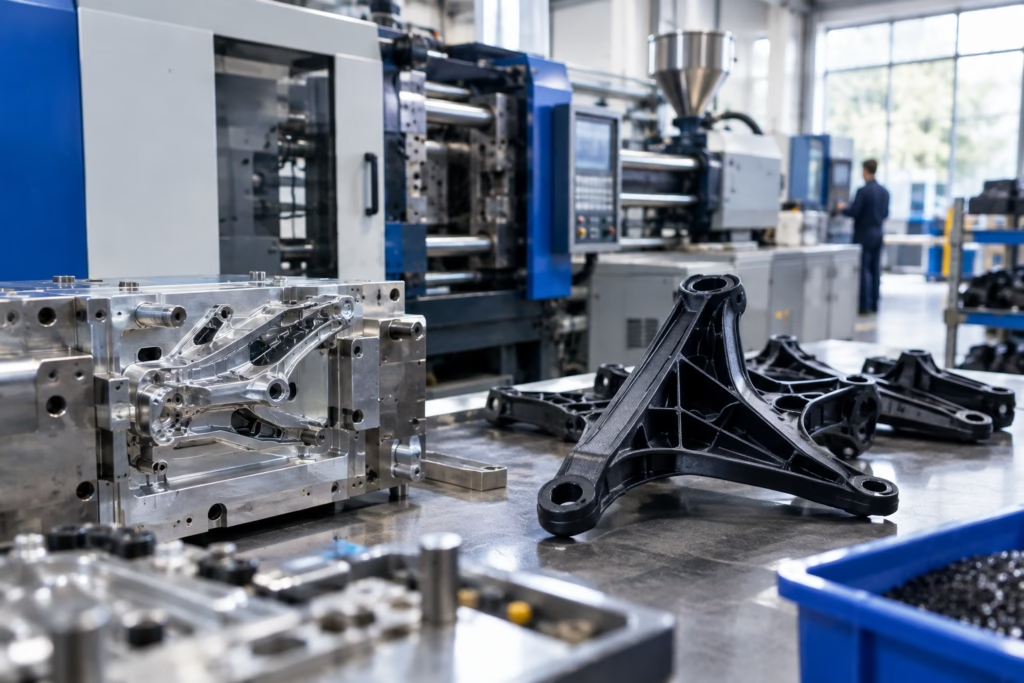
No substitution should move from theory to production without sample validation. A technical datasheet can tell you what the resin is capable of, but it cannot tell you how it will behave in your mold, with your wall thickness, on your equipment, or in your actual environment.
What to test first
- dimensional stability after molding and conditioning
- warpage under assembly loads
- heat aging or thermal cycling
- chemical exposure if the part will contact oils, solvents, cleaners, or fuel
- thread retention, snap-fit durability, or wear behavior if mechanically loaded
- electrical properties if the part is used in connectors or housings
What to ask the supplier
- Can the formulation be adjusted for stiffness, impact, or flame performance?
- What drying conditions are required before molding?
- How consistent is batch-to-batch viscosity or flow behavior?
- What are the realistic MOQ and lead time expectations?
- Can sample lots be matched to a future production grade?
We recommend this kind of process-oriented evaluation because material substitution succeeds when the supplier can support both formulation and production planning. A strong resin without a consistent supply plan can still create a program risk.
Conclusion: The Best Cost-Saving Strategy Is Application-Matched Resin Selection
When buyers compare PEEK vs PPS vs high temp nylon, the goal should not be to choose the cheapest resin in isolation. The goal is to find the lowest-cost material that still protects performance, yield, and long-term reliability. In many programs, that means using PPS instead of PEEK, or using high-temperature nylon instead of a more expensive engineering polymer or even metal, when the environment allows it.
The most important lesson is that cost savings come from matching the resin to the real application. If you do that well, 50% savings may be realistic in some cases. If you do it poorly, the project can pay for the mistake through scrap, process instability, or premature failure. From our manufacturing perspective at Poly Maro, the right answer is usually not the highest-performance resin on the shelf. It is the most cost-efficient formulation that still performs confidently in the part.
FAQs
Can PPS really replace PEEK in high-temperature applications?
Yes, in many applications PPS can replace PEEK when the part needs good heat resistance, chemical resistance, and dimensional stability but does not require PEEK’s highest-end performance margin. PPS is especially strong in electrical and structural parts where the service environment is demanding but not extreme. The key is to validate the real temperature, load, and chemical exposure before switching.
Is high-temperature nylon always cheaper than PPS?
Not always. Resin price alone may favor high-temperature nylon, but the total cost depends on cycle time, scrap rate, drying needs, and the reinforcement level required. In some parts, PPS may actually be more economical if it reduces warpage or improves consistency. The better choice is the one that delivers acceptable part quality at the lowest full-process cost.
When is PEEK still the right choice despite the cost?
PEEK is still the right choice when the part faces very high continuous temperatures, aggressive chemicals, repeated sterilization, or severe mechanical loading where failure risk is unacceptable. It is also a strong option when long-term creep resistance is critical and the budget can support premium performance. If the application truly needs that margin, cutting cost by switching materials can become more expensive later.
What should buyers check on a datasheet before switching materials?
Focus on heat deflection temperature, creep resistance, tensile retention at temperature, moisture absorption, shrinkage, and chemical resistance. These values tell you much more than a single strength number. For molded parts, processing behavior and dimensional stability are often just as important as headline mechanical performance.
How do reinforcement and fillers change the cost-performance balance?
Glass fiber and mineral fillers can improve stiffness, reduce warpage, and make PPS or high-temperature nylon suitable for structural or precision parts. That can lower total cost by reducing scrap and enabling metal replacement. The trade-off is that reinforcement may affect toughness, surface appearance, or wear behavior, so the formulation should be matched to the part function.
What is the safest way to validate a lower-cost resin substitution?
Start with a sample program that tests the actual service conditions, not just general material properties. Check molding stability, dimensional change, heat exposure, chemical contact, and assembly performance. Then review supplier consistency, lead time, MOQ, and whether the formulation can be tuned if issues appear. A controlled sample stage is the safest way to reduce cost without increasing risk.
Related Reading
- how to choose heat-resistant plastic compounds
- PPS vs PBT for high-temperature electrical components
- why some projects should not start by chasing the highest-performance plastic material
- how processability impacts total cost in plastic compounds
- application-based material selection for real manufacturing results