
In many new product programs, the first instinct is to ask for the strongest, stiffest, most heat-resistant resin available. That sounds safe, but in practice it can create an over specification plastic material problem: the project spends more on performance than the part actually needs, while also accepting higher processing risk, tighter sourcing pressure, and less flexibility in mass production.
If your project is balancing performance against cost, supply stability, and molding practicality, our custom plastic compounding support can help you work backward from the real application requirement instead of guessing from the highest headline properties. At Poly Maro, we typically start by matching functional needs such as heat resistance, impact level, flame retardancy, dimensional stability, and process window, then we shape the compound to fit production realities, sample validation, and long-term supply planning.
What Over-Specification Means in Plastic Material Selection
Over-specification happens when a material is selected for a property level that exceeds what the part truly needs, especially when that extra margin does not create measurable business value. In plastics, this often means moving directly to a high-performance engineering resin, a heavily reinforced grade, or a custom compound before the team has defined the real load, temperature, environment, or production constraint.
The issue is not that high-performance plastics are bad. The issue is that they are only justified when the application demands them. A connector housing, bracket, gear, or cover may need only moderate heat resistance, stable dimensions, or impact toughness. If the project starts with the most advanced resin rather than the minimum functional level, the result can be a more difficult part to mold, a more expensive BOM, and a more fragile supply chain.
For technical buyers, the right question is not “What is the best plastic?” It is “What is the right-performance plastic for this part, this process, and this cost target?” That framing usually leads to a better decision.
Why Teams Are Tempted to Choose the Highest-Performance Resin First

We see three common reasons. First, engineers naturally want margin. If a part is critical, it feels safer to specify a resin with extra strength or heat capability. Second, procurement teams often inherit a specification from an earlier prototype or from a competitor product and assume the premium material must be necessary. Third, product teams may worry that using a lower grade now will create quality problems later, so they choose a “future-proof” material upfront.
That instinct is understandable, but it can be misleading. In our experience, many early material choices are based on fear of failure rather than on a documented failure mode. When teams do not define the real stress profile, they often overestimate the need for stiffness, flame retardancy, chemical resistance, or temperature performance. The cost of that assumption compounds across tooling, molding, logistics, inventory, and lead time.
To prevent that, we recommend comparing the project against a real specification framework. Standards-based properties such as tensile strength, modulus, and elongation should be measured and compared in context, not as standalone bragging rights. The point is to use testable requirements, not vague prestige grades. For that reason, teams often benefit from reviewing ASTM plastics test methods for specifying and comparing material performance before locking in a resin family.
The Hidden Risks of Material Overengineering
Choosing the highest-performance resin first can look conservative, but it often creates hidden risk in four areas.
1. Unnecessary cost
Premium engineering plastics, reinforced compounds, and specialty functional materials usually cost more per kilogram, but the real cost impact is broader than resin price. Higher density can increase part cost. Higher viscosity can increase cycle time or raise scrap risk. More demanding drying can increase energy and handling cost. If the part does not need that performance level, the project pays for unused capability.
2. Processing difficulty
High-performance materials often require tighter control over moisture, barrel temperature, mold temperature, screw design, venting, and gate strategy. If the processing window is narrow, the same material can behave very differently between machines, shifts, or plants. That creates startup delay, inconsistent appearance, more trial-and-error, and more risk of warpage, short shots, or brittle parts.
3. Longer lead times
Specialty compounds may not be available in the exact color, reinforcement, flame-retardant package, or regulatory combination needed for the program. Even when they are available, lead time can be longer because the grade may be produced in smaller batches. For projects with aggressive launch schedules, that can become a major development bottleneck.
4. Supply instability
The more customized the resin, the more the project depends on a specific formulation, specific raw material sources, and specific production planning. If one ingredient becomes constrained, replacement may not be straightforward. That can create sourcing risk during scale-up or after launch.
When you compare a custom compound vs standard grade, you are really comparing more than performance. You are comparing process tolerance, commercial flexibility, and replacement risk as well.
How Over-Specification Affects Injection Molding and Extrusion
From a manufacturing standpoint, material choice is inseparable from the process. A resin that looks excellent on paper can be a poor choice if it causes inconsistent mold filling, poor surface finish, excessive wear on the screw, or unstable dimensions after demolding.
In injection molding, higher-performance or heavily reinforced plastics may need more careful drying, higher melt temperatures, and tighter control of residence time. If the material is moisture sensitive, improper drying can reduce mechanical properties or create surface defects. If the compound is very stiff, it may increase internal stress and warpage. If the flow is too low for the part geometry, the team may compensate with higher pressure or temperature, which can raise degradation risk.
In extrusion, a material that is technically strong but too difficult to process may produce unstable output, surface roughness, or profile variation. A line that runs steadily with a moderately modified resin can become difficult to keep within tolerance if the project jumps too quickly to a demanding high-performance compound.
For polyamides and other moisture-sensitive materials, drying and conditioning are not small details; they are part of the selection decision. Mechanical properties should be interpreted alongside the conditioning state, because the same resin can behave differently depending on moisture content and test preparation. That is one reason teams should pay attention to how to read TDS and SDS for material trade-offs before comparing grades by headline numbers alone.
Performance Is Not Free: The Real Cost Drivers Behind Engineering Plastics
In practice, the price of a plastic material reflects many things besides raw polymer type. Additives, reinforcement, flame-retardant systems, stabilizers, color matching, regulatory constraints, quality control burden, and batch management all influence cost. As the specification becomes more complex, the material becomes more capable, but also more expensive to formulate and more sensitive to supply variation.
Here is a simple way to think about it:
| Material Level | Typical Strength | Processing Difficulty | Supply Flexibility | Best Use Case |
|---|---|---|---|---|
| Standard resin | Basic functional performance | Usually easier | Higher | Non-critical parts, cost-sensitive housings, simple geometry |
| Modified resin | Balanced improvement in impact, heat, stiffness, or flow | Moderate | Good | Most production parts that need a functional upgrade without extreme complexity |
| High-performance resin | High thermal, mechanical, or chemical capability | Higher | Lower | Critical parts with strict loads, temperatures, or compliance demands |
This is why we often advise buyers to think in layers. If a standard grade is too weak, the next step is not always the highest-performance resin. A modified resin may solve the actual problem more efficiently. At Poly Maro, that layered approach helps us align formulation with the part’s real duty cycle instead of forcing every project into the premium tier.
When High-Performance Materials Are Truly Justified
There are cases where a premium resin is the correct choice from the beginning. These cases usually have one or more of the following characteristics: sustained high temperature, flame-retardant compliance, severe load bearing, wear resistance, precision dimensional control, electrical performance under stress, or exposure to chemicals, UV, or harsh outdoor environments.
Examples include structural components close to heat sources, electrical connectors with demanding safety needs, gear systems with repeated mechanical loading, and parts where failure would create safety, warranty, or regulatory issues. In these situations, trying to save cost with a lower-grade material can be false economy.
The key is to justify the performance level with evidence. For mechanical qualification, it helps to define the relevant test methods and acceptance criteria early. A tensile test result is useful only when it is tied to the actual load path, geometry, and safety margin of the part. The same applies to heat and impact requirements. If the application truly needs the performance, then the higher grade is not overengineering; it is a controlled technical decision.
A Layered Material Selection Approach That Reduces Risk
We recommend a three-step selection ladder.
Step 1: Start with the baseline resin
Ask whether the unmodified or standard grade can meet the core functional requirement. This is the fastest way to identify whether the application truly needs upgrading or whether the current concern is based on assumption.
Step 2: Evaluate a modified resin
If the baseline grade is not enough, the next question should be what kind of modification solves the specific problem. Impact modification may improve drop resistance. Glass fiber may improve stiffness and heat distortion. Mineral filling may help dimensional stability or cost balance. Flame-retardant modification may address safety or compliance. The right modification often gives you exactly the property you need without paying for unrelated performance.
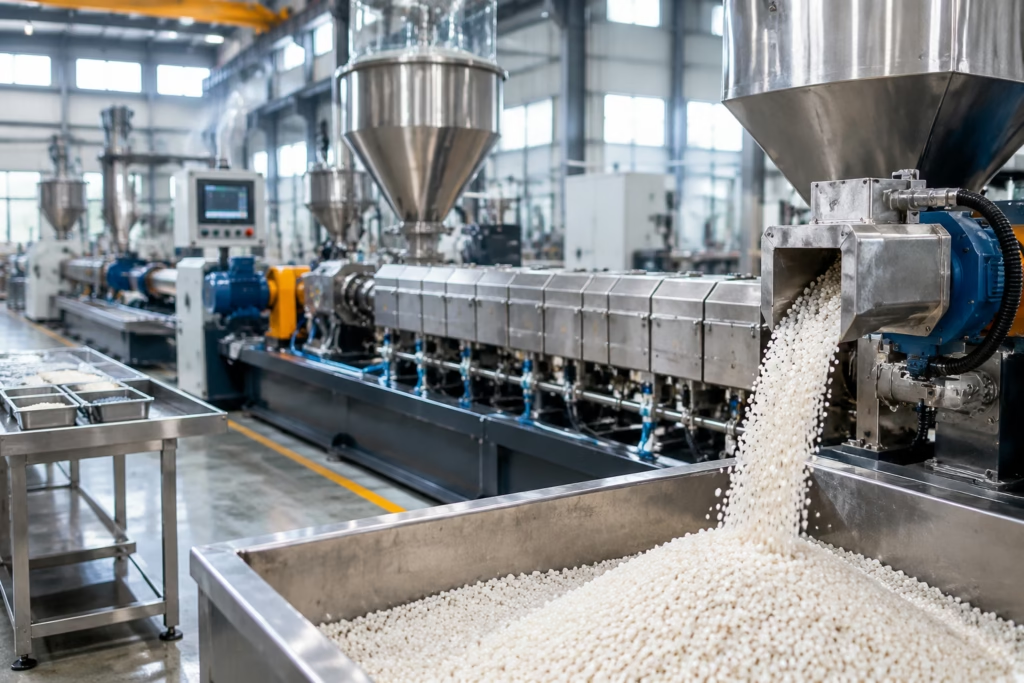
Step 3: Move to high-performance resin only when needed
Reserve the top tier for parts that truly need it. At this stage, the team should already know the manufacturing burden, the supply implications, and the part-level benefit. That makes the high-performance choice more defendable and easier to source.
If you are unsure whether a custom project is worth the extra development effort, it helps to evaluate the commercial logic early. Our experience with when custom development is worth the cost shows that the answer often depends on production volume, qualification risk, and how much performance gap must be closed.
How to Match Material Choice to the Real Application
The best material selection is application-driven. Different performance needs should lead to different material strategies.
- Strength and stiffness: Choose the lowest resin level that can hold load, shape, and assembly forces with acceptable creep and deformation.
- Heat resistance: Only pay for elevated thermal performance when the part actually sees sustained temperature, hot air exposure, or heat from nearby components.
- Flame retardancy: Use it where safety, standards, or customer requirements demand it, not by default.
- Dimensional stability: Prioritize this for precision housings, connectors, gears, and assemblies with tight tolerance stack-up.
- Wear resistance: Justify it for moving parts, sliding interfaces, and repeated contact points.
- Electrical performance: Confirm whether the part needs insulation, anti-static behavior, or conductivity; each path has different cost and processing implications.
The important point is to avoid assuming that one property improvement automatically solves the whole problem. A resin can be stiffer but harder to fill. It can be more heat-resistant but more brittle. It can be more flame-retardant but more demanding to dry or process. That is why material selection should always be a balance, not a single-property contest.
Common Decision Mistakes in Early Product Development
One common mistake is writing a spec around the prototype rather than around the production part. Prototypes are often printed, machined, or molded under conditions that do not represent the final process. A material chosen to rescue a prototype may be more expensive or difficult than needed in mass production.
Another mistake is using one impressive datasheet number to justify a whole resin choice. High tensile strength does not necessarily mean the part will resist impact, warpage, or thermal deformation in actual use. Likewise, excellent stiffness does not guarantee that the material will be easy to mold or that it will stay dimensionally stable after conditioning.
A third mistake is ignoring the supply chain. Some materials are technically ideal but commercially risky because the grade is narrow, the MOQ is high, or the lead time is unpredictable. If a resin has no workable replacement path, the project becomes vulnerable to disruptions after launch.
When we help teams evaluate sample data, we often ask them to confirm more than one criterion. If you want to avoid false confidence, it is useful to review what to confirm before requesting samples so that the sample reflects the actual production problem, not just a lab curiosity.
How to Evaluate Whether a Lower-Grade or Modified Material Can Work
This is where many projects save money without losing function. A lower-grade or moderately modified resin may be enough if the part’s real exposure is milder than originally assumed.
Ask these questions:
- What is the actual temperature range, not the worst-case imagined one?
- Is the part load-bearing, or does it only need shape retention and assembly support?
- Does the environment require chemical resistance, or only occasional contact?
- Will the part fail safely if it deforms slightly, or must it hold tight tolerance?
- Is the part exposed to UV, moisture, or wear continuously, or only intermittently?
- Can geometry, wall thickness, rib design, or reinforcement placement reduce the required material grade?
Often, the answer is yes: design adjustments and material modification together can replace a more expensive resin. That approach frequently lowers cost while improving manufacturing robustness. In practical terms, a better-designed part in a well-chosen modified resin often outperforms a poorly designed part made from an over-specified high-end material.
Procurement Considerations: MOQ, Lead Time, and Batch Consistency
Procurement teams should treat material choice as a supply decision as much as a technical one. A resin that meets the spec but cannot be delivered consistently is a risk to launch and a risk to production continuity.
Before committing, confirm the MOQ, lead time, packaging format, color control, requalification requirements, and replacement strategy. Ask whether the grade can be produced in repeatable batches and whether the formulation is stable enough to support long-term procurement. This matters even more for customized compounds, because the project may depend on a narrow set of raw materials or process conditions.
Batch consistency is particularly important when the part is dimensionally sensitive or visually critical. Small changes in viscosity, reinforcement dispersion, moisture content, or additive loading can show up as part variation. That means the cheapest option on paper may become the most expensive option once scrap, downtime, and customer complaints are included.
For sourcing teams, a practical question is whether the part needs a dedicated compound at all, or whether a standard grade with targeted support is enough. A good starting point is to ask the material supplier for a comparison of custom development scope versus off-the-shelf alternatives, and to verify the test plan before tooling is frozen.
A Practical Checklist for Balancing Performance, Cost, and Manufacturability
Use this checklist when a project appears to be heading toward overengineering:
- Have we defined the real failure mode?
- Have we documented minimum mechanical, thermal, and environmental requirements?
- Can a standard grade meet the need with design changes?
- Would a modified resin solve the problem with less cost and risk than a premium resin?
- What drying, molding, or extrusion changes would the high-performance grade require?
- Are lead time, MOQ, and batch stability acceptable for production?
- Do we have a realistic sample validation plan that reflects production conditions?
- Have we considered replacement risk if the exact grade becomes unavailable?
If the answer to most of these questions is unclear, the project is not ready to choose the highest-performance material. It is ready to compare options more carefully.
How We Think About the Right-Performance Material
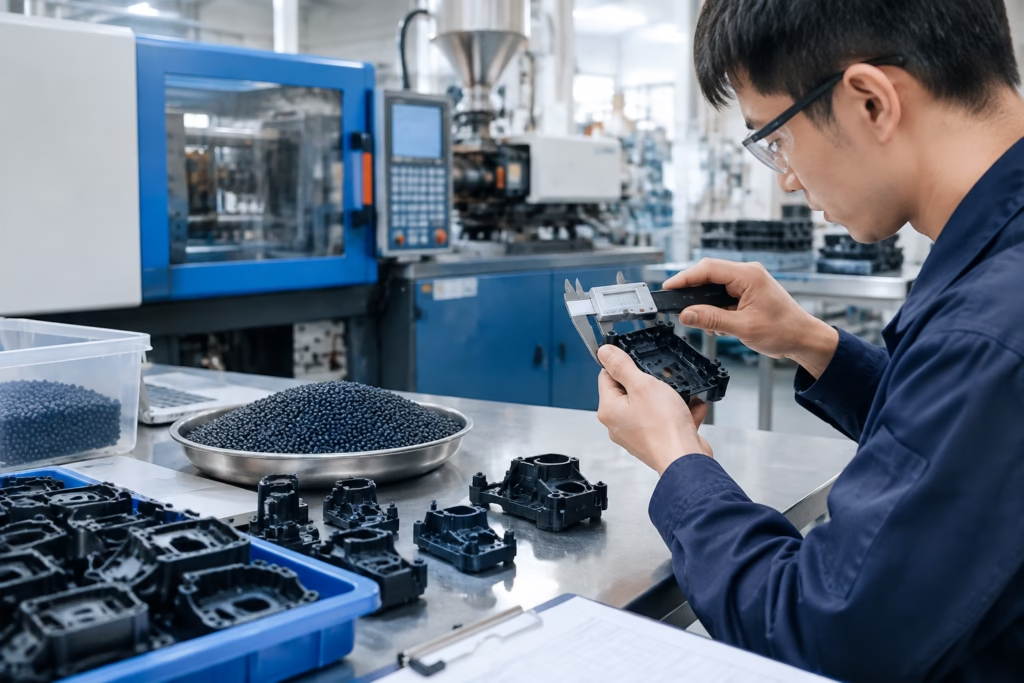
From our compounding and resin development perspective, the best project outcome is usually not the highest number on a datasheet. It is the material that meets the part function, runs steadily on the actual machine, survives the supply chain, and supports a sustainable cost structure.
That is why we encourage engineers and procurement teams to work from a functional target, not a prestige grade. In many cases, a carefully modified resin provides the best balance of performance and manufacturability. In other cases, a true high-performance material is necessary and fully justified. The difference comes from testing, process understanding, and honest discussion of the real operating environment.
Conclusion
Chasing the maximum-performance resin first can lead to unnecessary cost, harder processing, unstable supply, and poor production fit. A better approach is to start with the application requirement, test the actual risk, and then choose the lowest material level that still delivers reliable performance. That is how teams avoid over specification plastic material decisions and move toward better engineering plastic cost control.
When the selection process is grounded in function, processability, and sourcing reality, the result is usually a more robust program and a more competitive product.
FAQs
How do I know if I am over-specifying a plastic material?
You may be over-specifying if the chosen resin has far more heat, strength, flame-retardant, or chemical resistance than the part truly needs, especially when that extra performance increases cost or process difficulty without reducing real risk. The best way to check is to define the actual load, environment, tolerance, and failure mode, then compare the material against those requirements rather than against a competitor’s premium grade.
Is a higher-performance plastic always more reliable?
No. A higher-performance resin can be more capable in the lab, but reliability in production also depends on molding stability, drying sensitivity, shrinkage, warpage, and supply continuity. A moderately modified resin that runs consistently and meets the application requirement is often more reliable in real production than a premium grade that is difficult to process.
Can a modified resin replace a high-performance resin?
In many cases, yes. Impact modification, glass fiber reinforcement, mineral filling, flame-retardant packages, or other targeted adjustments can close the gap between a standard resin and the application need. The key is to identify which property is missing and then choose the simplest modification that solves that exact problem.
What should I check before moving from a standard grade to a custom compound?
Check whether the standard grade already meets the core requirement, whether the production process can handle the new material, and whether the projected volume justifies development work. You should also confirm sample validation criteria, lead time, MOQ, and whether the compound will remain stable across batches and future supply cycles.
Why does a premium plastic sometimes create more molding problems?
Premium plastics can have narrower processing windows, stronger moisture sensitivity, higher viscosity, or greater reinforcement loading. Those characteristics can make filling, venting, drying, and dimensional control more difficult. If the machine setup or mold design is not matched to the material, the result can be more scrap rather than better performance.
How can procurement teams avoid replacement risk when specifying plastics?
Procurement teams should avoid overly narrow specifications unless the application truly needs them. It helps to ask for multiple viable grades, confirm batch consistency expectations, review lead time and MOQ, and keep a fallback material option in case supply changes. That approach lowers the chance that a single specialty resin becomes a production bottleneck.