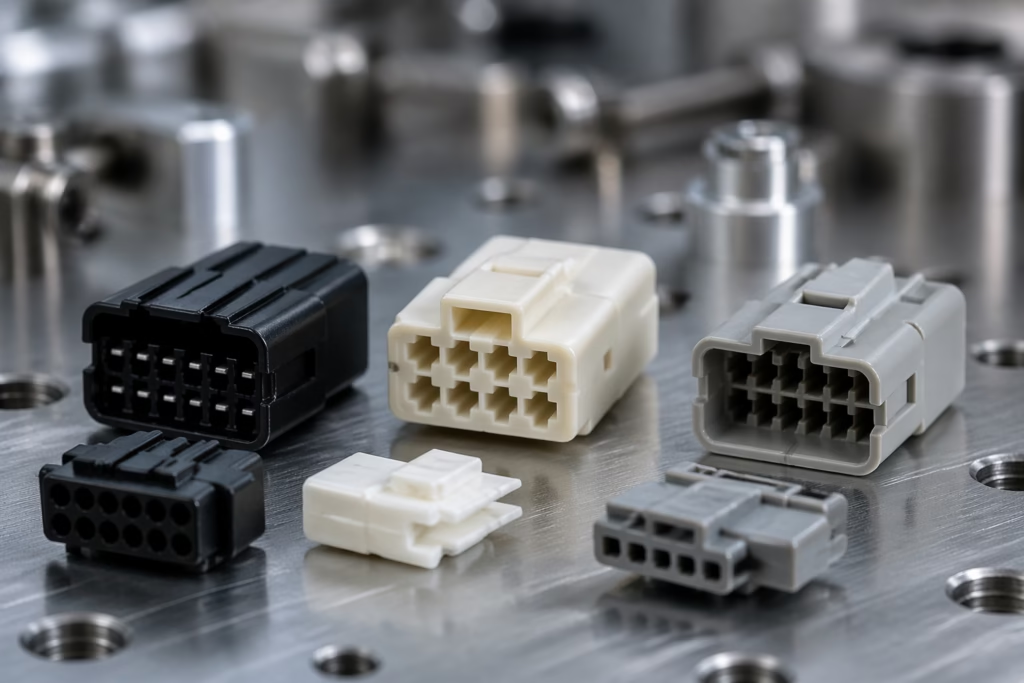
When an electrical part sits near heat, carries load, or must keep its shape over time, the question is not just which resin is stronger on paper. It is whether the material can keep performance stable through real operating conditions. In many projects, PPS vs PBT comes down to whether the part needs a reliable baseline engineering plastic or a higher-heat, higher-stability option that can handle tougher margins.
For parts used in high-temperature electrical applications, the right answer depends on temperature profile, electrical stress, mechanical load, and service life expectations, not just a single heat number.
Where PPS vs PBT matters most
Electrical components rarely fail because of one property alone. Connectors, relays, housings, switches, terminal blocks, and nearby heat-zone parts all face combinations of thermal aging, clamping force, dimensional drift, and occasional exposure to humidity or chemicals. That is why the material choice must reflect the whole environment, not only the nominal operating temperature.
In practice, the materials are often compared when a part is close to a motor, power device, transformer, battery module, lighting system, or an enclosed heat source. The more the part depends on precise geometry and stable contact pressure, the more the material decision matters.
| Selection factor | PBT | PPS |
|---|---|---|
| Heat tolerance | Suitable for many moderate hot environments | Better for more severe long-term heat exposure |
| Dimensional stability | Good, but more sensitive at higher temperatures | Stronger stability under heat and load |
| Chemical resistance | Generally solid for many electrical uses | Typically stronger in harsher chemical exposure |
| Cost level | Usually more economical | Usually higher and easier to over-specify |
What actually stresses electrical plastics in hot environments
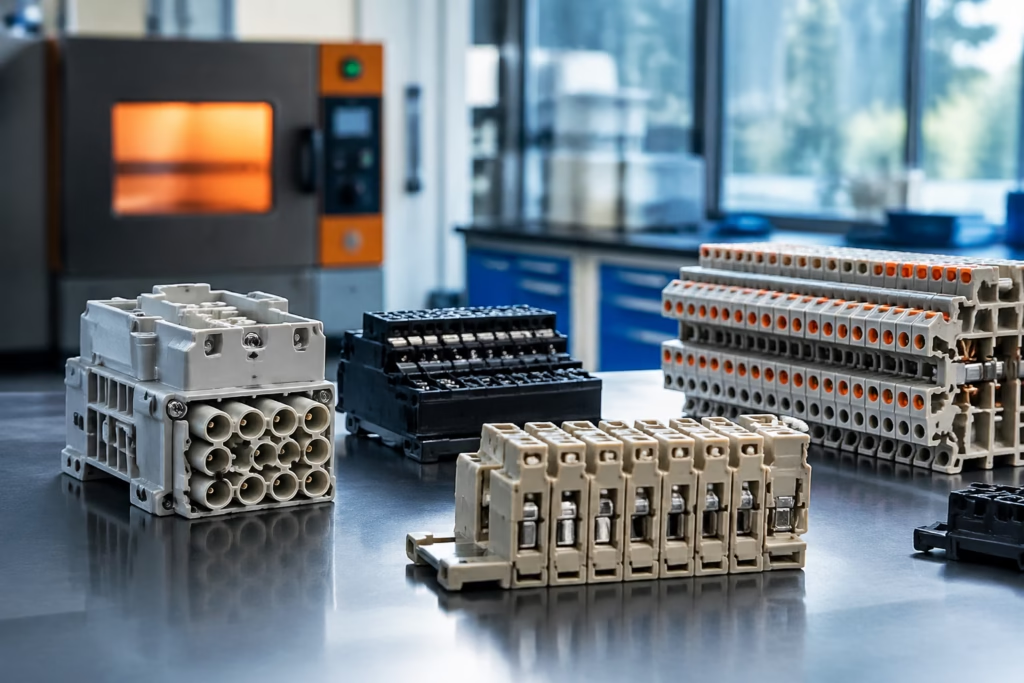
Heat alone does not tell the full story. A part may survive a high ambient reading if exposure is brief, but still deform over time if it carries stress or load. Continuous heat, short-term spikes, humidity, electrical load, and mechanical clamping all work together.
One important issue is creep. If a connector housing or terminal block slowly relaxes under force, contact pressure can drop and electrical performance can deteriorate. Another is dimensional stability: when a part expands or warps too much, assembly tolerance and sealing can be affected. This is where resin choice becomes a system decision rather than a simple material swap.
From a manufacturing point of view, Poly Maro often sees projects where the target temperature was set without enough attention to load duration. That is usually the first place to check before moving to a more expensive resin family.
PBT as the baseline choice
PBT materials are often the starting point for electrical parts because they balance moldability, electrical insulation, and cost-performance well. For many connectors, switch parts, housings, and general-purpose electrical components, PBT provides enough heat resistance and strength without making processing unnecessarily difficult.
PBT is often attractive when the design needs good flow, consistent molding behavior, and manageable cycle times. It is also commonly preferred when the part geometry is thin or intricate and the processor needs stable fill without extreme mold temperatures. In other words, it is a practical baseline, not a compromise material.
Where PBT begins to fall short is usually at the boundary: sustained heat near the top of its comfort range, repeated thermal cycling, higher mechanical stress, or tighter long-term dimensional demands. If the part is near a hot source and must retain shape and insulation reliability for years, the margin may be too thin.
If you are comparing multiple resin families for a connector platform, it can help to look at the PBT comparison for connectors alongside other engineering plastic options before deciding whether heat resistance is really the limiting factor.
PPS as the higher-grade option
engineering plastics portfolio decisions often move to PPS when the application demands more thermal headroom and stability than PBT can comfortably provide. PPS is known for strong heat resistance, very good dimensional stability, and excellent chemical resistance in many demanding environments.
That makes PPS attractive for parts that sit close to heat sources, see persistent thermal exposure, or must preserve critical dimensions under load. It is often considered when failure consequences are high and the design has little tolerance for creep or thermal drift. The tradeoff is that PPS can be more expensive and may require more careful processing to manage mold filling and part finish.
For some electrical parts, the question is not whether PPS is technically better, but whether the added performance solves a real risk. If the part already performs safely in PBT with margin, PPS may not improve the product enough to justify the cost or processing changes.
How to decide whether PPS is necessary instead of PBT
A practical decision should start with the actual operating profile. Ask whether the part sees continuous heat or only occasional spikes, whether it is load-bearing, and whether the geometry must remain stable over long periods. If the answer is yes to several of these, PPS becomes more attractive.
Use the following logic:
- Check the temperature profile. Continuous exposure matters more than short peaks.
- Evaluate electrical safety needs. Contact retention, insulation integrity, and flame resistance can be critical.
- Review mechanical loading. Clamped parts, snap fits, and connectors are vulnerable to creep.
- Consider humidity and chemicals. Moisture and fluid exposure can change performance expectations.
- Estimate service life. A part that must last for years needs more margin than a prototype or short-life assembly.
When these factors stack up, the decision shifts away from simple cost comparison and toward reliability under real use. That is often where engineering plastics selection needs technical support for material selection rather than a fast catalog decision.
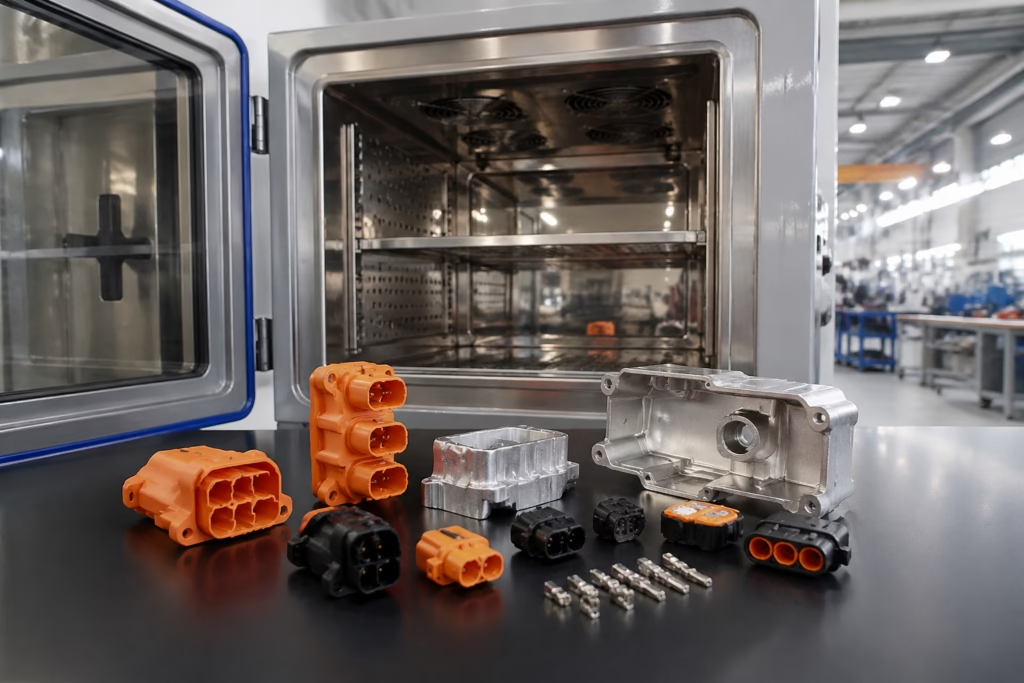
technical support for material selection can be useful when the part is electrically sensitive and the operating profile is only partially defined, because the final choice often depends on the weakest load or temperature condition, not the average one.
When PBT is still enough
PBT remains the right answer in many cases. If the component operates at moderate temperatures, does not carry heavy mechanical stress, and does not face severe chemical exposure, upgrading to PPS may add cost without meaningful benefit. This is especially true for high-volume electrical parts where processing efficiency and consistent cycle time matter.
PBT can also be the better choice when the design has enough margin built in through geometry, ventilation, part spacing, or system-level heat management. In those cases, choosing PPS may be a form of overengineering rather than smart risk control.
The goal is not to choose the highest-grade resin available. It is to choose the least expensive material that still meets thermal, electrical, and mechanical requirements with acceptable margin.
Cost, manufacturability, and over-specification risk
Material cost is only one part of the equation. A resin that is more difficult to mold, slower to process, or more sensitive to tooling conditions can raise total project cost even if the raw material price difference seems manageable.
That is why over-specifying to PPS can create hidden expenses: tighter process control, longer setup work, more demanding qualification, and possible changes to mold design or drying discipline. In some programs, the performance gain is real but still unnecessary for the actual application.
At the same time, under-specifying can be more expensive in the long run if parts deform, lose fit, or fail prematurely. The best decision is the one that balances performance margin with production reality. In a manufacturer-led workflow, Poly Maro typically evaluates both the resin behavior and the processing window before recommending a direction.
Practical selection questions
- Will the part see continuous heat or only intermittent exposure?
- Is the component load-bearing or mostly non-structural?
- Does dimensional stability affect electrical contact or sealing?
- Are there humidity, oil, or chemical exposure concerns?
- Is flame resistance part of the design requirement?
- Can the current design tolerate a higher-cost, more demanding resin?
If the answers point to long-term heat exposure, tight tolerance control, and strong reliability expectations, PPS may justify itself. If not, PBT is often the more balanced choice.
For teams comparing resin options across product families, the broader engineering plastics portfolio can help frame whether the application really needs a higher-grade resin or simply a well-processed standard engineering plastic.
Conclusion: choosing the right material without overbuying performance
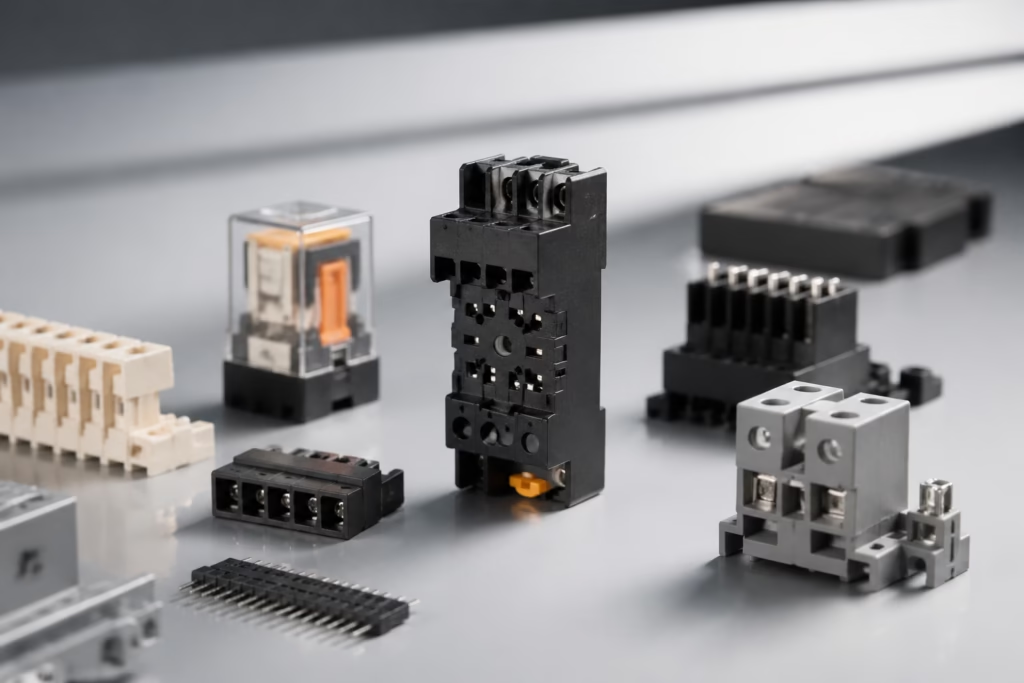
In the PPS vs PBT decision, the best choice is usually the one that matches the real environment, not the most heat-resistant option on paper. PBT is often the smarter baseline for many electrical components because it is practical, stable, and cost-effective. PPS becomes the stronger choice when heat, load, chemical exposure, or long service life push the part beyond PBT’s comfortable range.
If you define the operating profile clearly, you can avoid two common mistakes: under-specifying and risking failure, or over-specifying and inflating cost and processing complexity. For hot electrical components, that balance is the real design target.
FAQ
Is PPS always better than PBT for electrical parts?
No. PPS has higher heat and chemical resistance, but PBT is often sufficient for many electrical components. The right choice depends on operating temperature, load, durability needs, and cost targets.
When should I consider PPS instead of PBT?
Consider PPS when the part sees sustained heat, tight dimensional requirements, mechanical stress, or harsher chemical exposure, especially if long-term reliability is critical.
Why is PBT commonly used in connectors and housings?
PBT offers a strong balance of moldability, electrical performance, dimensional stability, and cost. That makes it a practical baseline for many connector and housing designs.
What is the biggest risk of choosing the wrong material?
The biggest risk is mismatch between the resin and the real service environment, which can lead to creep, warping, contact loss, cracking, or reduced long-term reliability.
Does PPS always make processing harder than PBT?
Not always, but PPS usually requires more careful process control. The exact moldability depends on part design, tooling, and the compound formulation.
How can I avoid over-specifying the material?
Start with the actual temperature profile, mechanical load, and service life requirement. If PBT already meets those conditions with margin, moving to PPS may add cost without meaningful benefit.