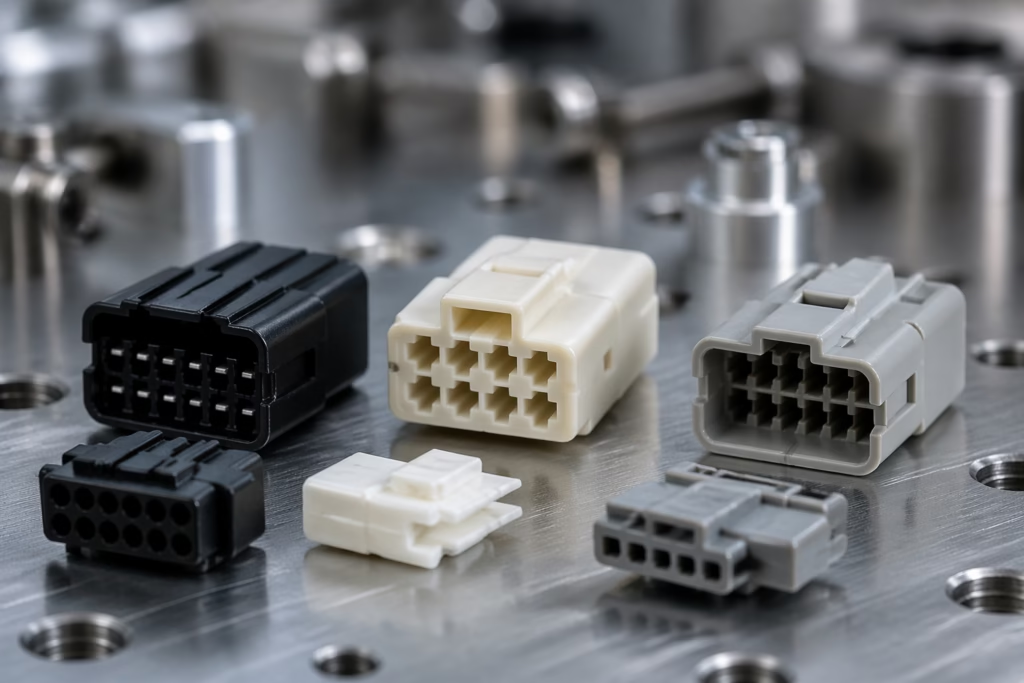
When engineers compare PC vs PC/ABS for housings and functional parts, the real question is usually not which material is universally better, but which one fits the part’s balance of impact resistance, heat resistance, appearance, and molding behavior. That decision affects not only part performance, but also tooling, cycle stability, and the amount of cosmetic finishing required.
For teams evaluating resin supply or custom compound options, it helps to review PC vs PC/ABS product options alongside the part’s actual service conditions rather than relying on generic material labels.
What matters most in housing material selection
For plastic housings and functional covers, the most common requirements tend to cluster around four areas: impact resistance, heat resistance, processing behavior, and appearance. A material that performs well in one area but creates problems in another may still be the wrong choice if the part is visible, thin-walled, or produced at high volume.
In practice, the right material must also support production efficiency. A housing material that is hard to mold, overly sensitive to shrinkage, or difficult to keep dimensionally stable can raise scrap risk and slow down development.
| Selection factor | Why it matters | Typical trade-off |
|---|---|---|
| Impact resistance | Protects the part from drops, hits, and handling damage | Higher impact often comes with a balance in stiffness or heat performance |
| Heat resistance | Supports use near motors, electronics, or warm environments | Better heat resistance may increase cost or reduce molding ease |
| Processing | Affects flow, shrinkage, and cycle stability | Better flow can come with lower rigidity if the formulation is not optimized |
| Appearance | Important for visible consumer and industrial housings | High gloss or clean texture can require more careful mold control |
Pure PC overview

Pure PC is known for strong impact resistance and good heat performance, which is why it is often selected when a housing must stay tough under stress. It also offers a more rigid feel than many general-purpose plastics, making it suitable for parts that must hold shape while protecting internal components.
Another reason designers choose pure PC is its ability to support demanding functional parts where toughness matters more than easy processing. In some projects, Poly Maro sees pure PC selected when the part must resist cracking, maintain stability, and deliver a more premium structural feel. For teams comparing formulations, pure PC material is often the starting point when impact and heat are both high on the priority list.
Where pure PC tends to perform best
- Transparent or semi-transparent housings that need toughness
- Protective covers exposed to repeated handling or drops
- Parts near moderate heat sources where deformation must be limited
- Functional components where a rigid and durable feel is important
PC/ABS overview
PC/ABS exists to balance the strengths of both base polymers. The PC portion contributes toughness and heat resistance, while the ABS portion helps improve processing ease and surface quality. That combination makes the alloy especially useful when a part needs to be molded reliably while still offering decent impact resistance and a better cosmetic result than many tougher engineering resins.
The trade-off is that PC/ABS usually does not match pure PC in maximum heat resistance or clarity. It is often chosen when the application needs a practical middle ground rather than the highest possible thermal ceiling. For many housing programs, that balance is exactly what keeps cost, appearance, and manufacturability aligned. If you want to compare the alloy base more broadly, the ABS resin reference can help explain why the blend behaves differently from pure PC.
Where PC/ABS tends to perform best
- Electronics housings with visible surfaces
- Interior covers and appliance panels
- Parts that need good flow and reliable molding
- Applications where balanced performance is more important than maximum heat resistance
Impact resistance comparison
For impact-resistant housing material selection, pure PC is usually the stronger option when the part must withstand sudden stress, drops, or repeated mechanical abuse. It is often preferred when crack resistance is more important than easy processing or lower raw material cost.
PC/ABS still offers useful impact performance, but it is generally selected when the part needs a balanced profile instead of top-tier toughness. In thin-walled housings, that balance can be enough if the loading is moderate and the design is supported by good rib structure and wall consistency.
The practical question is whether the part is expected to survive severe abuse or simply normal handling. If the answer is severe impact exposure, pure PC is often the safer direction. If the loads are moderate and appearance matters, PC/ABS may be the more efficient compromise.
Heat resistance comparison
When the part will face elevated temperature, pure PC is commonly the better heat resistant plastic housing choice. It generally holds shape better under thermal stress, which is valuable near internal electronics, warm air paths, or components that generate localized heat.
PC/ABS can still work well in many indoor or device housing applications, but it is usually not the first choice when thermal margin is tight. If the part sits close to a heat source, the design team should evaluate long-term distortion risk rather than only short-term stability.
For sourcing teams, this is where specification discipline matters. Choosing a balanced alloy because it is easier to mold can lead to later issues if the housing needs to retain fit, cover gaps, or support alignment after heat exposure.
Processing and molding comparison
Processing behavior is often the deciding factor in PC vs PC/ABS programs. PC/ABS typically offers better flow and a more forgiving molding window, which can help in thin-wall parts, more complex geometry, or projects where cosmetic consistency matters across multiple cavities.
Pure PC can be more demanding in molding and may require closer attention to drying, gate design, and processing conditions. When molded well, it delivers strong performance, but the process window may feel narrower than that of PC/ABS. For teams that need deeper production guidance, technical support for material selection can help align resin choice with mold behavior and part geometry.
Dimensional stability and shrinkage also influence the decision. If the part has tight snap fits, visible seams, or alignment-sensitive features, the easier processing profile of PC/ABS may reduce development friction. If thermal or impact performance is more critical, pure PC may still justify the extra process control.
| Processing aspect | Pure PC | PC/ABS |
|---|---|---|
| Flow behavior | Generally more demanding | Typically easier |
| Dimensional control | Good, but process-sensitive | Often more forgiving |
| Shrinkage behavior | Needs tighter molding discipline | Usually easier to manage |
| Production friendliness | Better when process is well controlled | Often better for general housing production |
Surface appearance comparison
Appearance is one of the strongest reasons teams choose PC/ABS. The alloy often supports a cleaner visual finish, smoother surface behavior, and better paintability for consumer-facing or decorative housings. It is often selected when the part will be seen frequently and the surface needs to look consistent right out of the mold.
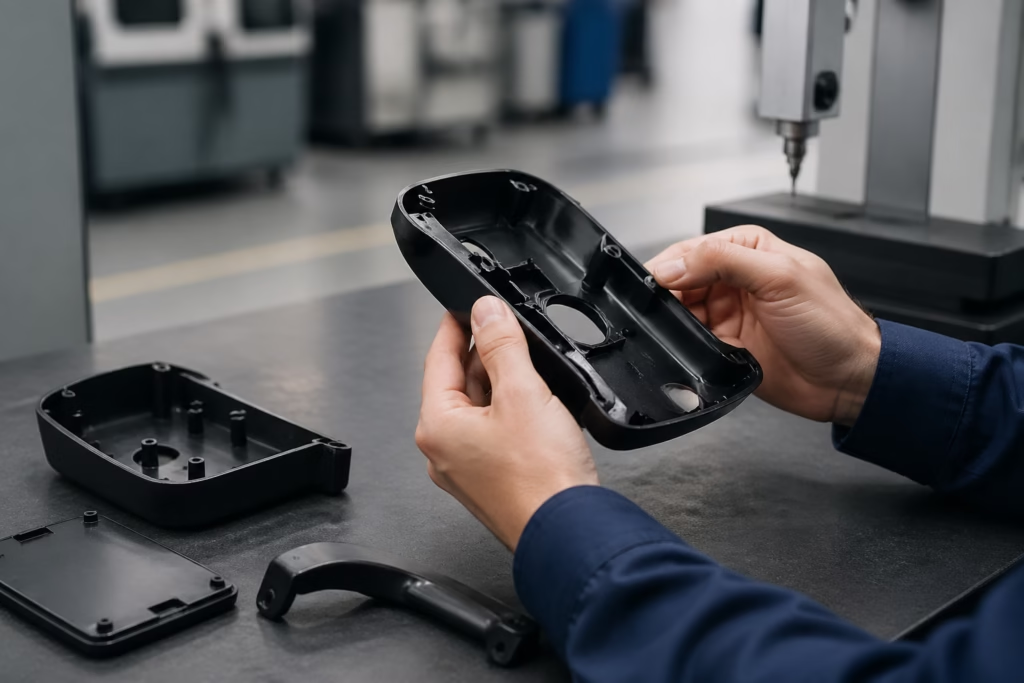
Pure PC can also be used for attractive parts, but the finish may depend more heavily on mold quality, processing control, and the specific grade. If a product must look premium with less post-processing effort, PC/ABS is frequently the more practical option.
That said, appearance should not override all other requirements. A visually good housing that warps, softens, or cracks under real service conditions still creates a product risk. The best choice is the one that balances visual quality with long-term functional reliability.
When to choose pure PC
Choose pure PC when the part needs strong impact resistance, better heat performance, and a tough structural feel. It is especially suitable when the housing is more function-critical than appearance-driven, or when the part must keep its shape under mechanical or thermal stress.
Common use cases include protective electronic housings, safety-related covers, internal structural shells, and parts that may be exposed to drops or repeated handling. If the design must prioritize durability over molding convenience, pure PC often makes the most sense.
- High-impact protective housings
- Heat-exposed internal covers
- Parts requiring strong dimensional retention under stress
- Functional components where toughness is the main goal
When to choose PC/ABS
Choose PC/ABS when the part needs a balanced solution: good impact resistance, acceptable heat resistance, easier molding, and a stronger visual finish. It is commonly used for housings that are visible, moderately stressed, and produced at scale.
This alloy is often a good fit for consumer electronics, appliance trims, instrument covers, and other parts where the product team wants a dependable combination of performance and manufacturability. In many cases, PC/ABS reduces the amount of compromise needed between engineering and aesthetics. For teams comparing material families in a broader selection process, PC/ABS and ABS comparison can be useful context.
- Visible housings with cosmetic requirements
- Complex molded parts that need easier processing
- Moderate-heat applications
- Projects where balance matters more than maximum thermal performance
Common mistakes in material selection
One common mistake is choosing only by cost. A lower-cost resin can create higher total cost if it causes warpage, cosmetic defects, or early failure. Another mistake is overestimating heat needs and selecting a more demanding resin than the application actually requires.
It is also easy to ignore how the part will be molded and finished. If the material does not suit the mold design, wall thickness, or cosmetic target, the development team may spend more time correcting process issues than building the product. Finally, teams sometimes compare impact values or heat performance in isolation without considering the complete housing system.
In practice, material selection should reflect the full production reality, not just a datasheet headline. That is why Poly Maro often treats resin choice as a combined engineering and manufacturing decision rather than a simple performance ranking.
Practical selection checklist
Use the following questions to narrow down PC vs PC/ABS quickly:
- Does the part need maximum impact resistance?
- Will it see meaningful heat exposure in service?
- Is the part visible enough that surface finish matters?
- Do you need easier molding and more forgiving flow?
- Are dimensional stability and snap-fit control important?
- Is the design more performance-driven or appearance-driven?
If impact and heat are both high priorities, pure PC is often the stronger direction. If the part needs a balanced profile with better cosmetic and processing behavior, PC/ABS is usually the more practical choice.
Final recommendation matrix
| Decision need | Better fit | Why |
|---|---|---|
| Maximum toughness | Pure PC | Better suited to severe impact and demanding service conditions |
| Higher heat resistance | Pure PC | More appropriate when thermal margin is tight |
| Easy molding | PC/ABS | Usually more forgiving in processing and flow |
| Better cosmetic finish | PC/ABS | Commonly preferred for visible housings |
| Balanced performance | PC/ABS | Useful when the application needs a compromise across requirements |
| Harsh functional service | Pure PC | Better when durability is more important than appearance |
In short, choose pure PC when the part is pushed harder by heat or impact, and choose PC/ABS when the product needs a more balanced and production-friendly housing material. For many programs, the right answer comes from matching the resin to the exact service environment, not from selecting the strongest material on paper.
FAQ
Is PC stronger than PC/ABS? Pure PC is generally the better choice when maximum impact resistance is the priority, while PC/ABS is selected more often for balance, appearance, and easier molding.
Is PC/ABS good for heat-resistant housings? PC/ABS can work in many moderate-heat applications, but pure PC is usually preferred when the housing must tolerate higher temperatures for longer periods.
Which material is easier to mold? PC/ABS is usually easier to process because it tends to flow more readily and is often more forgiving in production.
Which material looks better on visible parts? PC/ABS is often favored for visible housings because it usually offers a cleaner cosmetic finish and better paintability.
When should I avoid choosing by cost alone? You should avoid cost-only selection when the part has tight cosmetic requirements, thermal exposure, or impact risk, because the wrong resin can increase total production cost.
Can Poly Maro help compare housing material options? Yes, Poly Maro can support resin selection by reviewing performance needs, processing conditions, and whether a pure PC or PC/ABS approach fits the part better.