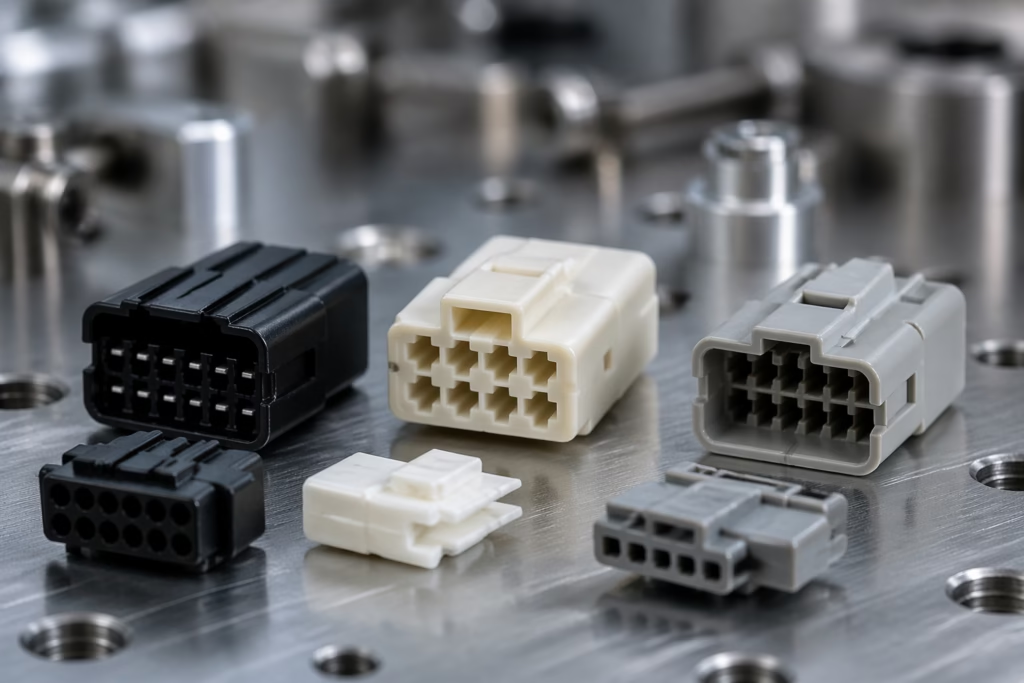
When engineers compare PA66 vs PA12, the real question is usually not which nylon is “better,” but which one matches the project’s load, environment, and tolerance needs. PA66 tends to be favored for higher strength and stiffness, while PA12 is often selected when lower moisture absorption and more stable dimensions matter more than maximum load-bearing performance.
For a broader view of available resin options and material systems, the product overview can help frame nylon selection alongside other engineering plastics.
Project Goals First: What Matters More?
The fastest way to make a good material decision is to rank the project priorities before comparing properties. In many nylon parts, the key trade-off is straightforward: PA66 usually delivers stronger mechanical performance, while PA12 usually offers better dimensional stability in humid or wet conditions.
If a part must carry load, resist deformation, and stay economical, PA66 often deserves attention. If a part must keep tight tolerances, reduce moisture-related swelling, and perform more consistently in changing environments, PA12 may be the better fit.
This is especially relevant in parts with molded fits, snap features, or long service life. A nylon that looks strong on paper can still create issues if it absorbs too much moisture for the application.
PA66 vs PA12 at a Glance

Both materials are polyamides, so they share many characteristics such as toughness, abrasion resistance, and broad processing use. The difference lies in how each one balances strength, moisture sensitivity, and stability.
| Decision Factor | PA66 | PA12 |
|---|---|---|
| Strength and stiffness | Usually higher | Usually lower |
| Moisture absorption | Higher | Lower |
| Dimensional stability | More affected by humidity | Better in humid or wet use |
| Wear and toughness | Good | Good |
| Best-fit priority | Load-bearing performance | Tolerance retention |
From a buying and engineering perspective, the important point is that PA66 and PA12 solve different problems. Choosing the wrong one often creates downstream issues in assembly, fit, or field performance.
Strength Comparison: Why PA66 Is Often Chosen for Higher Load-Bearing Performance
PA66 is commonly selected when a part needs higher tensile strength and stiffness. That makes it a practical option for components that must carry moderate loads, maintain shape under stress, or provide firmer support in structural applications.
In real projects, this often matters for brackets, clips, gears, and mechanical housings where rigidity is more important than long-term tolerance stability in wet environments. PA66 also tends to provide a more robust feel in parts where deformation under load is a concern.
Poly Maro often sees PA66 specified where designers want a balanced engineering nylon with stronger mechanical response and manageable processing behavior. In those cases, strength requirements usually outweigh moisture sensitivity concerns.
If your design priorities are more load-driven than environment-driven, a dedicated PA66 material line is usually the right starting point for evaluation.
Low Moisture Nylon Advantage: Why PA12 Excels in Dimensional Stability
PA12 is often the better choice when moisture uptake could disturb part geometry. Lower moisture absorption helps it maintain dimensions more consistently after molding and during service, which is valuable for precision assemblies and parts with tight tolerances.
This becomes important in cable accessories, protective components, fluid-adjacent parts, seals supports, and housings that must remain stable after exposure to humidity or repeated environmental cycling. A material that changes less with moisture can reduce assembly variation and field complaints.
PA12 also tends to be attractive when parts are exposed to intermittent wet conditions or when storage and use environments vary significantly. For this reason, it is often selected where dimensional predictability matters as much as mechanical performance.
For teams comparing nylon families more broadly, the PA6 vs PA66 vs PBT comparison can help clarify when nylon is the right family and when a different resin may fit better.
Material Behavior in Different Environments
Environment can change the practical behavior of both nylons. Heat, humidity, chemicals, and long-term aging all affect how a part performs after molding.
PA66 usually handles heat well for many engineering uses, but its moisture response can alter stiffness and dimensions over time. In contrast, PA12 often keeps a more stable geometry in humid conditions, though it may not match PA66 in raw strength.
Chemical exposure should also be reviewed carefully. Nylon families can respond differently depending on the fluid, temperature, and exposure duration. That is why material selection should always be tied to the actual service environment, not only the datasheet headline values.
When the environment is uncertain or multi-factor, technical support can be valuable for checking processing conditions, tolerance implications, and likely performance trade-offs before the tool is finalized.
How Moisture Affects Performance
Moisture absorption is one of the biggest reasons PA66 vs PA12 decisions matter in real projects. As nylon absorbs moisture, it can swell, soften slightly, and change mechanical behavior. That may reduce stiffness while also shifting critical dimensions.
For molded parts, this can create tolerance drift, warping concerns, and assembly variation. A snap-fit that works at shipping may behave differently after conditioning. A gear that is dimensionally accurate at first may change after environmental exposure.
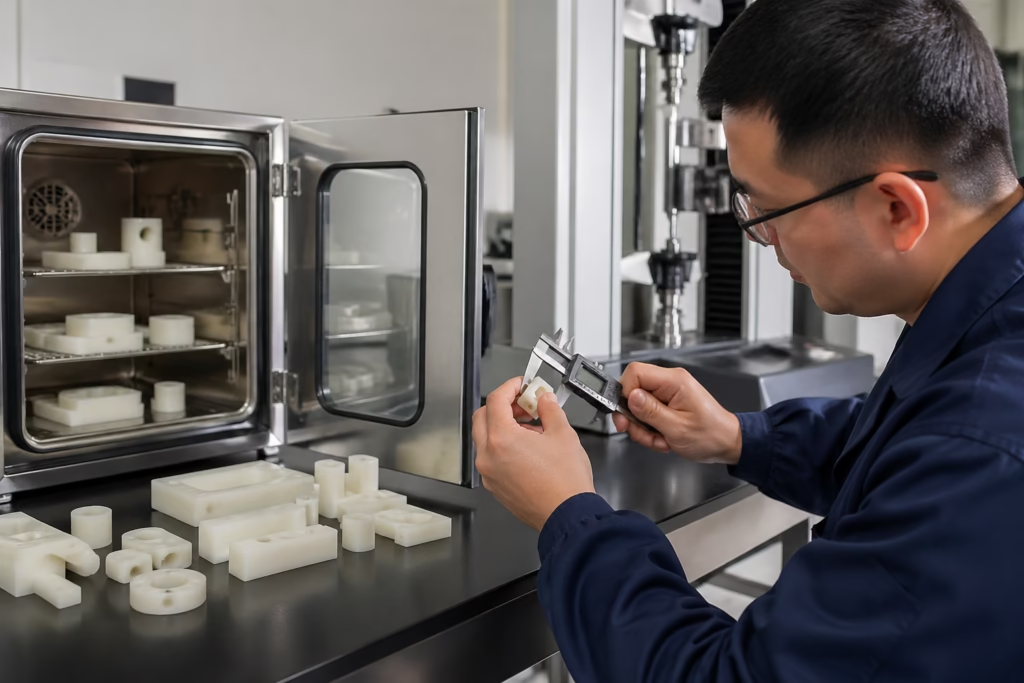
PA66 is more vulnerable to this kind of change than PA12. That does not make PA66 unsuitable; it simply means designers should account for conditioning, tolerance stack-up, and expected service humidity.
PA12’s lower moisture uptake makes it easier to hold dimensions in many real-world situations, especially where the part must remain predictable after storage, transport, or outdoor use.
Typical Application Scenarios
The application usually reveals the right material choice faster than a property table. PA66 is often preferred for load-bearing components, while PA12 is often preferred for parts where environmental stability is more important than maximum strength.
PA66 is often a better fit for:
- structural clips and brackets
- gear components with higher load demands
- rigid housings
- reinforced mechanical parts
- general engineering parts needing stronger stiffness
PA12 is often a better fit for:
- cable accessories
- fluid-exposed components
- precision housings
- parts with tight dimensional tolerances
- components used in humid or variable environments
For projects where nylon is one candidate among several engineering plastics, it can also help to review related material families such as PA6 to understand where the balance of cost, strength, and processing may shift.
Recommended Parts by Use Case
Part geometry and function strongly influence the right nylon selection. A thin snap feature, for example, may need a different balance of flexibility and moisture stability than a thick structural bracket.
For gears, PA66 often makes sense when stiffness and load transfer matter. For cable clips and routing accessories, PA12 can be more attractive when the part must keep fit and flexibility after exposure to humidity.
For housings, the decision often depends on whether the housing is load-bearing or tolerance-critical. For fluid-exposed or semi-exposed components, PA12 may reduce the risk of geometry change over time.
If the project also needs broader material comparison across engineering plastics, the PA6 vs PA66 vs PBT comparison can help narrow the shortlist by functional requirement rather than by resin family alone.
Selection Checklist for Projects
A practical selection process should answer five questions before choosing between PA66 and PA12:
- How much load will the part carry?
- Will humidity or water exposure affect dimensions?
- How tight are the tolerances and fit requirements?
- Will the part face heat, chemicals, or long service life?
- Is cost-performance balance more important than maximum property retention?
If strength and stiffness are the dominant needs, PA66 usually stays in the lead. If dimensional stability and low moisture uptake are more important, PA12 often becomes the safer choice. In many cases, the right answer depends less on a single property and more on how several requirements interact.
For complex programs, working with a material supplier that understands processing and modification logic can reduce trial-and-error. That matters especially when the part needs reinforcement, color matching, or custom property tuning.
Final Decision Guide
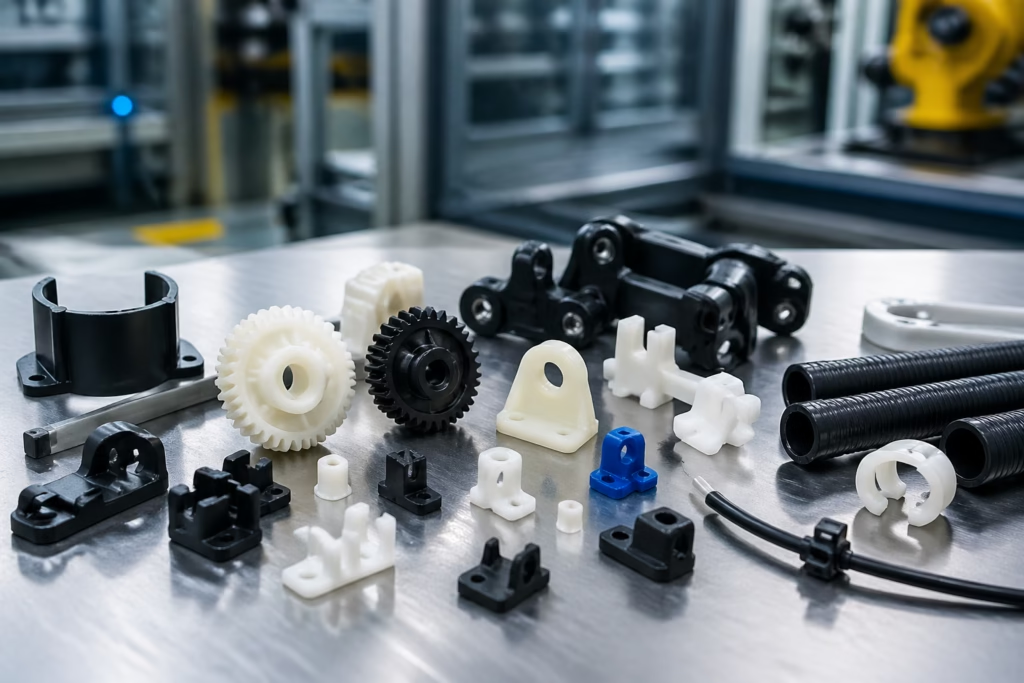
Choose PA66 when the project needs higher load-bearing performance, stronger stiffness, and a more economical engineering nylon for structural use. Choose PA12 when dimensional stability, low moisture absorption, and consistent fit in variable environments are more important.
In short, PA66 is often the strength-first option, while PA12 is often the stability-first option. The best choice is the one that protects the part’s real function after molding, during assembly, and throughout service life.
For teams balancing design, processing, and procurement priorities, Poly Maro usually recommends evaluating the actual use environment first, then matching the resin to the performance risk that matters most.
FAQ
Is PA66 stronger than PA12?
In many common engineering uses, PA66 is chosen for higher strength and stiffness, while PA12 is selected more for stability and lower moisture absorption.
Is PA12 better for humid environments?
Yes, PA12 is often preferred when humidity or moisture exposure could change dimensions or affect fit over time.
Which nylon is better for tight tolerances?
PA12 is usually the safer choice when dimensional stability is more important than maximum load-bearing performance.
Can PA66 still work in outdoor applications?
Yes, but designers should account for moisture absorption, property changes, and tolerance drift during the full service life.
Which material is better for gears?
PA66 is often chosen for gears when higher stiffness and load transfer are priorities, while PA12 may be preferred in lower-load or moisture-sensitive designs.
How should I decide between PA66 and PA12 for a new project?
Start by ranking load, humidity exposure, tolerance requirements, and cost targets, then choose PA66 for strength or PA12 for moisture-related stability.