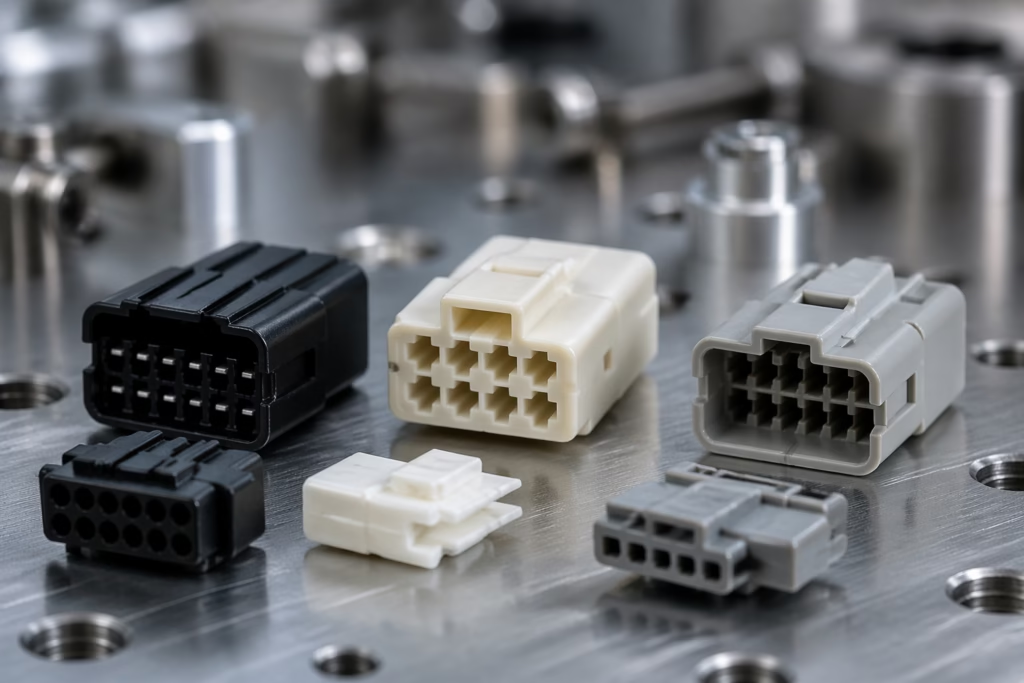
When teams compare PP vs PA for cost-sensitive structural parts, the real question is usually not which resin is “better” in theory. It is whether the part can still meet load, heat, and dimensional targets at the lowest possible material cost. In many projects, PP is the right starting point. In others, the performance gap is large enough that PA becomes the safer choice.
For readers comparing material options in a more focused way, a useful next step is to review analyze the content of this https://polymaro.com/products/, since it helps connect this selection discussion with the broader material scope and manufacturing perspective offered by Poly Maro.
This guide explains the practical upgrade threshold from PP to PA for structural plastic selection. It is written for engineers, sourcing teams, and product developers who need a cost effective engineering plastic, not a theoretical material lecture.
PP vs PA: Why This Decision Comes Up So Often
PP and PA sit in a common decision zone for molded structural parts. Both are widely used, both can be processed efficiently, and both can be adapted with fillers or reinforcements. Yet they behave very differently once a part has to carry load, survive heat, or hold shape over time.
PP often wins the early screening stage because it is low cost, light, and easy to process. PA enters the picture when the part starts to move from “shape only” to “shape under stress.” That is where material preference stops mattering and performance risk starts driving the decision.
What buyers and engineers are really balancing
The decision is usually a trade-off among four things: cost, stiffness, durability, and manufacturability. Lower resin cost does not always mean lower total cost if the part warps, creeps, or fails early. On the other hand, switching to PA too soon can raise cost without adding real value.
Why structural parts need a different selection mindset
A cover or trim piece can tolerate more variation than a bracket, clip, mount, or housing rib. Structural parts need enough stiffness and stability to keep the assembly working as designed. That means the selection logic must focus on service conditions, not just resin family reputation.
What Structural Parts Actually Need to Do

Before comparing PP vs PA, define the job the part must do. Many selection mistakes happen because teams look at the resin first and the duty cycle second.
Load-bearing and stiffness
If the part supports weight, clamps another component, or holds alignment, stiffness matters as much as strength. A resin that looks acceptable in a datasheet may still deflect too much in the real part geometry.
Impact resistance
Some parts see sudden drops, assembly snaps, or repeated contact loads. In those cases, impact resistance is more important than high static strength alone. The shape, wall thickness, and cold-temperature behavior all matter here.
Dimensional stability
For clips, mounts, and fitting features, dimensional change can be a failure mode by itself. If the part grows, shrinks, warps, or absorbs moisture in a way that changes fit, the assembly may no longer close or lock correctly.
Service temperature
Heat is one of the clearest separators in PP vs PA selection. A part that looks fine at room temperature can soften, creep, or lose load retention once the service temperature rises.
Long-term reliability
Short-term appearance can hide long-term trouble. A part may pass a one-time load test but still fail after weeks or months of creep, vibration, humidity, or thermal cycling. That is why structural plastic selection must consider the full life of the product.
PP as the Cost-Effective Baseline Material
PP is often the baseline choice when the project is cost driven and the part is not heavily loaded. For many applications, it delivers enough performance at a very attractive price point.
Why PP is often the default option
PP is widely available, light in weight, and generally easy to mold. Its processing window is familiar to many converters, which helps reduce setup friction. For large-volume parts, that simplicity can matter as much as raw material cost.
Main advantages of PP
- Low density, which helps reduce part weight
- Low material cost compared with many engineering plastics
- Good processability in injection molding and related methods
- Useful chemical resistance in many everyday environments
- Flexible design options for walls, ribs, and living features
Where PP usually works well
PP is often a good fit for low-load housings, covers, guards, simple brackets, clips, and non-critical structural components. It is especially attractive when the part is not exposed to high heat and does not need tight dimensional control after long service.
Where PP starts to struggle
PP’s limits become visible when the part must stay rigid under load, tolerate elevated temperatures, or retain fit in a demanding assembly. It can also become less predictable when the design depends on very stable dimensions or strong long-term load retention.
In many projects, this is where teams begin comparing PA6 for tougher structural parts against PP. The point is not to upgrade automatically, but to check whether the performance gap is large enough to justify the added cost and processing changes.
When PA Becomes Necessary
PA becomes necessary when PP can no longer protect the function of the part. The question is not whether PA is stronger in a general sense. It is whether the application needs the extra performance enough to offset the trade-offs.
Signs that PP is no longer enough
If the part bends too much, loses shape under heat, shows creep over time, or fails to maintain an assembly fit, PP may no longer be the safe choice. These are all signs that the design has crossed into a more demanding structural range.
How PA changes the performance picture
PA is often chosen for higher stiffness, better strength, improved wear resistance, and better heat performance. That makes it useful for structural parts that do more than simply hold a shape. It is frequently selected when the part must carry load, resist repeated motion, or stay reliable under tougher service conditions.
The value of reinforced PA grades
Reinforced PA grades are often used when the part needs even more stiffness and better load retention. Glass fiber reinforcement, for example, can help a design hold geometry better under stress. The trade-off is that reinforcement usually raises processing sensitivity and can affect surface quality and dimensional behavior.
For parts that need both stiffness and heat resistance, PA66 when stiffness and heat matter is often part of the evaluation. This matters most when the part is no longer a simple support piece and starts behaving like a true load-bearing component.
What changes when you upgrade to PA
The upgrade is not free. PA usually brings higher material cost, moisture sensitivity, and more careful processing needs. It may also change shrinkage and dimensional response, which means the mold and assembly design may need to be reviewed again.
The Key Decision Factors: Absorption, Rigidity, and Heat Resistance
Three questions usually decide the PP vs PA debate faster than anything else: does moisture matter, does stiffness matter, and does heat matter?
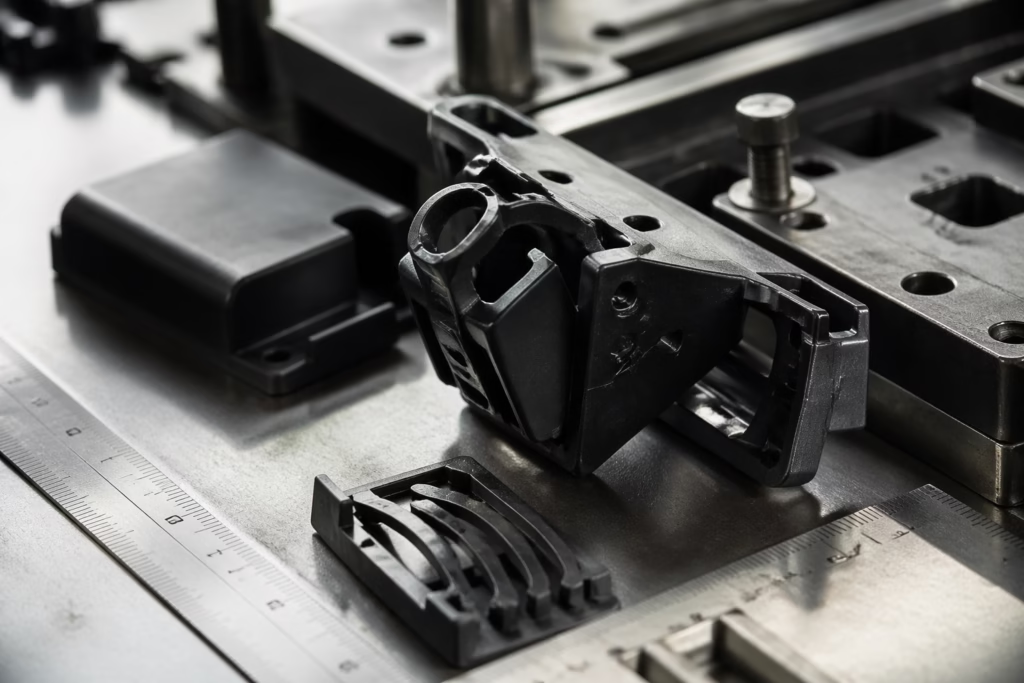
Moisture absorption and dimensional change
PA absorbs moisture more than PP. That can be a problem or a feature depending on the part. If humidity changes the part’s size or stiffness in a way that affects tolerance, fit, or function, the design must account for it. If the environment is humid but the part is built with that behavior in mind, PA can still work well.
When humidity becomes a selection issue
Humidity becomes important when the part has narrow fit windows, precision clip engagement, or stable assembly requirements. A small dimensional shift can turn into a real system issue. That is why moisture should be treated as a design variable, not a side note.
Rigidity and load retention
For structural plastic selection, stiffness is often the first property people notice and the first one they underestimate. A part can be strong enough on paper but still feel weak in the assembly if it deflects too easily. If load retention matters, the resin must hold its shape for the full service life, not just the first test cycle.
This is also where PBT for stable, cost-aware designs may enter some discussions as a reference point for stable, dimension-focused parts. Even when PBT is not the final choice, it can help teams clarify whether the real need is stability, stiffness, or temperature resistance.
Heat resistance and thermal cycling
Heat is often the tipping point. If the part sits near a motor, power source, engine bay, or other warm zone, PP can become risky much sooner than expected. Thermal cycling can also reveal weakness over time, especially where a part alternates between hot and cool states and slowly loses its fit or shape.
Secondary factors that can decide the outcome
- Creep under constant load
- Fatigue from repeated flexing
- Impact behavior in cold conditions
- Wear at moving contact points
- Long-term reliability in changing environments
How to Decide Whether PP or PA Makes More Sense
The best decision process is simple: start with the part duty, then test the risks, then compare the cost of failure with the cost of upgrade.
When PP usually stays the better choice
If the part is low-load, cost-driven, and dimensionally forgiving, PP usually remains the better option. It is often the most practical cost effective engineering plastic when the design can accept moderate performance and the assembly has some tolerance for variation.
When PA is worth the upgrade
If the part carries meaningful load, must stay rigid, works near heat, or needs better wear and long-term stability, PA may justify the extra cost. In those cases, the material cost difference is often smaller than the cost of rework, redesign, warranty exposure, or field failure.
A simple selection checklist
- Does the part carry a real structural load?
- Will it face heat above normal room conditions?
- Does dimensional change affect fit or function?
- Will the part see repeated flexing or impact?
- Is long-term load retention critical?
- Can the design tolerate moisture-related behavior?
Questions to ask before switching materials
Ask whether the part actually needs the upgrade, or whether the issue can be solved by changing wall thickness, rib design, tolerance strategy, or assembly geometry. If the design can be fixed without changing resin, PP may still be enough. If not, the upgrade to PA becomes easier to justify.
Case-Based Judgment Examples
Real projects rarely fit into neat material charts. These examples show how the decision usually works in practice.
Example: A lightweight cover or bracket
A cosmetic cover or lightly loaded bracket often stays in PP because the part mainly needs shape, low cost, and easy molding. If the bracket is not holding a critical load and the installation zone is not hot, PP is often the efficient answer.
Example: A structural clip or mount
A clip or mount that must hold force over time is a different case. If the geometry is small, the stress is concentrated, and repeated engagement is expected, PA is often more reliable. That is where PP may still mold well but fail in actual service.
For this kind of part, some teams ask Poly Maro for material selection support before freezing the tool design. That step can help confirm whether the real risk is stiffness, heat, moisture, or assembly tolerance.
Example: A part exposed to humidity and heat
This is the hardest case because the answer depends on the balance between temperature, moisture, and fit requirements. PP may stay stable enough if the loads are light. PA may be the safer option if the part must stay rigid and keep its shape through seasonal or operating changes.
What these cases teach
The upgrade threshold is rarely about one property alone. It appears when multiple demands stack up: load plus heat, or load plus humidity, or stiffness plus long-term reliability. Once those demands overlap, PA often becomes the more defensible material choice.
PP vs PA in Structural Plastic Selection
Here is the practical takeaway for structural plastic selection: PP is the cost-efficient base case, and PA is the performance upgrade when the application proves that the base case is not enough.
| Decision Factor | PP Usually Fits | PA Usually Fits |
|---|---|---|
| Cost pressure | Highest priority | Secondary to performance |
| Load level | Low to moderate | Moderate to high |
| Heat exposure | Limited | More demanding |
| Dimensional stability | Forgiving design | Tighter fit requirements |
| Long-term load retention | Less critical | Important |
| Moisture sensitivity | Often easier to manage | Must be evaluated carefully |
Used correctly, this table is not a universal rulebook. It is a quick filter for deciding where the project sits on the PP vs PA line.
Conclusion: The Best Material Is Not Always the Strongest One
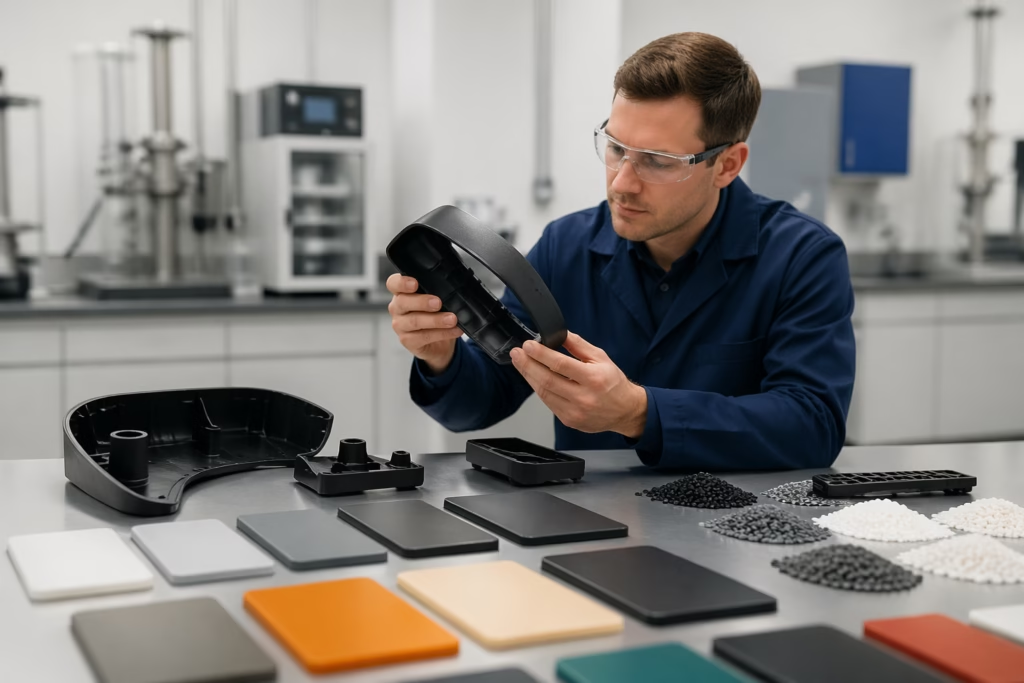
PP is the better choice when the part is cost sensitive, lightly loaded, and forgiving in fit and service conditions. It is often the most practical material for simple structural parts because it keeps the design affordable and easy to process.
PA becomes worth the upgrade when the part has real structural demand, needs better stiffness or heat resistance, or must hold performance over time. Once the risk of deformation, creep, wear, or failure becomes expensive, the higher material cost can be justified.
The core rule is simple: upgrade only when the performance risk is greater than the cost gap. That is the most reliable way to approach PP vs PA for cost-sensitive structural parts.
Frequently Asked Questions
Is PP always cheaper than PA for structural parts?
PP is usually lower in raw material cost, but total part cost depends on processing, scrap, redesign risk, and performance life. A cheaper resin is not always the cheaper final solution if it causes failures or rework.
What is the biggest reason to switch from PP to PA?
The most common reason is that the part needs more stiffness, better heat resistance, or better long-term load retention than PP can reliably provide. In many projects, that is the point where PP stops being safe enough.
Does moisture make PA a bad choice?
Not necessarily. Moisture absorption is a design factor, not an automatic deal-breaker. PA can still be the right choice if the part’s tolerances, geometry, and service environment are designed with that behavior in mind.
Can reinforced PP replace PA in some cases?
Sometimes it can help, especially when the goal is to improve stiffness without changing resin family. But if the application needs higher heat resistance, better wear behavior, or stronger load retention, PA may still be the more reliable option.
How do I know if PP is enough for my part?
Check the load level, temperature, fit sensitivity, and long-term duty. If the part is lightly loaded, not heat exposed, and tolerant of some variation, PP often remains the better and simpler choice.
When should engineering teams ask for support before choosing PP vs PA?
Support is useful when the part is load-bearing, works near heat, has tight tolerances, or must survive for a long service life. In those cases, a quick selection review can prevent expensive tooling or material mistakes.