
Comparative Guide: PA6 vs PA66 vs PBT for Connector and Electrical Component Material Selection
Choosing the right plastic material for connectors, switches, and insulators is critical to ensure performance, reliability, and manufacturability in electrical applications. This comparative guide explores PA6, PA66, and PBT, providing in-depth analysis into their strengths, weaknesses, and practical selection considerations for engineers, procurement specialists, and manufacturers.
Readers evaluating engineering plastics for connectors and electrical components may also want to review Poly Maro’s industrial application portfolio. This page offers a curated view of typical uses, material properties, and application-specific insights to help technical and sourcing professionals assess the suitability, compatibility, and manufacturing expertise for various plastic resin solutions.
Understanding Key Material Criteria for Connector Applications
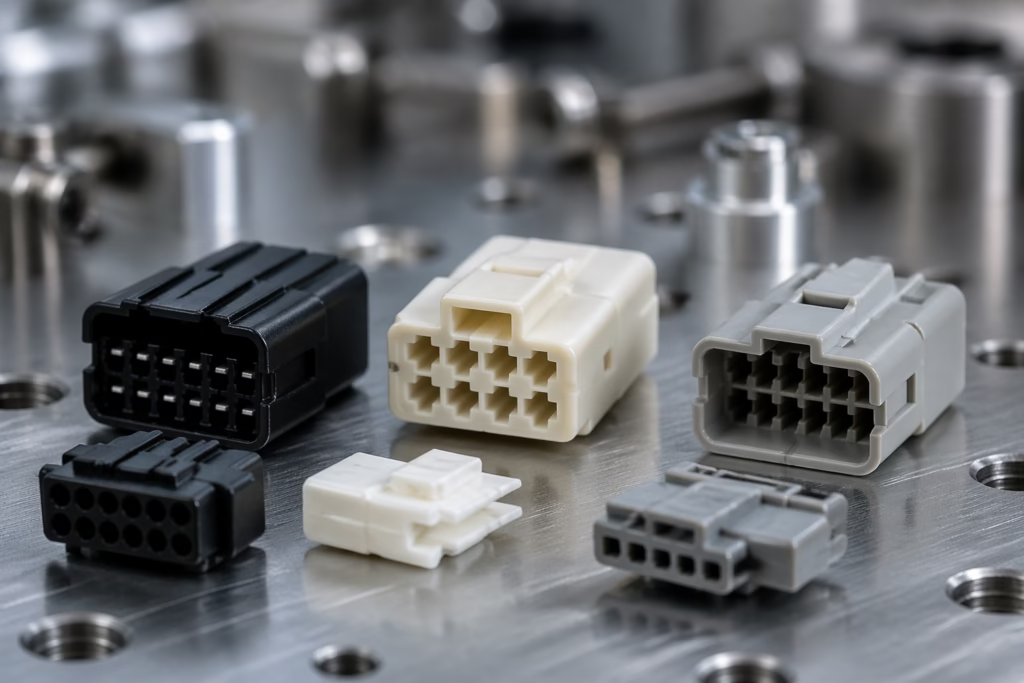
The selection of plastics for electrical connectors, switches, and insulating components requires careful balancing of mechanical strength, electrical insulation, dimensional stability, moisture resistance, and cost-performance logic. Mismatches can lead to quality failures, production issues, or unnecessary expenses.
What Are PA6, PA66, and PBT?
PA6 (Polyamide 6), PA66 (Polyamide 66), and PBT (Polybutylene Terephthalate) are widely used engineering plastics, each offering unique property profiles suited to electrical components. Their formulation flexibility makes them popular choices for molded connector bodies, switch housings, and insulation parts.
PA6: General Properties and Applications
PA6 is known for good toughness, flexibility, and impact resistance. It is cost-effective and easy to process, but is less dimensionally stable than PA66 or PBT, particularly when exposed to moisture.
PA66: General Properties and Applications
PA66 offers higher rigidity, better heat resistance, and stronger dimensional stability compared to PA6. It is often used where precision and tight tolerances are required.
PBT: General Properties and Applications
PBT excels in dimensional stability, moisture resistance, and electrical insulation, making it a preferred material in demanding environments and complex connector designs.
Comparing Mechanical Properties
Mechanical strength impacts connector durability and fit. PA66 typically delivers higher tensile strength and stiffness than PA6, while PBT provides moderate strength but superior long-term dimensional stability.
| Property | PA6 | PA66 | PBT |
|---|---|---|---|
| Tensile Strength | Moderate | High | Medium |
| Flexural Modulus | Medium | High | Medium-High |
| Impact Resistance | High | Good | Moderate |
Dimensional Stability: Why It Matters in Electrical Applications
Dimensional stability refers to a material’s ability to retain shape and size under stress, temperature, and humidity changes. For connectors and electrical housings, this is a critical factor. PA66 and PBT perform notably better than PA6 in maintaining tight tolerances after molding or during use.
Moisture Sensitivity and Environmental Resistance
Moisture absorption can cause swelling, warping, and loss of electrical insulation. PA6 is most susceptible, followed by PA66—though both can be improved with fillers or modifications. PBT features inherently low moisture pickup, making it suitable for high-humidity or outdoor installations.
Electrical Properties: Insulation and Breakdown Resistance
PA66 and PBT generally offer better electrical insulation performance than PA6. PBT, in particular, maintains dielectric strength even in challenging environments, which is important for avoiding electrical failures or shorts in compact connector designs.
Heat Resistance and Thermal Performance
Elevated temperatures can affect connector function and longevity. PA66 withstands higher continuous temperatures compared to PA6 or PBT, making it suitable for demanding applications or those near heat-generating components.
Flame Retardancy Requirements
Flame-retardant grades are often required in electrical components. All three materials can be formulated to meet UL94 standards, but PBT’s chemistry responds well to flame-retardant additives with minimal impact on mechanical and electrical properties.
Engineering Plastic Solutions for Electrical Components
For expanded options and ready-to-use compounds, Poly Maro’s engineering plastic solutions page offers a comprehensive portfolio, including PA6, PA66, and PBT resin grades tailored for connector manufacturing and electrical part production.
Processing Considerations: Moldability and Part Quality
PA6 and PA66 require higher processing temperatures than PBT and are sensitive to moisture prior to molding. PBT offers easier flow, shorter cycle times, and less drying, making it favorable in high-volume production.
Cost and Supply Chain Factors
PA6 is typically lowest in cost and most widely available. PA66 is slightly higher priced due to tighter tolerances and performance profile. PBT often commands a premium, justified by its superior dimensional and environmental properties.

Table: PA6 vs PA66 vs PBT at a Glance
| Feature | PA6 | PA66 | PBT |
|---|---|---|---|
| Cost | Low | Medium | High |
| Dimensional Stability | Moderate | High | Excellent |
| Moisture Resistance | Poor | Fair | Excellent |
| Electrical Insulation | Good | Better | Best |
| Processing | Drying Needed | Drying Needed | Low Drying |
Material Selection Logic: When to Choose PA6, PA66, or PBT
Material selection depends on application context and performance targets. PA6 is suitable for cost-sensitive designs with moderate requirements. PA66 serves well in precision connectors requiring higher stability and performance. PBT excels in scenarios where dimensional stability, moisture resistance, and electrical insulation are paramount.
Connector Application Scenarios: Matching Material to Function
- PA6: Budget-focused connectors, moderate insulation parts
- PA66: Automotive electrical connectors, industrial switches
- PBT: High-density connectors, outdoor electrical housings
Common Selection Mistakes and How to Avoid Them
Overlooking moisture sensitivity of PA6, misjudging tolerances, or underestimating cost impact of PBT are frequent pitfalls. Considering end-use environment, fit, and assembly requirements is crucial for optimal results.
Material Selection Guidance for Buyers and Engineers
For detailed advice, Poly Maro’s material selection guidance resource gives practical recommendations, troubleshooting tips, and technical support for resin choice, processing adjustments, and project requirements.
Impact of Fillers and Modifiers
Glass fiber, mineral fillers, and flame-retardant packages can tailor PA6, PA66, and PBT for specific applications. However, changes in mechanical or flow properties may affect moldability and part performance.
Role of Virgin vs. Recycled Resin
Virgin resins guarantee consistent properties, while recycled options support sustainability but may introduce variability. Poly Maro works with both, offering blends based on buyer priorities and application risk profiles.
Customization and Technical Support from Manufacturers
Material customization—whether color, additives, or reinforcement—requires manufacturer insight and support. Poly Maro’s plastic pellets manufacturer capabilities include formulation development and process support for innovative connector projects.
Certification and Compliance in Electrical Applications
Electrical grade plastics often target compliance with UL, RoHS, and other standards. Proper documentation and traceability should be established with the resin supplier. Request technical data sheets and certifications as part of the sourcing process.
Poly Maro’s Company Background as a Professional Resin Supplier
Poly Maro’s company background as a professional resin supplier details decades of engineering plastic expertise and technical support for electrical and connector sectors, ensuring alignment with industry performance and compliance requirements.
Comparative Guide: PA6 vs PA66 vs PBT—Summary of Findings
PA6, PA66, and PBT each offer unique advantages. Cost, dimensional stability, moisture resistance, and electrical insulation should guide selection decisions. Manufacturers and engineers must assess application risk, processing needs, and compliance concerns. When matching resin to function, always weigh the trade-offs between price, performance, and design goals.
Final Recommendations: Making Confident Decisions
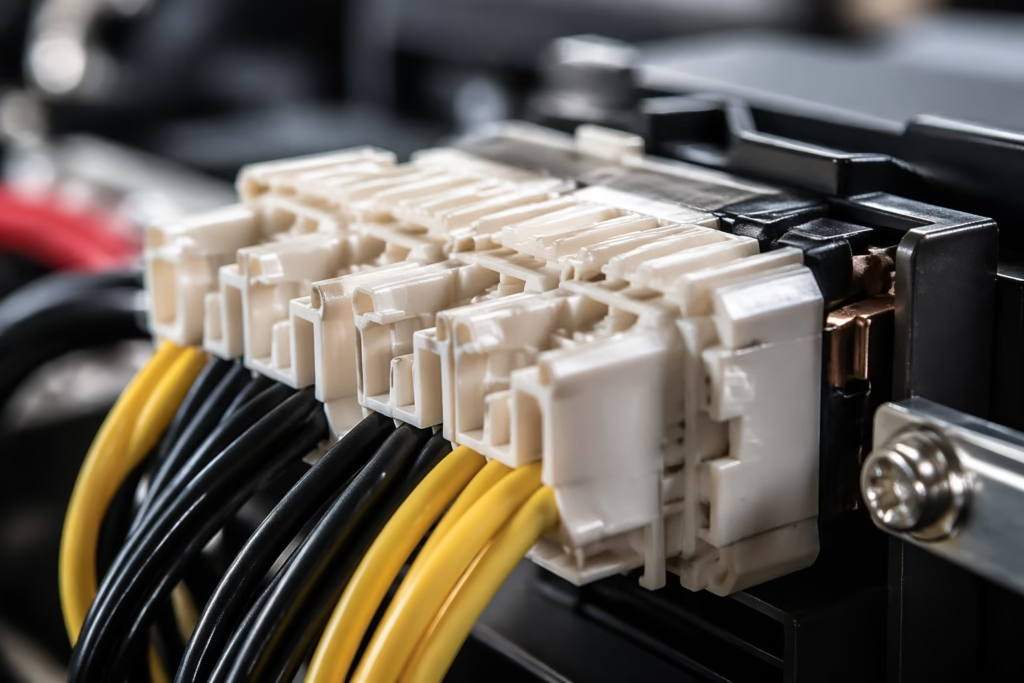
Careful material selection reduces risk and optimizes product quality. For complex scenarios or new connector designs, partnering with an experienced manufacturer like Poly Maro provides access to custom formulation, technical support, and a full portfolio of engineering plastics suited to electrical sector requirements.
Frequently Asked Questions
How do PA6, PA66, and PBT differ in dimensional stability?
PA66 and PBT both offer high dimensional stability, with PBT excelling under fluctuating humidity and temperature. PA6 is more prone to swelling and warping, especially in moist environments.
Which material provides the best moisture resistance for connectors?
PBT is the most moisture-resistant, maintaining shape, strength, and electrical performance even in humid or outdoor applications. PA6 absorbs the most water, while PA66 performs moderately.
Is flame retardancy easily achieved in PA6, PA66, and PBT?
All three can be formulated for flame retardancy, but PBT responds especially well to additives, preserving key properties after modification. Consult your manufacturer for grade recommendations.
Are PA6, PA66, or PBT suitable for high-temperature electrical applications?
PA66 performs best at elevated temperatures, followed by PBT. PA6 should be limited to moderate heat settings unless heavily modified.
What should engineers consider when selecting resin for tight-tolerance connectors?
Dimensional stability is critical. PBT and PA66 are preferred for precision parts, while PA6 requires careful assessment and possibly reinforcing fillers to control shrinkage.
Can recycled content be used in connector plastics without compromising quality?
Recycled resins can be used, but property consistency may vary. Virgin material is recommended for critical or high-performance applications.


