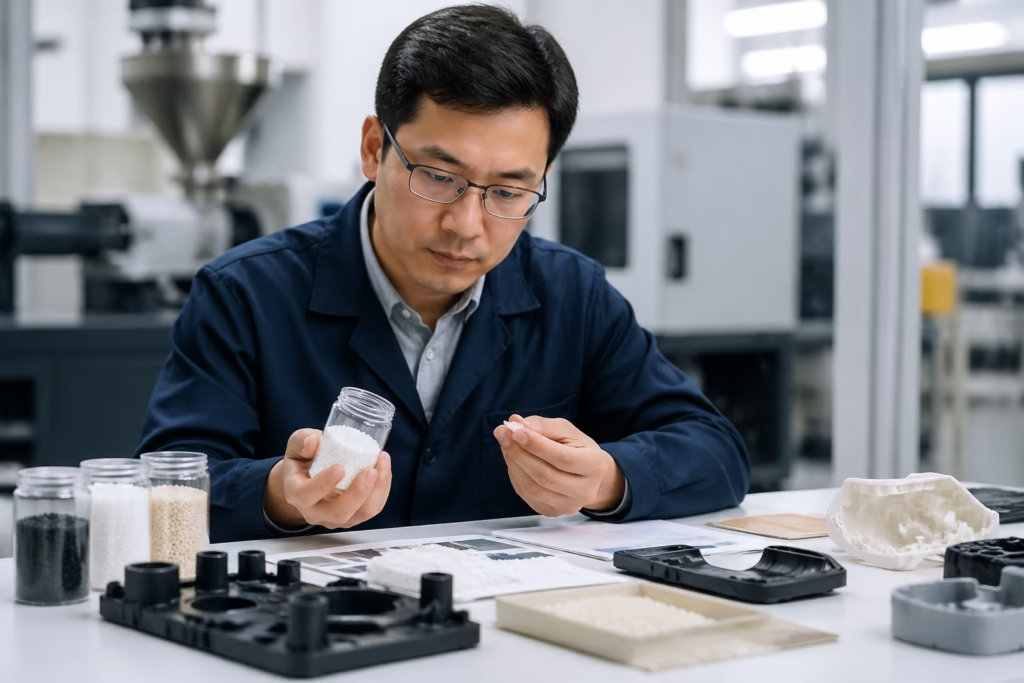
Metal replacement plastic can solve real problems in weight, corrosion resistance, and part consolidation, but long-term reliability depends on more than replacing metal with a lighter polymer. Engineers and procurement teams need to evaluate how the part behaves after months or years of load, heat, vibration, and exposure.
metal replacement plastic solutions are most dependable when material selection matches the real duty cycle, not just the initial mechanical target.
In practice, the best results come from treating plastic replacing metal as a structural design decision, not a simple material swap. That means checking stress levels, temperature range, assembly method, and the environment the part will actually see in service.
Why industries move from metal to plastic
Teams usually adopt a metal replacement plastic to reduce mass, improve corrosion resistance, simplify molding, or combine several components into one part. Those benefits can be important in industrial equipment, appliances, mobility systems, electrical housings, and many consumer products.
The challenge is that a plastic substitute for metal does not fail like metal. It may creep, relax, embrittle, absorb moisture, or lose dimensional control gradually. That is why the selection process should include both performance targets and aging risk.
For component families that need broader material matching, engineering applications can help narrow whether a reinforced resin, filled compound, or unfilled grade is the right direction.
What makes a structural plastic substitute reliable long term?
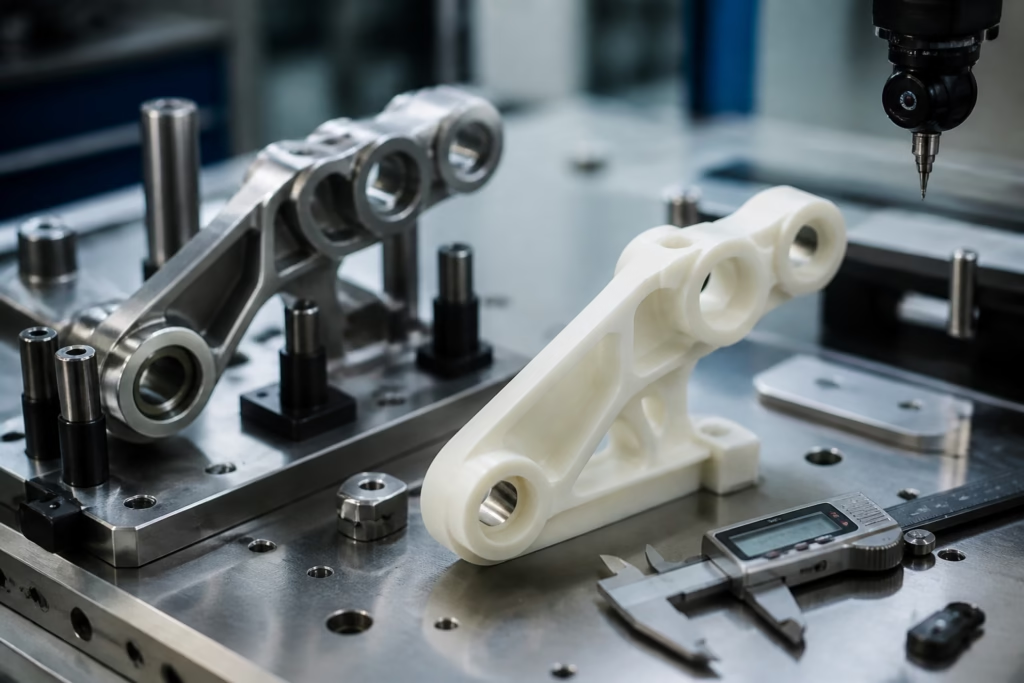
Reliable performance starts with the application envelope. A structural plastic substitute must be evaluated under sustained load, repeated cycles, heat exposure, chemical contact, UV light, and assembly conditions. A part that looks strong in a short test can still drift out of tolerance over time.
One reason Poly Maro often frames material selection around use conditions is that resin behavior changes with geometry, thickness, reinforcement, and processing history. The same polymer family can behave very differently in a thin clip, a thick housing, or a ribbed bracket.
Buyers should also consider safety margin. If a design only works when the polymer is near its short-term limit, it is not yet a dependable replacement for metal. Long-term reliability needs enough headroom for aging, variability, and real-world misuse.
Risk 1: Creep and stress relaxation under sustained load
Creep is one of the most common failure modes in a metal replacement plastic. Under constant load, the material can slowly deform, even if the stress seems modest at the start. Stress relaxation can also reduce clamp force in threaded, snapped, or compressed parts.
This matters in housings, clips, brackets, fasteners, seals, and press-fit features. A part may hold dimensionally after assembly, then loosen over time as temperature and load work together.
Designers should reduce sustained stress where possible, add load paths, increase wall support, and avoid relying on a small snap feature to carry a permanent load. For higher-performance resin choices, PA66 materials are often evaluated when heat and mechanical demand are both important, though the exact grade still depends on moisture and load conditions.
How to reduce creep risk
- Lower long-term stress instead of only checking initial strength.
- Increase section thickness or add ribs to spread load.
- Avoid sharp stress concentrators at threads and snap features.
- Test at the expected service temperature, not only room temperature.
Risk 2: Fatigue and crack growth from repeated cycling
Many parts do not fail from one large overload. They fail from small, repeated cycles. Vibration, assembly and disassembly, shock loading, and repeated flexing can create crack growth in a plastic replacing metal part even when static strength looks acceptable.
The risk is higher when the design includes weld lines, knit lines, corners, holes, or areas with poor fiber orientation. Parts that must flex repeatedly, such as latches or mounting features, need a fatigue-aware design from the start.
For those cases, material choice and processing history are closely linked. technical support is useful when a design needs help balancing stiffness, impact resistance, and fatigue durability without overbuilding the part.
What to watch during fatigue evaluation
- Repeated deflection at the same location.
- Microcracks near notches or gates.
- Loss of retention force after cycling.
- Impact damage that becomes a crack starter.
Risk 3: Thermal aging and property drift
Heat can change a metal replacement plastic long before the part visibly fails. Elevated temperature may reduce stiffness, accelerate oxidation, or amplify creep. Repeated hot-cold cycles can also create stress from different expansion rates in the part and its mating materials.
This risk is especially important in electrical enclosures, under-hood assemblies, lighting components, and equipment near motors or heaters. A material that performs well at room temperature may become too soft, too brittle, or too dimensionally unstable after thermal aging.
If a design must hold shape at elevated temperature, resin family alone is not enough. The right grade, reinforcement level, and part geometry all matter. In many product lines, PBT grades are considered when electrical performance, dimensional control, and moderate thermal resistance need to work together.
| Thermal issue | Typical effect | Design response |
|---|---|---|
| Continuous heat | Softening and creep | Use a higher heat-rated grade and reduce load |
| Thermal cycling | Cracking or loosened fits | Allow tolerance for expansion and contraction |
| Hot spots | Localized property loss | Review part geometry and nearby heat sources |
Risk 4: Environmental degradation from moisture, chemicals, and UV
Environmental exposure is often underestimated because the part may look fine for a long time before degradation becomes measurable. Moisture can plasticize some resins, chemicals can attack surfaces or cause stress cracking, and UV exposure can embrittle exposed parts.
Real-world contamination adds another layer. Oils, cleaning agents, dust, and process fluids can alter the surface or accelerate aging. This is why the same metal replacement plastic may be suitable in one environment and unsuitable in another.
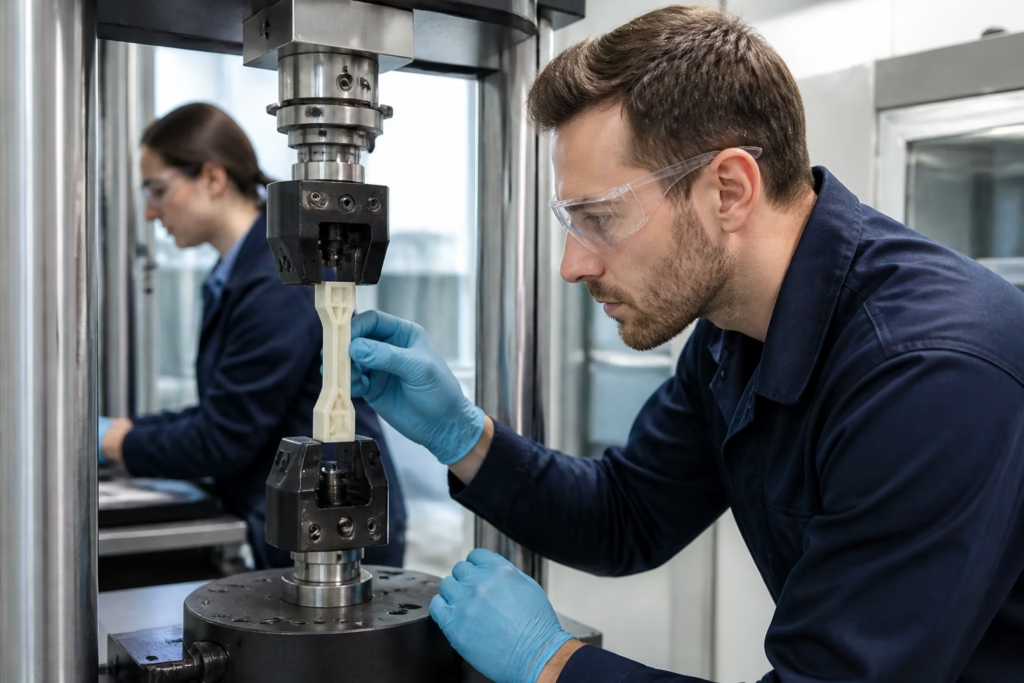
When the environment is harsh or variable, selection should include the possibility of protective pigments, stabilizers, coatings, or a different resin system altogether. It is also wise to review the full operating environment rather than only the nominal one.
Environmental checks that matter
- Moisture uptake after storage and service.
- Chemical contact from cleaners, lubricants, or process media.
- UV exposure in indoor and outdoor use.
- Stress cracking risk under combined load and chemistry.
Risk 5: Dimensional instability and tolerance loss
A structural plastic substitute can fail functionally even when it does not break. Small changes in shrinkage, warpage, fiber orientation, or long-term deformation can create fit issues, alignment errors, sealing problems, or assembly difficulty.
This risk is common in precision housings, gears, connector bodies, clips, and parts that mate tightly with metal. Once the part drifts outside tolerance, assembly force, sealing performance, and noise levels can all change.
Design reviews should include gate location, wall thickness uniformity, reinforcement direction, mold cooling, and post-mold conditioning. These process factors are just as important as the polymer family. For teams comparing validation paths, low moisture absorption plastics can be relevant when dimensional stability is the main concern.
How to verify long-term reliability before launch
Long-term validation should combine material screening, prototype testing, and accelerated aging. The goal is not to prove a part is perfect. The goal is to prove it remains functional within acceptable limits over the intended life.
A practical test plan usually includes sustained load testing, vibration testing, thermal cycling, environmental exposure, and dimensional inspection before and after aging. If the part is safety critical or high consequence, testing should be closer to the actual use profile than to a simplified lab condition.
For teams building a custom qualification plan, custom plastic compounds may be the better route when standard grades do not match the exact stiffness, heat, or durability window.
A simple validation sequence
- Define load, temperature, and environment targets.
- Choose the resin family and reinforcement approach.
- Run prototype testing under real or accelerated conditions.
- Inspect for creep, cracking, warpage, and retention loss.
- Confirm that the part still fits and functions after aging.
Which parts are usually suitable, and which are not?
Many parts are good candidates for a metal replacement plastic when the load is moderate, the geometry is complex, corrosion is a concern, or weight reduction has clear value. Examples often include covers, brackets, clips, housings, cable management parts, and structural elements with distributed load.
By contrast, high-load safety-critical parts, heavily worn interfaces, very hot zones, and applications with extremely tight dimensional stability requirements are more difficult. In those cases, a polymer may still work, but only after careful design, testing, and sometimes reinforcement or hybrid construction.
For parts facing surface wear or sliding contact, wear-resistant plastic compounds may be worth comparing against a standard structural grade.
Practical decision checklist
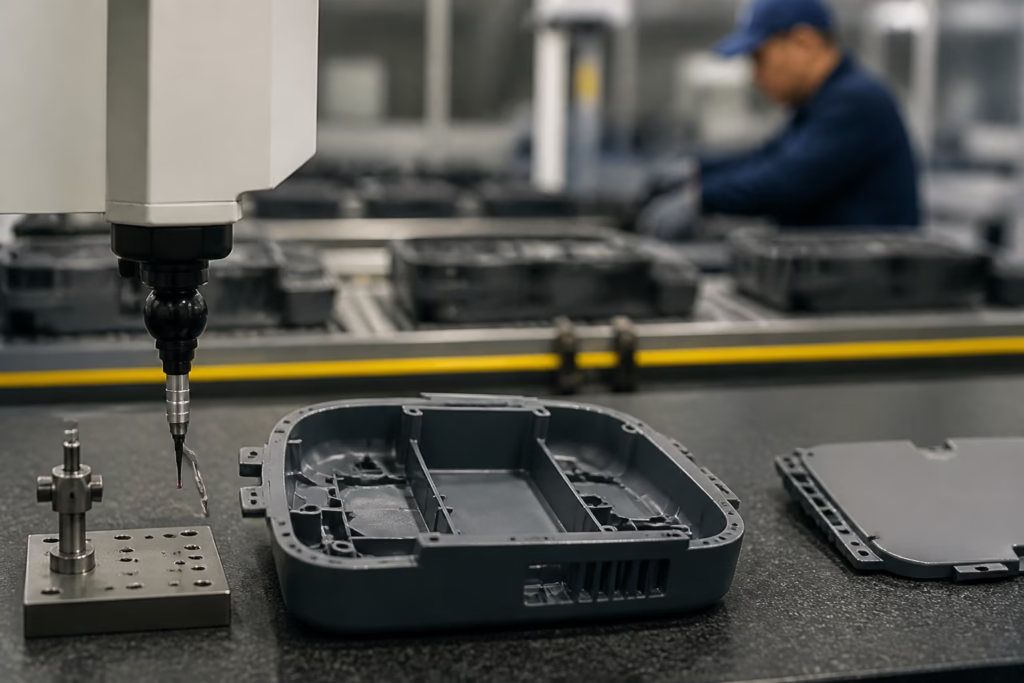
Before approving a metal replacement plastic, ask four questions: Will the part carry load for a long time? Will it see repeated cycling? Will temperature or chemistry change its properties? Will the geometry stay inside tolerance after aging?
If the answer is uncertain, do not assume a direct swap is safe. The better approach is to match the resin, reinforcement, and processing method to the real service condition. That is where a manufacturer-oriented selection process becomes valuable, because material choice and part design must work together.
Where flame exposure is part of the risk profile, flame retardant plastic compounds may also need to be evaluated alongside structural performance.
In short, the most reliable plastic replacing metal projects are the ones that account for aging, not just initial strength. When the team validates creep, fatigue, thermal drift, environmental exposure, and tolerance stability early, the final design is far less likely to create costly surprises later.
FAQ
What is the biggest long-term risk in a metal replacement plastic?
Creep is often the biggest risk because many parts look strong at first but slowly deform under constant load. It is especially important in clips, housings, threads, and clamped joints.
How do you know if a structural plastic substitute will hold up?
You need to test it under the actual load, temperature, and environment it will see in service. Short-term strength alone is not enough to predict long-term behavior.
Can a metal replacement plastic handle vibration?
Yes, in many cases, but fatigue and crack growth must be checked carefully. Geometry, weld lines, and repeated flexing all affect vibration durability.
Why does heat matter so much for plastic replacing metal?
Heat can reduce stiffness, increase creep, and accelerate aging. Thermal cycling can also create stress from expansion differences between parts.
When is dimensional stability the main concern?
It becomes critical in precision housings, tight-fitting connectors, sealing parts, and assemblies with strict alignment requirements. Moisture, shrinkage, and warpage can all affect fit.
What should procurement teams ask before approving a substitution?
They should ask whether the part has a validated load case, environmental exposure profile, and life expectation. If not, the substitution may be premature even if the material cost looks attractive.