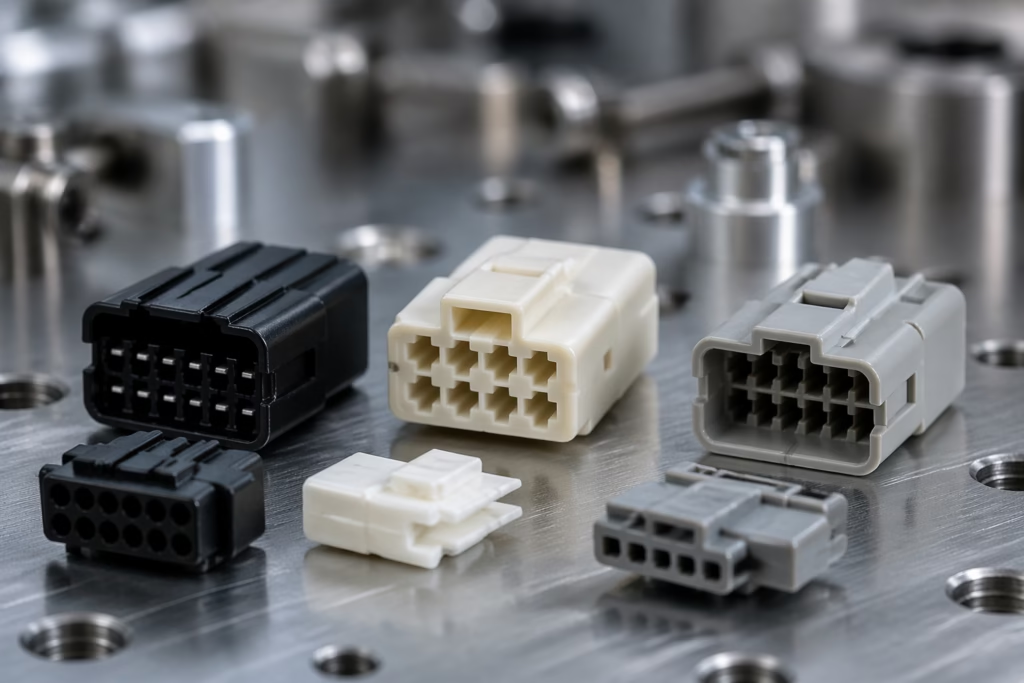
When comparing PA6 vs PA12, the real question is not which nylon is “better” overall, but which one fits the part, the process, and the cost target. PA6 often offers strong mechanical performance at a practical price, while PA12 is usually chosen when lower moisture absorption, better dimensional stability, and easier long-term consistency matter more.
For teams evaluating higher-performance nylon options, the selection process often starts with the target environment and the required balance of strength, stability, and processing window. If your design is trending toward lower water uptake or more demanding service conditions, it can also help to review available PA12 compounds early in the specification stage.
In many sourcing conversations, Poly Maro sees the same pattern: a part may not need the most expensive nylon available if a modified PA6 can meet the performance target with better cost efficiency. That is why a material comparison should always include processing behavior, environmental exposure, and the risk of dimensional change after molding.
What Are PA6 and PA12?
PA6, also called Nylon 6, is a widely used engineering thermoplastic known for a strong balance of toughness, stiffness, and cost-performance value. It is commonly selected for molded parts, functional housings, and mechanical components where strength matters.
PA12, also called Nylon 12, is a lower-moisture-absorption polyamide. It is often used in applications that benefit from better dimensional stability, improved flexibility, and more predictable behavior in humid or chemically exposed environments.
Both are polyamides, but their molecular structures lead to different performance profiles. That difference affects part stability, molding behavior, and the conditions in which each material makes the most sense.
PA6 vs PA12: Quick Comparison Table
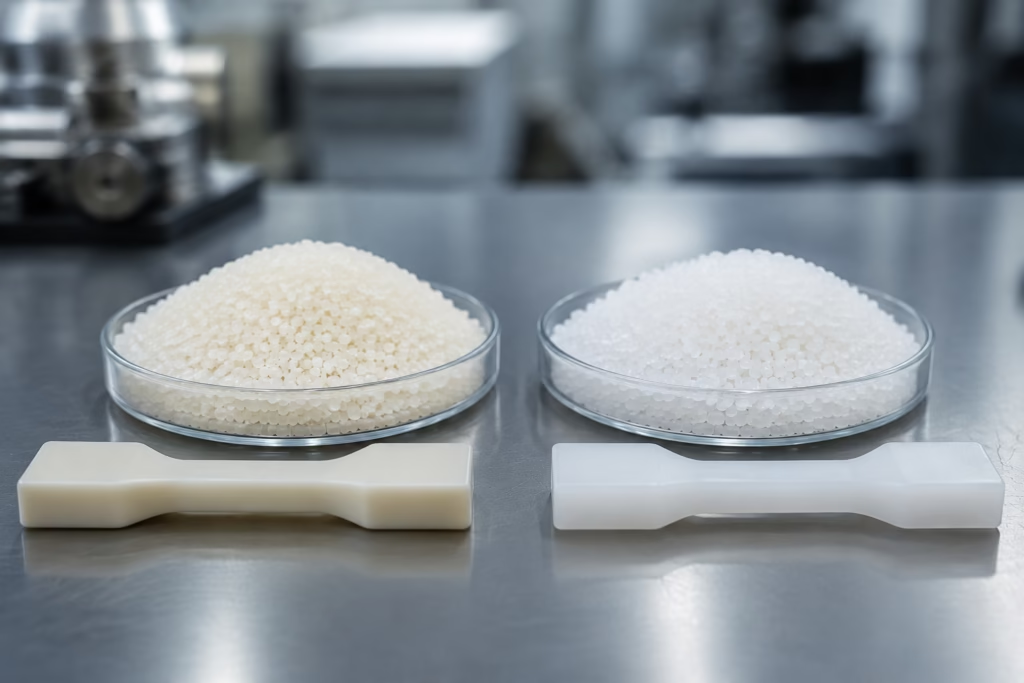
| Attribute | PA6 | PA12 |
|---|---|---|
| Moisture absorption | Higher | Lower |
| Dimensional stability | More affected by humidity | Better in humid conditions |
| Strength and stiffness | Generally higher | Moderate |
| Impact and flexibility | Good, but more rigid | Typically better flexibility |
| Chemical resistance | Good, application dependent | Often stronger in demanding exposure |
| Heat resistance | Good | Good, but often chosen for stability rather than maximum stiffness |
| Cost | Usually lower | Usually higher |
| Availability | Very broad | More specialized |
Key Difference 1: Moisture Absorption and Dimensional Stability
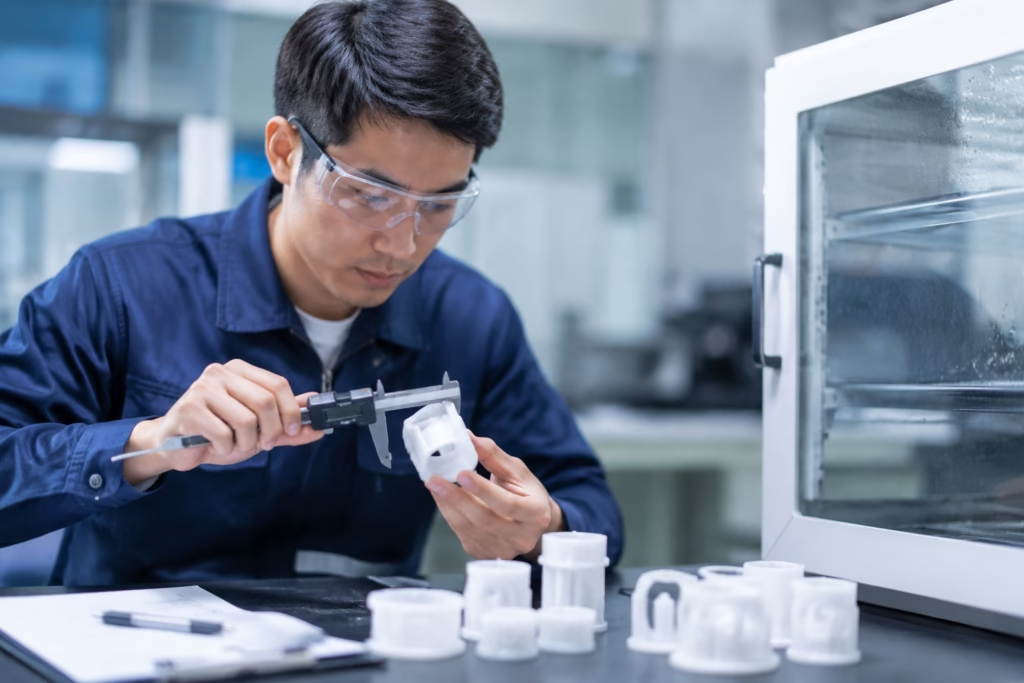
Moisture behavior is one of the biggest reasons buyers compare PA6 vs PA12. PA6 absorbs more moisture from the environment, which can change part dimensions, soften stiffness, and affect tight-tolerance assemblies over time.
PA12 absorbs less moisture, so it tends to hold dimensions better in humid service conditions. This can be important for gears, clips, connectors, fluid-related parts, and precision housings where consistent fit matters more than absolute rigidity.
If your design depends on maintaining fit after exposure to changing humidity, PA12 often reduces risk. If the part can tolerate some conditioning and you need a stronger cost-performance balance, PA6 may still be the more practical choice.
For projects where dimensional control is a top priority, it is worth comparing your material target with PA6 materials as well, because modified grades may narrow the gap in real use.
Key Difference 2: Strength, Stiffness, and Mechanical Performance
PA6 generally delivers higher stiffness and tensile performance than PA12 in many standard grades. That makes it attractive for load-bearing parts, structural components, and molded items that need a firmer feel.
PA12 is usually less rigid but can offer better toughness and flexibility. In dynamic parts, that can be useful because the material may better tolerate repeated movement, snap-fit engagement, and vibration.
The right choice depends on what the part must do. If the design needs maximum rigidity, PA6 is often favored. If the part needs to flex without cracking and maintain stable performance under movement, PA12 may be the better fit.
When extra reinforcement is allowed, glass fiber reinforced compounds can raise stiffness and load capacity for PA6-based designs, but they can also reduce flexibility and increase molding sensitivity.
Key Difference 3: Chemical Resistance
PA12 is often selected when the part may contact fuels, oils, certain chemicals, or harsher industrial fluids. Its lower moisture absorption and stable behavior can make it a strong option for tubing, fluid-handling parts, and outdoor or semi-exposed applications.
PA6 also has useful chemical resistance, but performance can vary more with moisture, temperature, and specific media. In other words, the environment matters more than the material name alone.
For chemical exposure, the safest approach is to match the resin to the actual media, temperature, and loading pattern rather than assuming all nylons behave the same. Small differences in fluid compatibility can create large differences in long-term reliability.
Key Difference 4: Heat Resistance and Processing Temperature
Both materials can be used in engineering applications that face elevated temperatures, but the best choice depends on the balance between heat resistance, creep behavior, and dimensional stability.
PA6 is widely processed and well understood in injection molding. It generally offers strong mechanical performance, but it may be more affected by absorbed moisture after molding.
PA12 is often preferred when processing consistency and dimensional stability are more important than maximum rigidity. It can also be attractive in applications where the part needs to maintain stable behavior after repeated thermal cycling.
For products that must keep shape under heat while resisting deformation, some teams also evaluate impact modified compounds to improve toughness without sacrificing the full performance profile of the base resin.
Key Difference 5: Cost and Availability
PA6 is typically more available and usually less expensive than PA12. That makes it the first look for many procurement teams, especially when the part volume is high and the application does not require the lower moisture uptake of PA12.
PA12 is often more specialized and higher in cost, so its value must come from performance advantages such as stability, chemical resistance, and reduced dimensional drift. In some designs, those benefits justify the price difference because they can reduce failure risk, rework, or warranty exposure.
From a sourcing perspective, the right comparison is not just resin price per kilogram. It is the total cost of ownership, including molding efficiency, scrap risk, post-conditioning effects, and field performance.
PA6 vs PA12 Applications: Which Material Fits Your Product?
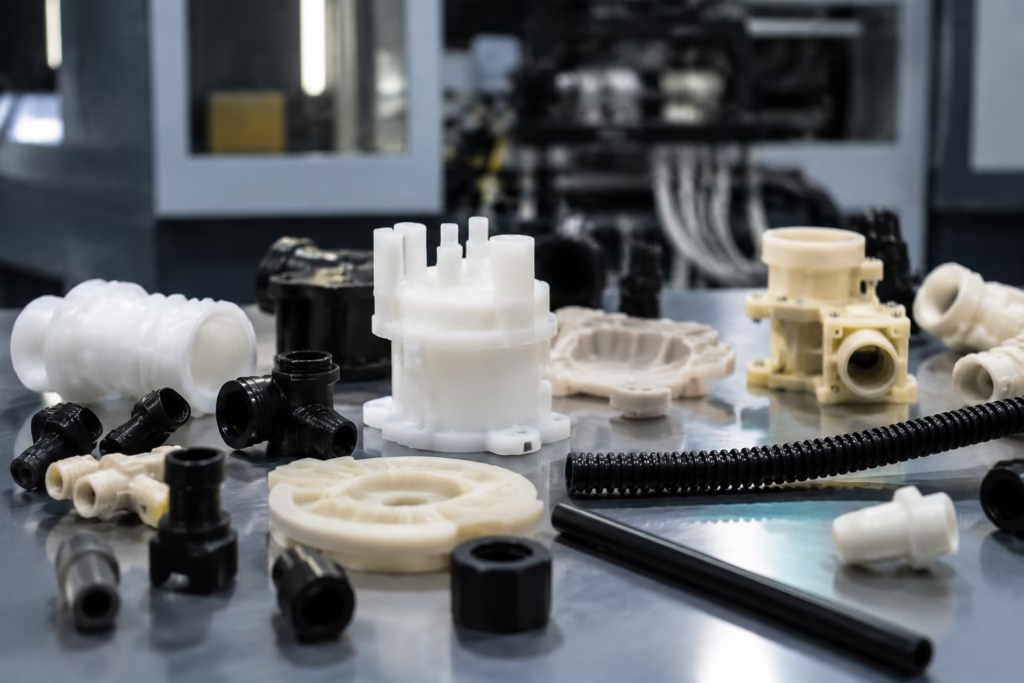
PA6 is commonly used for mechanical parts, brackets, gears, structural housings, cable ties, and general industrial molded components. It is often a strong default when the design needs a durable engineering plastic with broad supply availability.
PA12 is often preferred for fuel lines, pneumatic tubing, cable jacketing, flexible connectors, and parts exposed to humidity or chemicals. It tends to fit applications where stability, flexibility, and reduced water uptake are more important than the highest stiffness.
In practice, application fit is usually determined by one of three questions: Will the part live in humidity? Will it move repeatedly? Will a small dimension shift create a system problem? Answering those questions usually makes the choice clearer than comparing datasheets alone.
Can PA6 Replace PA12?
Sometimes yes, but not always. PA6 can replace PA12 when the application is not highly sensitive to moisture absorption, flexibility, or long-term dimensional drift. In those cases, PA6 may deliver acceptable performance at a lower cost.
However, PA6 is usually not a direct drop-in replacement when the design depends on low water uptake, high dimensional stability, or stable behavior in humid service. If the part is tolerance-critical, the risk of substitution increases.
The right way to judge replacement is to compare the full service environment, not just the base resin family. Temperature, humidity, chemical exposure, load profile, and assembly tolerance all affect whether a swap is realistic.
Modified PA6 as a Cost-Effective Alternative to PA12
For many projects, modified PA6 can offer a practical middle ground. Depending on the formulation, it may improve impact resistance, reduce brittleness, or better support a specific processing window while keeping the cost closer to standard PA6.
That is why custom resin development matters. A manufacturer such as Poly Maro can help align the formulation to the application instead of forcing a standard grade to do a nonstandard job.
When the goal is to get closer to PA12-like performance without moving fully into PA12 cost, engineers often evaluate tailored PA6 compounds or custom nylon compounds that balance impact, stiffness, flow, and dimensional control.
In some cases, a modified PA6 with reinforcement or impact modification can meet the mechanical target well enough to avoid redesigning the part around a more expensive nylon.
How to Choose Between PA6 and PA12
A good selection process starts with the application, not the resin name. If you need more stiffness, broad availability, and lower cost, PA6 is often the first candidate. If you need lower moisture absorption, better dimensional stability, and more consistent behavior in changing environments, PA12 deserves a closer look.
Use the following practical checklist:
- Choose PA6 if the part needs stronger stiffness at a lower cost.
- Choose PA12 if humidity and dimensional stability are primary concerns.
- Choose PA12 if the part sees repeated flexing or movement.
- Choose PA6 if the application can tolerate moisture conditioning after molding.
- Choose modified PA6 if you need a cost-effective balance of performance and processability.
- Review reinforcement or impact modification when standard grades do not fully match the target.
When teams compare options at this stage, it is often useful to review supporting technical content on dimensional stability in plastics, because the final choice is often driven by tolerance control rather than raw strength alone.
How Poly Maro Supports PA6, PA12, and Custom Polyamide Compounds
For manufacturers and product developers, the best outcome usually comes from matching the resin system to the actual part requirement, then tuning the compound if needed. That may mean selecting a standard PA6, moving to PA12, or developing a modified compound for a tighter performance window.
Poly Maro works in that kind of application-focused framework, especially when a project needs a balance of moldability, mechanical performance, and cost control. In practice, that can include base material selection, compound modification, and support for OEM or ODM material needs.
In projects where the part has moving surfaces, repeated contact, or wear concerns, it can also help to compare the design against wear-resistant plastics for moving parts to see whether a different compound strategy may reduce maintenance risk.
Conclusion
In the PA6 vs PA12 decision, there is no universal winner. PA6 is often the cost-effective choice when stiffness, availability, and general engineering performance matter most. PA12 is usually the better fit when low moisture absorption, dimensional stability, and chemical resilience are higher priorities.
The best decision comes from matching the resin to the environment, tolerance needs, and production target. If the design sits between the two, a modified PA6 may be the most practical route because it can improve performance without moving fully into PA12 pricing.
If you are comparing options for a molded part, tubing system, housing, or engineered component, a material-first review usually saves time later in tooling and validation.
FAQ About PA6 vs PA12
Which is stronger, PA6 or PA12?
PA6 is generally stronger and stiffer in standard grades, while PA12 usually offers more flexibility and better dimensional stability.
Which absorbs less moisture, PA6 or PA12?
PA12 absorbs less moisture than PA6, which helps it hold dimensions better in humid environments.
Is PA12 more expensive than PA6?
Yes, PA12 is typically more expensive because it is more specialized and chosen for higher stability requirements.
Can PA6 be used instead of PA12?
Sometimes it can, especially when moisture and dimensional drift are not critical. For tight tolerances or humid service, PA12 is usually safer.
When should I choose a modified PA6?
Choose modified PA6 when standard PA6 is close to the target but needs better impact, stiffness balance, or processing performance at a lower cost than PA12.
What applications are best suited for PA12?
PA12 is often used for tubing, connectors, flexible components, and parts that need low moisture absorption and stable performance in demanding environments.