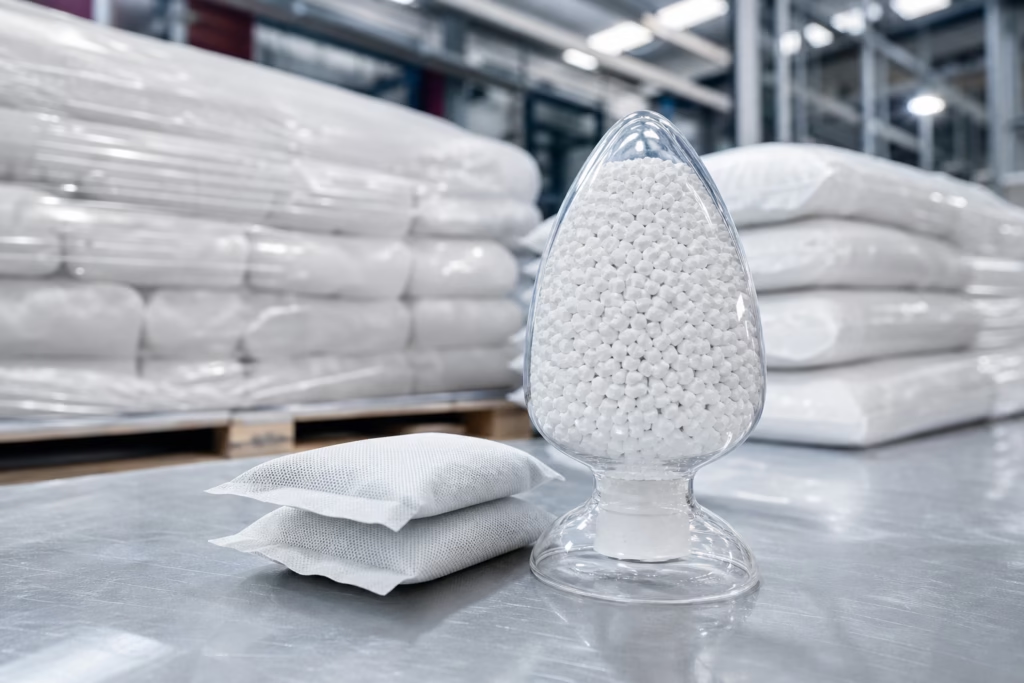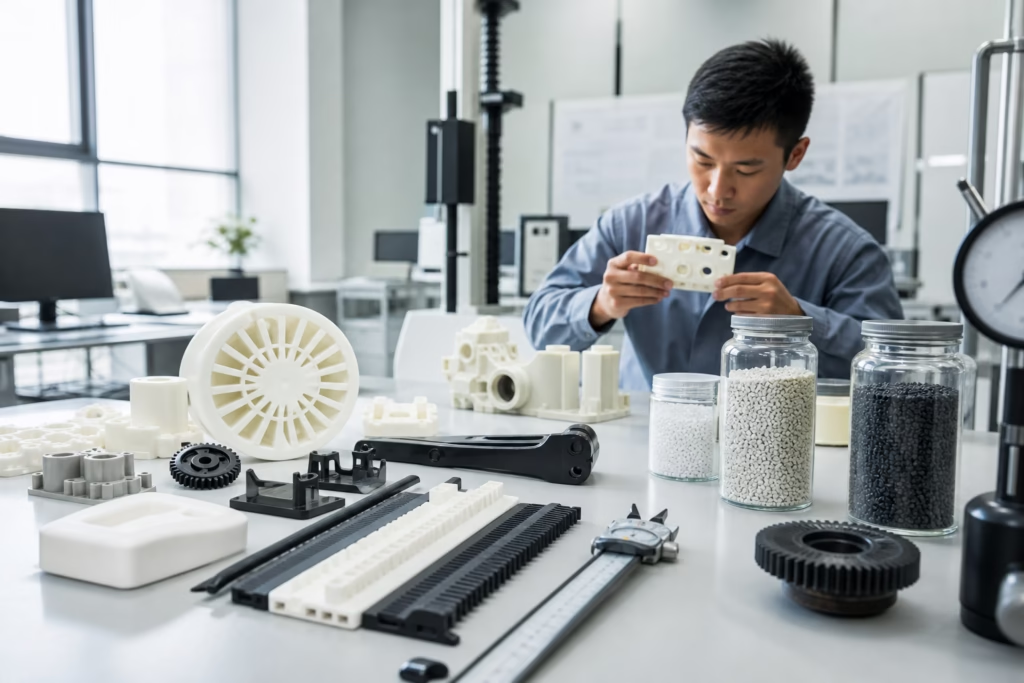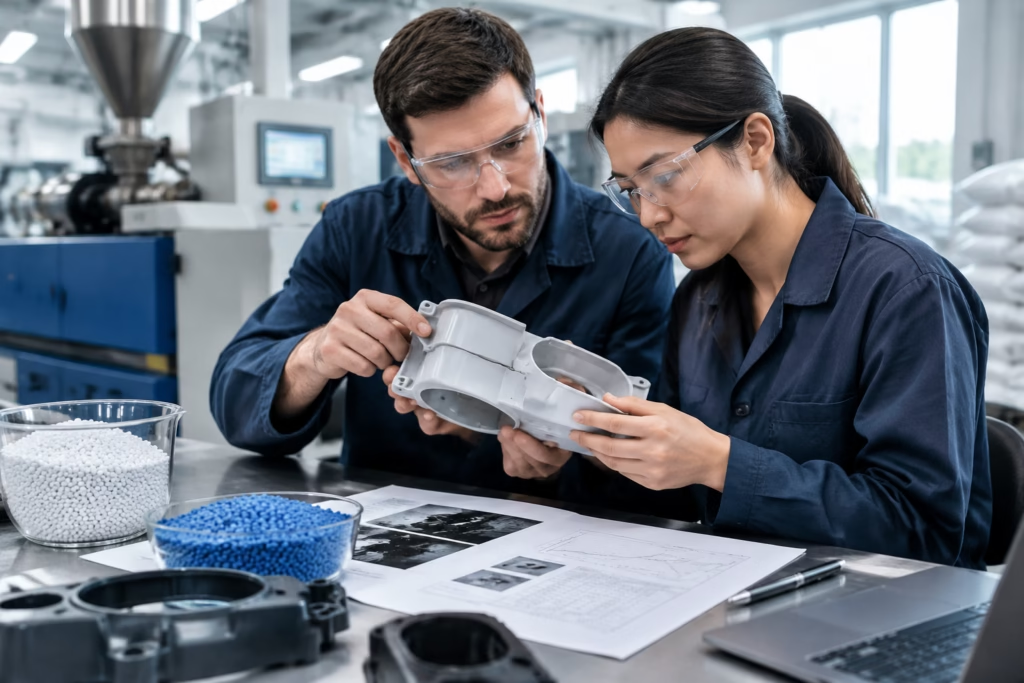
When PA6 or PA66 modified parts crack, chip, or fail in a brittle way, drying is often the first thing people check, but it is rarely the full explanation. In many projects, the real issue is a combination of resin choice, toughening level, reinforcement balance, molding stress, and the part’s actual service environment. For engineers and sourcing teams, solving the PA66 brittleness root cause means looking beyond moisture and comparing how the material, process, and design work together after the part leaves the mold.
For teams that need a practical starting point, our PA66 material options for stronger, more stable molded parts page is a useful entry into the material-selection side of the problem. At Poly Maro, we often help buyers narrow the issue by checking whether the base resin matches the load, whether the toughness package is adequate, whether reinforcement is over-specified, and whether the processing window can support stable molding before a grade is approved for production.
Why PA6 and PA66 modified parts crack or become brittle
Brittleness in nylon parts usually appears as a symptom, not a single defect. A part may pass dimensional inspection, look acceptable on the surface, and still fail early in assembly or service because the material no longer has enough impact margin under the real stress state. In practice, cracking can be triggered by low-temperature impact, notch sensitivity, weld lines, chemical attack, excessive residual stress, or a formulation that was optimized for stiffness but not for durability.
That is why the diagnosis should start with the failure pattern. A clean, glassy break often points toward brittle overload or stress concentration, while whitening, crazing, or edge splits may suggest localized stress, poor fusion, or environment-assisted cracking. If the part failed after a load spike, at a mounting boss, or near a weld line, the material may be marginal even if the resin data sheet looks acceptable on paper.
Drying is necessary, but it is not the whole answer
Moisture control matters because nylons are hygroscopic and their properties change with conditioning. Overly wet material can reduce processing stability, create splay, lower mechanical consistency, and increase variability. But even when drying is correct, parts can still crack if the resin grade, toughening system, or process window is wrong for the application. In other words, drying solves one variable, not the entire failure chain.
When we evaluate brittle PA6 or PA66 parts, we usually separate the question into three layers: material formulation, molding conditions, and end-use stress. If all three layers are not aligned, the part may still look acceptable at shipment but fail during assembly, vibration, thermal cycling, or field use.
Root cause 1: resin mismatch between the polymer and the actual service load
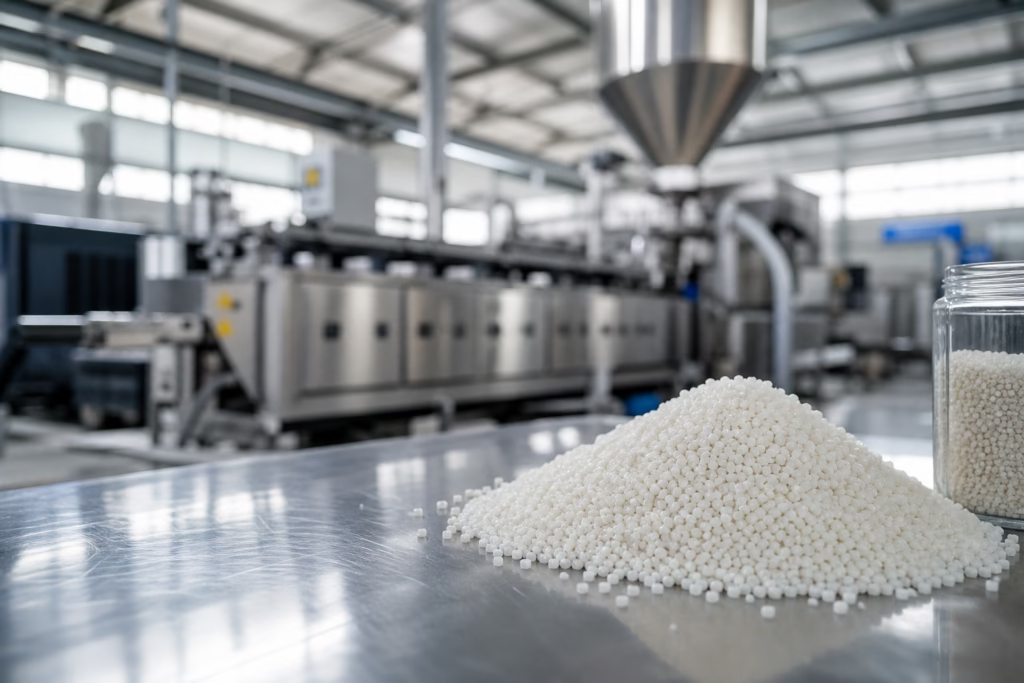
One of the most common PA66 brittleness root cause scenarios is simply choosing a grade that is too stiff, too dry, too highly reinforced, or not heat-stabilized enough for the real working condition. A nylon that performs well in a lab coupon may still crack in a housing, connector, or structural clip if the part sees impact, repeated assembly stress, elevated temperature, or low-temperature service.
The key question is not only whether the base polymer is PA6 or PA66, but whether the selected grade matches the part’s required balance of toughness, heat resistance, creep resistance, and dimensional stability. PA66 usually offers better heat resistance and strength retention than PA6, but that does not automatically mean it is the right choice if impact resistance and toughness are the dominant failure drivers. For resin-family comparison during early selection, this PA6 vs PA66 selection guide is helpful because the wrong base polymer often creates a brittleness problem before compounding even begins.
From a manufacturer’s perspective, we look at the load case first: is the part seeing static load, snap-fit deflection, repeated stress, torsion, or sudden impact? If the answer is impact or intermittent overload, a standard structural nylon may be too unforgiving, and a tougher modified grade is usually more appropriate.
Root cause 2: the toughening system is under-designed or incompatible
Many cracked parts are not made from an inherently wrong polymer family; they are made from a grade that does not have enough impact modification for the application. Toughening can be increased in multiple ways, but the effectiveness depends on dispersion, compatibility, and the interaction between the modifier and the nylon matrix. If the modifier is poorly matched, the part can still fail in a brittle manner even though the formulation claims impact improvement.
In practice, brittle failure often appears when the toughening level is too low for the notch severity or when the modifier does not survive processing well enough to create effective energy absorption. A part may show better room-temperature impact in a datasheet but still crack after cold conditioning, thermal aging, or chemical exposure. That is why impact-modified grades are not interchangeable; the exact blend design matters.
When the material is close to acceptable but still too brittle, we often discuss impact-modified plastic compound solutions as a more targeted recovery path than simply switching to a softer resin. The goal is to preserve the strength and heat performance the application needs while improving energy absorption at weak points such as bosses, corners, clips, and weld lines.
For example, in connector housings or mechanical clips, a small change in modifier compatibility can change how the part behaves under assembly stress. The best toughened grade is not the softest one; it is the one that maintains enough structural stiffness while reducing crack sensitivity in the actual part geometry.
Root cause 3: reinforcement or filler loading is too aggressive
Another frequent problem is over-reinforcement. Glass fiber, mineral filler, or other rigid additives can improve stiffness, heat resistance, and dimensional stability, but they can also reduce elongation and increase notch sensitivity if the balance is not controlled. A heavily filled or highly reinforced nylon may look strong in a tensile test yet still be brittle in a molded feature that experiences impact or repeated flexing.
This trade-off is especially important when procurement teams ask for higher stiffness without specifying how the part will be loaded. If the material is optimized only for modulus, the formulation can become too unforgiving. A brittle break in a reinforced nylon part often means the structure is carrying the load, but the matrix does not have enough toughness to prevent crack growth after a local stress peak.
When structural performance and crack resistance both matter, the formulation must be designed deliberately. In some programs, a combination of reinforcement and impact modification is needed, not one or the other alone. That is why material development should be discussed early with the supplier rather than after the first broken sample appears.
If the application is a load-bearing housing, bracket, or structural component, we may compare options against glass fiber reinforced resin choices for structural parts to judge whether stiffness is being pushed too far at the expense of impact margin. A part that needs rigidity at a stable temperature may still require additional toughening to keep the failure mode from becoming brittle.
| Formulation choice | Main benefit | Common brittleness risk |
|---|---|---|
| Standard nylon | Balanced cost and processability | Low impact margin in stressed parts |
| Impact-modified nylon | Better crack resistance and energy absorption | May sacrifice some stiffness |
| Glass-fiber reinforced nylon | Higher stiffness and dimensional stability | Notch sensitivity and lower elongation |
| Reinforced plus toughened nylon | Better balance for structural parts | Requires careful formulation control |
Root cause 4: the molding process is creating hidden damage
Even a well-designed formulation can fail if processing introduces excessive stress or degrades the polymer. High melt temperature, excessive shear, long residence time, poor venting, incorrect gate size, or insufficient packing can all increase brittleness. In nylon, subtle changes in processing can change crystallization behavior, molecular integrity, and internal stress distribution enough to influence crack resistance.
One common mistake is assuming that if the part fills, the process must be acceptable. In reality, a part can fill completely and still contain weld line weakness, orientation imbalance, or residual stress from aggressive packing. Small molded features are especially vulnerable because they do not have much material to redistribute load after a defect forms.
We also check whether the part was over-dried or exposed to moisture rebound after drying. Poor handling can create inconsistent surface appearance and property drift, which then makes the failure analysis misleading. Another important process problem is using a grade outside its intended molding temperature window, especially with heat-sensitive modifiers.
When the issue is a combination of temperature exposure and process stress, a heat-resistant plastic compound options review can help clarify whether the grade itself is stable enough for the selected melt and service conditions. A stronger thermal window does not eliminate process defects, but it can reduce the risk of molecular damage during production.
In our compounding work, we often tell processors that brittle failures do not only come from the part design; they can also come from a process that is too aggressive for the selected resin. The best material still needs a stable molding window.
Root cause 5: design and service conditions are amplifying stress
Sometimes the material is reasonable and the molding is acceptable, but the part geometry or service environment creates an unavoidable stress concentration. Sharp corners, thin-to-thick transitions, weld lines, snaps with insufficient radius, over-tight screws, and poorly supported bosses all raise local stress and make brittle failure more likely. If the part is exposed to low temperature, vibration, assembly abuse, chemical contact, or cyclic flexing, the crack risk increases again.
This is where many teams misread the problem. They see the part as “too brittle,” but the real issue is that the part has no tolerance for stress concentration. A tougher pellet can improve the margin, but it cannot completely rescue a geometry that is over-stressed by design. The right question is whether the material and design can share the load more evenly.
For this reason, we often combine material review with a practical crack-risk review: weld lines, bosses, gate locations, wall transitions, and the expected service environment. In applications where design stress is unavoidable, material selection has to include extra impact margin rather than only stiffness or heat resistance.
How to distinguish material brittleness from molding defects
Not every crack means the resin is wrong. A useful failure analysis separates three possible sources: material deficiency, process-induced damage, and design-driven stress concentration. If several parts fail in the same location, the location itself is a clue. If failures appear near weld lines or gates, the molding strategy may be at fault. If the part breaks after exposure to chemicals, heat cycling, or low temperatures, the service environment may be accelerating crack growth.
Standardized testing matters here. Visual inspection is not enough when the question is whether a grade has enough impact margin. We encourage buyers to compare conditioned samples and suspect parts using a recognized impact method such as Izod impact testing for brittleness confirmation, because it gives a more reliable basis for grade comparison than appearance alone. That is especially important when a sample looks acceptable but the field part keeps cracking.
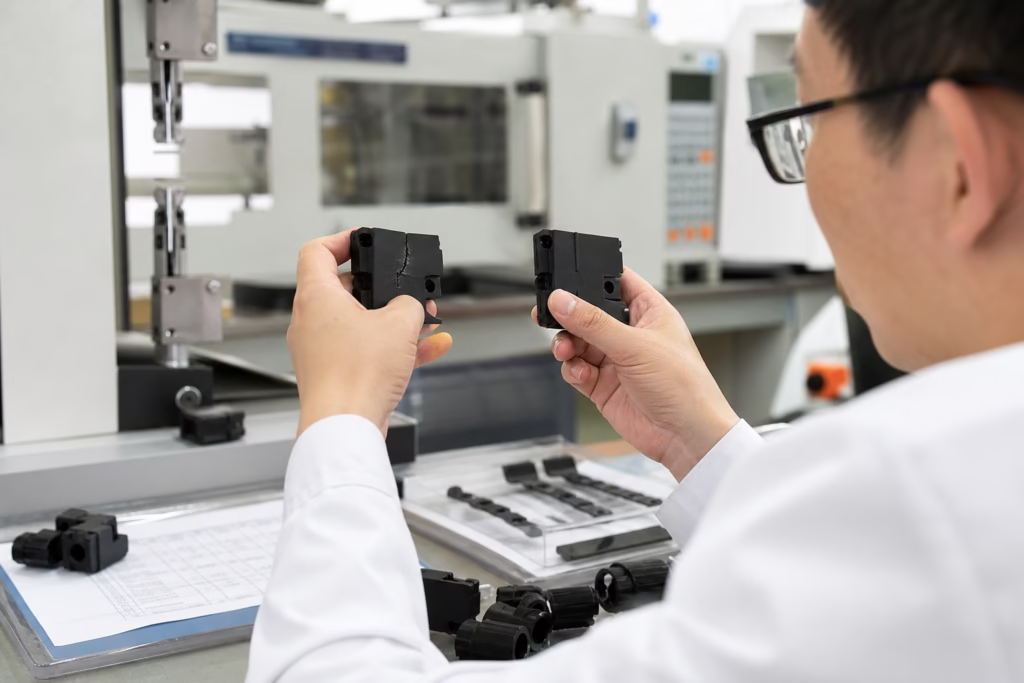
From a sourcing perspective, the smartest approach is to compare parts, not just pellets. If the molded part, the gate condition, and the test method are all aligned, the failure picture becomes much clearer.
Which performance indicators matter most when choosing nylon toughening pellets?
When selecting nylon toughening pellets, buyers should avoid focusing on one property in isolation. Anti-brittle selection is about balance. The most important indicators usually include impact strength, elongation at break, heat resistance, dimensional stability, flowability, and fatigue resistance. Depending on the application, chemical resistance and electrical insulation may also matter.
Impact strength tells you how much energy the material can absorb before cracking. Elongation helps indicate whether the material has any margin for deformation. Heat resistance matters because a toughened grade that softens too much under service temperature may still fail. Flowability matters because poor flow can cause weld line weakness, short shots, or high orientation stress. Dimensional stability matters because a part that warps or shrinks unevenly may build stress into itself after molding.
For toughened nylon pellets, the best grade is usually the one that meets the required stiffness and temperature targets while raising the part’s crack tolerance enough for the actual stress environment. A material that is too soft may solve the symptom but create other problems in assembly, creep, or shape retention.
What to compare on the data sheet
Do not stop at tensile strength. Ask for notched impact data, elongation, heat resistance information, moisture conditioning behavior, and the recommended drying and processing range. If the supplier can only discuss a single nominal property, the grade may not be well suited to a production environment. We also prefer to review the intended part thickness, gate position, and expected cycle conditions before making a recommendation.
When to choose nylon toughening pellets versus other modified PA66 options
Nylon toughening pellets are usually the right direction when the part needs better crack resistance without abandoning the benefits of PA66 or PA6. If the part is brittle mainly because it is too notch-sensitive or too stiff for the load, a toughened grade can recover performance while preserving the basic nylon advantages of strength, processability, and temperature resistance.
However, toughening is not always the only answer. If the part also requires very high rigidity, then a reinforced plus toughened formulation may be better. If the main issue is thermal deformation, then the formulation may need heat stabilization rather than just impact modification. If the issue is all three at once, the compounding design has to combine the right tools in one grade instead of changing only one property.
At Poly Maro, we treat this as a formulation balancing exercise, not a simple “add more modifier” decision. Our custom plastic compounding support for brittle part issues is typically used when a customer needs a specific balance of impact, stiffness, color, heat resistance, and process stability rather than a generic off-the-shelf grade.
One practical rule is this: choose nylon toughening pellets when crack resistance is the main bottleneck and the part still needs nylon’s structural and thermal behavior. Choose other modified PA66 options when the part is failing because the formulation must also solve reinforcement, heat, creep, or dimensional-control problems.
How to evaluate a toughened PA66 pellet supplier
Supplier selection is part of the technical solution. A weak material supplier can turn a good formulation into a production risk if batch consistency is poor or if the processing window is not clearly defined. The first question is whether the supplier can explain the formulation logic in application terms. If the answer only describes generic properties, there may not be enough engineering support behind the grade.
We recommend checking four points: consistency, test evidence, sample validation, and production planning. Consistency means the pellets behave similarly from batch to batch. Test evidence means the supplier can show relevant data for the same property that is failing in your part. Sample validation means the grade has been tested in the actual mold, at the actual drying and process conditions, not just in a lab specimen. Production planning means MOQ, lead time, and supply stability are suitable for the buyer’s launch plan.
If you are evaluating a manufacturer, it also helps to confirm whether they can tune the formulation for the exact balance you need. That may include impact-modified nylon, reinforced nylon, heat-stabilized nylon, or a combination of these approaches. From our side, that is one reason buyers come to Poly Maro for application-oriented resin development rather than a single fixed grade.
| Evaluation item | What to ask | Why it matters |
|---|---|---|
| Batch consistency | Do properties stay stable across lots? | Reduces production drift and scrap |
| Processing window | What drying and molding conditions are recommended? | Prevents hidden process-induced brittleness |
| Sample validation | Was the grade tested in the real part? | Confirms part-level performance |
| Customization | Can toughness, stiffness, or heat be tuned? | Matches the actual application |
| Supply planning | What are MOQ and lead time? | Supports launch and inventory control |
Typical application scenarios for anti-brittle PA66
Anti-brittle PA66 is often needed in automotive clips, housings, electrical connectors, terminal supports, industrial covers, and consumer parts that experience repeated assembly or impact. In automotive applications, temperature cycling and vibration make crack resistance especially important. In electrical and electronics parts, the material must often combine toughness with dimensional stability and insulation performance. In industrial equipment, the part may need to survive loading, assembly torque, and long-term fatigue.
In these applications, the best grade is rarely the one with the highest stiffness or the highest impact value alone. It is the one that performs predictably after molding and still retains enough toughness after conditioning, storage, or thermal exposure.
That is why material selection should always be tied to the actual part function, not just resin family preference. If the part is a snap-fit housing, the priority may be crack resistance. If the part is a structural carrier, stiffness may matter more, but toughness still cannot be ignored. If the part is a connector body, flow and dimensional stability may matter as much as impact performance.
Practical checklist before changing material grade
Before switching to a new pellet, we suggest running a short but disciplined checklist. First, verify the failure location and whether the crack starts at a weld line, corner, gate, or screw boss. Second, confirm drying, storage, and handling conditions. Third, compare the actual molding settings to the recommended process window. Fourth, review the load case, including assembly force, temperature, vibration, and chemical exposure. Fifth, compare the current grade’s impact and elongation performance to the required margin. Sixth, test a candidate toughened grade in the actual tool before approving it for production.
This approach reduces unnecessary material changes. Many brittle-part problems are solved not by replacing nylon entirely, but by selecting a more appropriate modified nylon grade with the right balance of toughness and stiffness.
How Poly Maro supports PA66 brittleness reduction
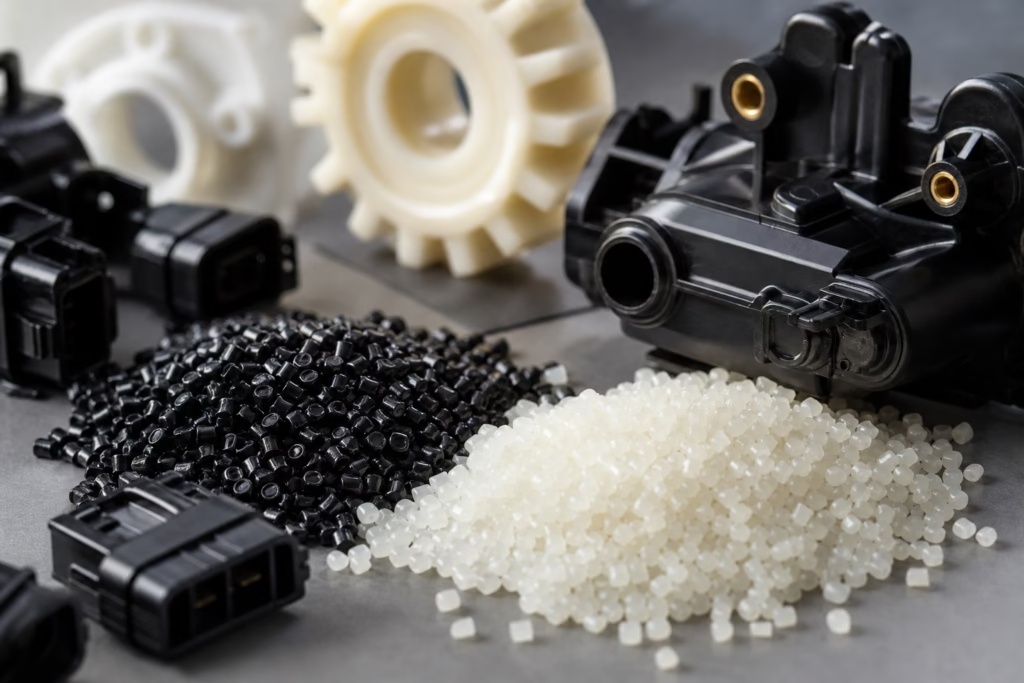
From a manufacturer’s perspective, the most effective way to reduce brittleness is to treat the problem as a systems issue. At Poly Maro, we support buyers with formulation matching, custom compounding, and process-oriented sample evaluation so the selected pellet fits the real part rather than just the specification sheet. For some projects, the answer is a tougher base resin. For others, it is reinforcement adjustment, heat stabilization, or a combined modification strategy.
We also pay close attention to production consistency, because a grade that varies from lot to lot can make a brittle part problem much harder to solve. When the application is sensitive, the material should be validated in the same mold, under the same drying conditions, and against the same failure mode the customer sees in production.
In short, the PA66 brittleness root cause is usually not one single issue. It is a chain of mismatched choices across resin selection, toughening design, reinforcement balance, processing, and service conditions. If you break the chain at the right point, the part often becomes stable again without overcorrecting into a softer or less suitable material.
Conclusion
If PA6 or PA66 modified parts are cracking, do not stop at drying. Look at the resin family, the impact modification strategy, the reinforcement level, the molding process, and the part’s stress environment. The best nylon toughening pellets are the ones that restore crack resistance while still matching the application’s stiffness, heat resistance, and dimensional-control needs. For engineers and sourcing teams, that balance is what turns a brittle part into a reliable production part.
FAQs
Why do PA6 and PA66 parts crack even when drying is correct?
Because moisture is only one variable. Parts can still crack if the base resin is too stiff for the load, the toughening level is too low, the reinforcement is too aggressive, or the part geometry creates stress concentration. Processing stress and service environment can also trigger brittle behavior after molding.
What is the most common PA66 brittleness root cause in production?
In production, the most common cause is usually a mismatch between the selected grade and the real application condition. That can mean insufficient impact modification, too much reinforcement, or a molding window that introduces residual stress and weld line weakness.
How do I know whether I need nylon toughening pellets?
If the part needs better crack resistance but still must keep nylon’s strength, temperature performance, and processability, nylon toughening pellets are often the right direction. They are especially useful when impact failure or notch sensitivity is the main problem.
Should I choose impact-modified nylon or glass-fiber reinforced nylon?
Choose impact-modified nylon when crack resistance is the priority and stiffness can stay moderate. Choose glass-fiber reinforced nylon when rigidity and dimensional stability are more important, but make sure the formulation still has enough toughness for the part’s stress level.
What should I ask a supplier before approving a toughened PA66 grade?
Ask for impact data, elongation, heat resistance, drying guidance, recommended molding conditions, sample validation in the actual part, batch consistency, MOQ, and lead time. These details show whether the supplier understands production risk, not just resin chemistry.
How can I confirm brittle failure with testing?
Use standardized impact testing on conditioned samples and compare the results with the cracked parts. A recognized impact method is far more reliable than visual inspection alone because it helps separate a true material weakness from a one-off molding or design issue.