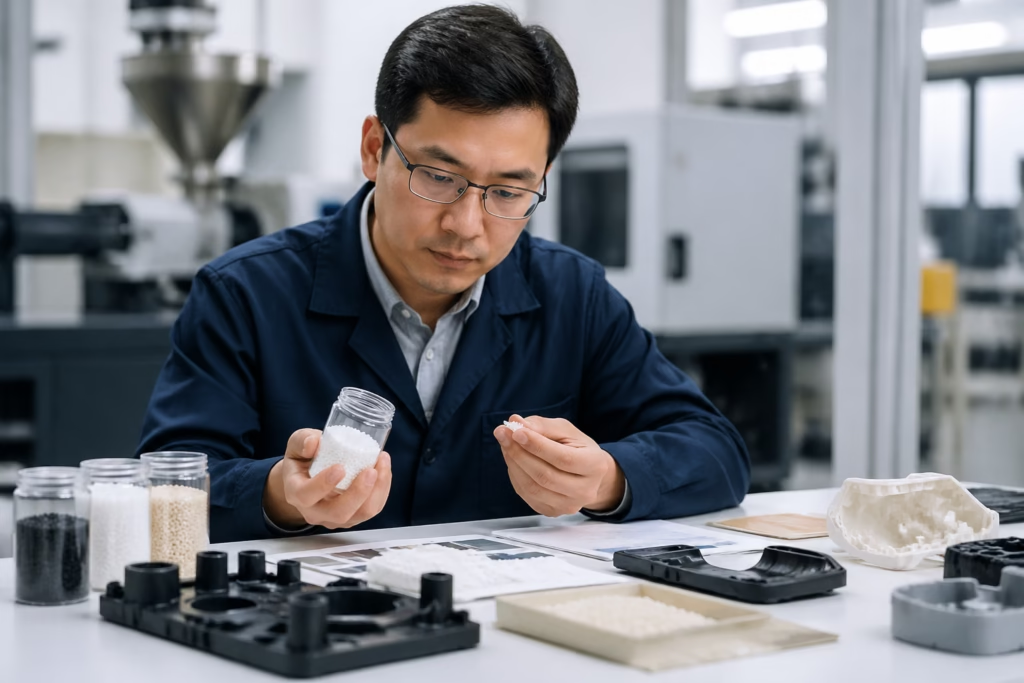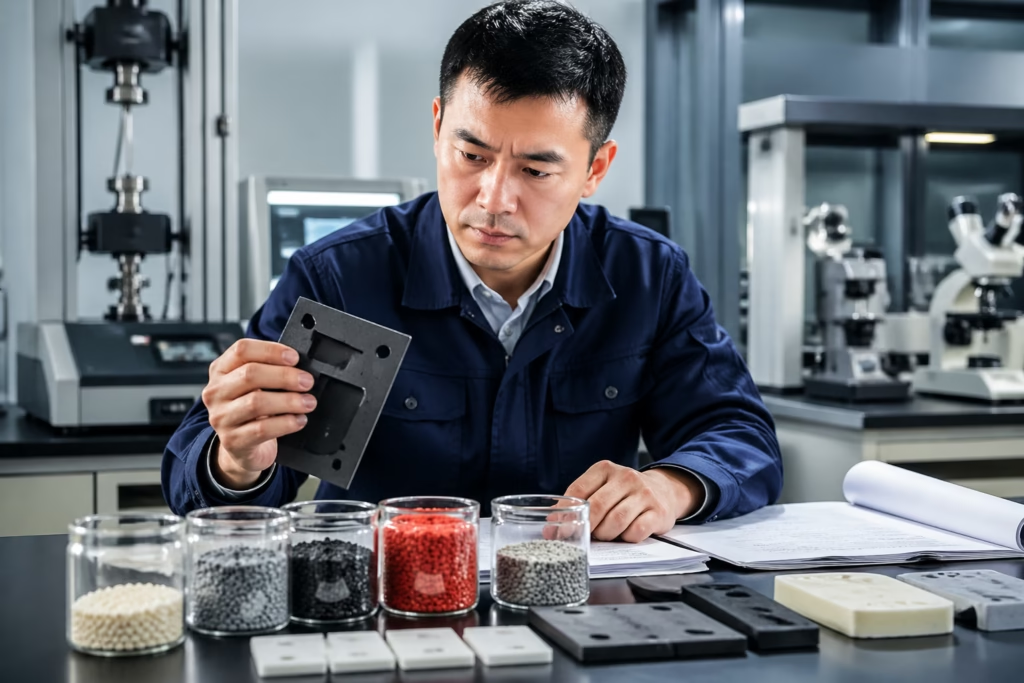
Dimensional stability plastic is one of the most important selection criteria when a part must stay within tolerance after molding, storage, assembly, and real service exposure. This matters especially for precision connectors, housings, alignment features, and snap-fit parts, where a small shift in size can affect fit, sealing, or electrical performance.
technical support can be useful when a part needs to be evaluated against both processing conditions and the service environment, because stability problems often come from the interaction between resin choice, mold design, and exposure history.
What makes this topic challenging is that a plastic that looks stable in the lab can behave very differently after humidity, heat, load, or time are introduced. For engineers, the real question is not whether a resin is “stable” in general, but which conditions control its dimensional movement in the final application.
Why dimensional stability matters in precision plastic parts and connectors
For precision parts, dimensional drift is not a cosmetic issue. It can change contact alignment, insertion force, retention, sealing performance, and assembly reliability. In connector systems, even small warpage or shrink variation can create stack-up problems that are hard to correct later in production.
Stability also affects yield. A material that varies with moisture or residual stress may produce acceptable parts at first, then drift during storage or after environmental conditioning. That means the mold may be capable, but the part still fails in the field.
What dimensional stability means in plastic materials

Dimensional stability is the ability of a plastic part to keep its original geometry when exposed to heat, humidity, chemicals, mechanical load, or aging. It is related to, but not the same as, strength, stiffness, or heat resistance.
- Strength describes how much force a part can withstand before failure.
- Stiffness describes how much a part resists deformation under load.
- Heat resistance describes how well the material tolerates elevated temperature without softening or losing performance.
- Dimensional stability describes whether the part keeps its size and shape over time and across conditions.
A material can be strong but still move dimensionally if it absorbs moisture, relieves molding stress, or creeps under constant load. That is why dimensional stability must be evaluated separately from headline mechanical properties.
Why the same plastic behaves differently across environments
The same resin can shrink, warp, or creep differently because environmental exposure changes the balance between the polymer structure and the part’s internal stresses. A molded part is not a static object; it is a processed structure with orientation, thermal history, and sometimes absorbed moisture already built in.
Temperature can accelerate chain mobility, humidity can swell some polymers, chemicals can plasticize or attack the surface, and long-term load can slowly deform the part. In many precision parts, the largest movement is not from a single dramatic event but from a combination of small effects over time.
For moisture-sensitive applications, it is helpful to compare material families directly. A guide such as low moisture absorption plastics can help narrow the field when the design cannot tolerate swelling or property drift after conditioning.
Environmental factors that affect dimensional stability
Temperature
Higher temperature increases molecular motion and can reduce the part’s ability to hold shape, especially if the service temperature approaches the glass transition region. Repeated thermal cycling can also reveal hidden residual stress and produce gradual warpage.
Humidity and water uptake
Some plastics absorb moisture and expand, while others resist water better and stay closer to molded dimensions. In connector housings and alignment parts, moisture uptake is often one of the first reasons a part moves out of tolerance.
Chemicals and fluids
Lubricants, cleaning agents, fuels, and process chemicals can soften certain polymers or alter surface and bulk behavior. Even when there is no obvious damage, the part may show measurable dimensional change after exposure.
Mechanical load and time
Constant stress creates creep, which is slow deformation under sustained load. Snap-fits, brackets, and clamped sections are especially vulnerable because load is often concentrated at local features rather than distributed evenly.
Material factors that influence stability
Material structure controls how much the environment can move the part. A resin with high crystallinity may shrink differently than an amorphous resin, while fiber reinforcement can improve stiffness but also create directional shrink behavior if the flow orientation is strong.
Moisture absorption is another major variable. In practice, the difference between materials often shows up after conditioning, not immediately after molding. That is why comparing grades only in dry-as-molded form can be misleading, especially for connector material selection.
For example, engineers often compare PA66 vs PA12 when they need to balance stiffness, moisture response, and dimensional movement in a precision component. The better choice depends on whether the application favors higher mechanical performance or lower property drift in humid conditions.
How processing and molding conditions affect final stability
The final dimension of a part is set not only by the resin but also by the molding process. Cooling rate affects shrinkage, wall thickness changes the cooling gradient, and residual stress can remain locked into the part if flow and packing are uneven.
Gate location and part orientation also matter. If flow is heavily directional, the material may shrink differently along and across the flow path. That can create warpage in flat parts or dimensional mismatch in connector housings with multiple critical features.
Wall thickness should be designed carefully because thicker sections usually cool more slowly and may shrink more than thin sections. That is why an apparently good material can still fail a tolerance target if the mold or part geometry is not balanced.
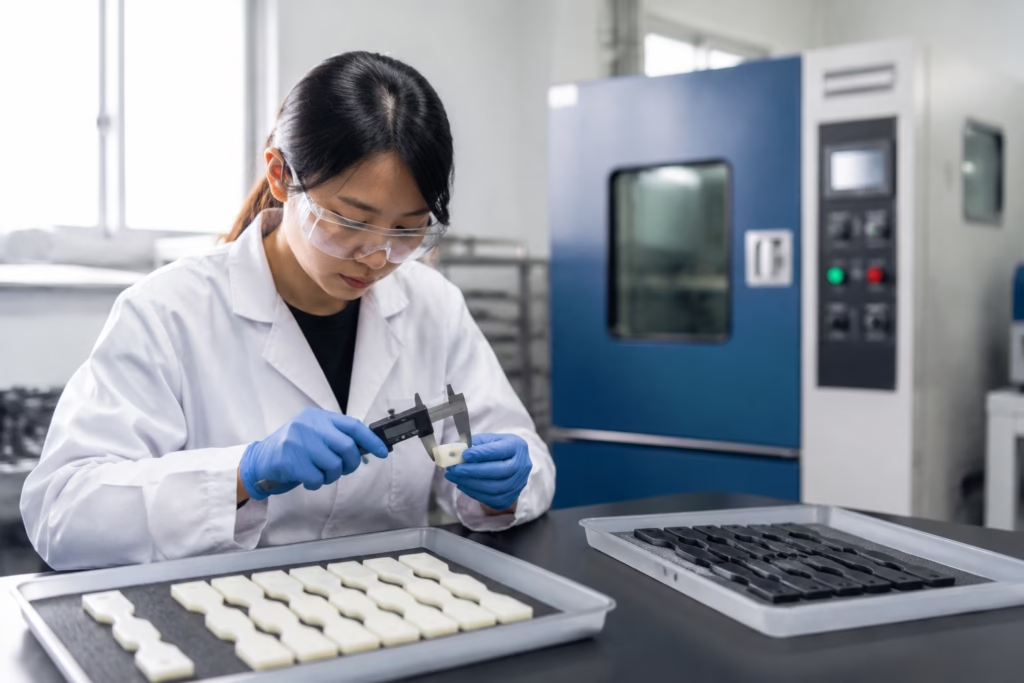
When a project needs a highly consistent engineering resin, POM for precision parts is often considered for its useful balance of machinability, low friction, and dimensional control in many molded components. The final choice still depends on load, temperature, and chemical exposure.
How to evaluate dimensional stability in practice
A useful evaluation starts with measuring the part in its baseline condition, then repeating the measurement after exposure to the expected service environment. The key is to test the part as a system, not just the raw resin pellet.
| Evaluation step | What to measure | Why it matters |
|---|---|---|
| Baseline measurement | Critical dimensions, flatness, and key fit features | Creates the reference point for later comparison |
| Conditioning | Heat, humidity, chemical exposure, or load | Simulates the real environment |
| Post-conditioning measurement | Size change, warpage, and feature movement | Shows how the part actually responds |
| Time tracking | Short-term and long-term changes | Reveals creep and aging effects |
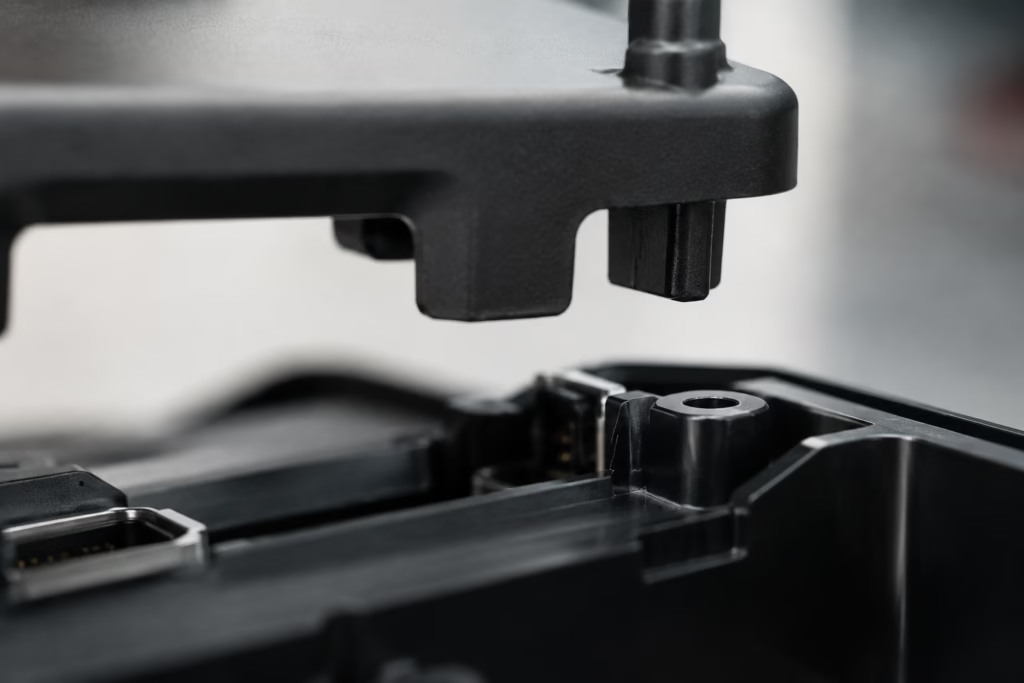
For precision work, measure the dimensions that matter most to function. In connectors, that may include terminal alignment, latch position, and housing width. In alignment parts, it may include hole spacing, flatness, and feature concentricity.
Recommended test strategy for precision components
A practical test strategy is to simulate the service environment, measure before and after conditioning, and then repeat measurements over time. This is more useful than a single pass/fail check because many plastic materials change gradually rather than abruptly.
It is also wise to compare dry-as-molded and conditioned states. A part that looks excellent in the dry state may show much larger dimensional movement after moisture absorption or thermal soak. That difference is often critical in real assemblies.
When a design team is choosing between related engineering grades, a comparison such as connector material selection can help clarify which resin family better fits the expected exposure profile and dimensional target.
How to choose a precision plastic material based on application risk
Different parts face different risks. Connector housings often need stable geometry and good electrical fit. Snap-fit features need controlled flexibility and recovery. Alignment parts need repeatable dimensions and low drift. Tight-tolerance assemblies may need a low-moisture or reinforced material depending on the environment.
In high-risk designs, stability is often improved by reducing moisture sensitivity, controlling wall thickness, selecting the right crystallinity level, and keeping residual stress low. If a design is especially sensitive, a manufacturer like Poly Maro can help evaluate whether a standard resin, modified resin, or reinforced compound is the more practical path.
Material selection should be tied to the failure mode you want to avoid. If the main risk is warpage, look at shrink behavior and flow orientation. If the main risk is swelling, look at moisture uptake. If the main risk is long-term deformation, look at creep under sustained load.
Common mistakes engineers make when judging dimensional stability
One common mistake is testing only the dry state and ignoring conditioning. Another is selecting a material because it is stiff without checking whether it will hold size in the real environment. A third mistake is overlooking process effects and assuming material choice alone will solve a geometry problem.
Engineers also sometimes compare materials using properties that are not directly tied to dimensional control. For example, higher temperature resistance does not automatically mean better stability if the part still absorbs moisture or carries residual stress. The evaluation must match the actual failure mechanism.
It is also easy to overlook the difference between short-term and long-term behavior. A part may look fine after molding, pass initial inspection, and still creep or warp after weeks of service. That is especially relevant in precision assemblies where tolerance margin is limited.
A practical selection checklist for stable molded part material
- Define the critical dimensions and the allowable drift.
- Identify the real service environment, including heat, humidity, chemicals, and load.
- Compare dry-as-molded and conditioned dimensions.
- Check moisture absorption and creep risk for the target resin family.
- Review wall thickness, gate location, and expected flow orientation.
- Consider whether reinforcement, filler content, or a modified compound is needed.
- Measure the part over time, not only at first inspection.
- Compare the material against the actual function, not just the datasheet headline.
For demanding parts, this checklist helps move the discussion from general material preference to engineering evidence. That leads to better decisions on connector housings, precision frames, alignment features, and other molded parts where size control is non-negotiable.
In some programs, a standard grade is enough. In others, the best answer is a tuned material system with a specific balance of rigidity, shrink control, and environmental resistance. The right choice depends on the part geometry, the process window, and the exposure profile.
FAQ
What is dimensional stability in plastic parts? Dimensional stability is the ability of a plastic part to keep its size and shape after molding and during service exposure such as heat, humidity, load, or chemicals.
Why does the same plastic behave differently in different environments? Because temperature, moisture, chemicals, and time change how the polymer structure responds, and the part may also carry residual stress from molding.
Is a stiffer plastic always more dimensionally stable? No. Stiffness helps resist deformation, but a plastic can still swell, creep, or warp if it absorbs moisture or experiences thermal or stress-related change.
How should I test dimensional stability for a connector housing? Measure the critical features before conditioning, expose the part to the expected service environment, then remeasure and compare the change over time.
Which material factors matter most for stable precision parts? Moisture absorption, crystallinity, filler content, glass transition behavior, and the degree of molding-induced stress are usually the most important factors.
What is the most common mistake in material selection for stable molded parts? The most common mistake is choosing a material based only on dry properties and not checking how it behaves after exposure to the real operating environment.