
When overseas buyers evaluate a plastic compound manufacturer in China, the first questions are usually not about price alone. They want to know whether the supplier can keep material properties stable, communicate clearly across time zones, provide usable documentation, and scale a validated sample into repeat production without surprises. For engineering applications, those issues matter as much as resin selection itself.
For projects that need custom property tuning, reinforcement, flame retardancy, or a tighter processing window, custom plastic compounding support can help align formulation, testing, and production planning before the first purchase order. At Poly Maro, we approach these projects from a manufacturer’s perspective: match the resin family to the end use, define the critical properties, confirm molding behavior early, and then build supply expectations around sample validation, batch control, and delivery planning.
Why Overseas Buyers Source Plastic Compounds from China
China has become a major sourcing base for engineering plastics and functional compounds because many buyers are looking for a balance of cost, technical flexibility, and manufacturing scale. A good supplier in China is often expected to do more than ship pellets. Buyers may need formulation adjustment, color matching, glass fiber or mineral reinforcement, flame-retardant performance, impact modification, antistatic behavior, or dimensional stability for molded parts that must work in demanding environments.
That said, sourcing from China is not only about finding a lower quotation. Overseas procurement teams usually compare suppliers based on whether they can support the entire material decision process: early technical discussion, prompt sample preparation, transparent data, and stable follow-through. The best supplier is the one that reduces engineering risk, not the one that only offers the simplest price sheet.
What Buyers Worry About First: Quality, Consistency, and Communication
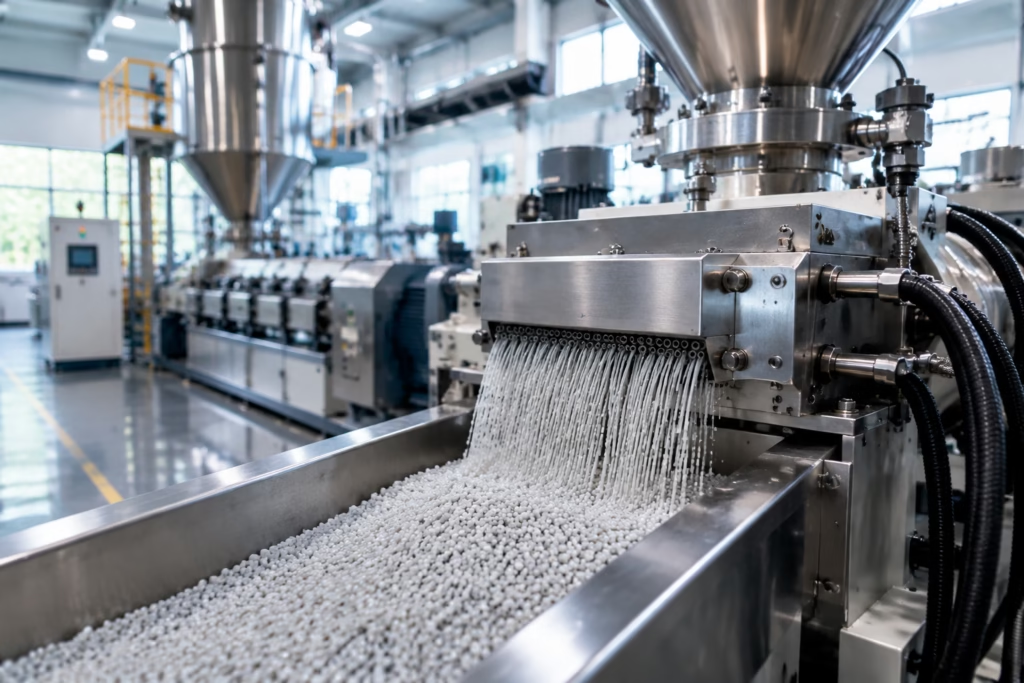
In cross-border projects, the first concern is often whether the product delivered later will match the sample approved today. A material may look acceptable in a lab test but still fail in real production if moisture control, reinforcement dispersion, melt flow, or additive balance is inconsistent. Buyers therefore want evidence that the supplier manages formulation, compounding, and final inspection with discipline.
Communication is the second concern. Many sourcing teams have experienced situations where a supplier answers quickly at the quote stage, then becomes slow when buyers ask for processing guidance, test data, or documentation. That creates hidden cost because design, purchasing, and production teams all depend on the same technical answers. For that reason, responsive communication is not a courtesy; it is part of the material quality system.
| Buyer Concern | What Good Suppliers Should Show | Why It Matters |
|---|---|---|
| Material consistency | Stable batch-to-batch properties and controlled compounding | Reduces scrap, dimensional drift, and customer complaints |
| Technical communication | Fast, clear answers from engineering or sales support | Helps teams make decisions before tooling or mass production |
| Validation support | Sample data, molding guidance, and follow-up troubleshooting | Improves the chance that lab results translate to production |
| Documentation | TDS, SDS, COA, and compliance files when requested | Supports qualification, audits, and regulatory review |
How to Evaluate a China Engineering Plastic Supplier Before Requesting Samples
Before any sample request, overseas buyers should assess whether the supplier understands the application, not just the resin name. A serious plastic compound manufacturer in China will ask about end-use temperature, impact requirements, electrical needs, flame rating expectations, surface appearance, molding method, and any restrictions on color, odor, or compliance.
That discussion tells you how the supplier thinks. If the response is only a product name and a generic quote, the project may be too shallow. If the supplier asks about part geometry, wall thickness, gate position, moisture sensitivity, and expected annual demand, the supplier is already thinking about production risk. Buyers can also use the key details to confirm before requesting samples as a checklist for project alignment before formal evaluation begins.
Questions worth asking early
- Which resin family and modification path fit the application best?
- What properties are being optimized, and what trade-offs are expected?
- How does the material behave during drying, molding, and cooling?
- What are the likely risks for warpage, shrinkage, brittleness, or surface defects?
- Can the supplier support repeat production after the sample is approved?
Quality Control: What to Check in Material Properties, Batch Consistency, and Process Stability
Buyers should look beyond a single tensile strength value or a single melt flow number. Engineering plastics are selected because the whole property package matters: strength, stiffness, impact resistance, thermal behavior, moisture uptake, chemical resistance, electrical performance, and molded-part stability. For reinforced materials, fiber length, dispersion, and orientation also influence final performance.
From a manufacturing standpoint, consistent compounding is what turns a promising formulation into a reliable commercial material. That means proper raw material weighing, uniform mixing, controlled extrusion conditions, pellet appearance consistency, and routine inspection of critical properties. If the material is intended for molding, buyers should also ask for drying recommendations and processing windows, because moisture and thermal history can change the part behavior even when the resin grade is unchanged.
For buyers who need a better basis for property review, it helps to understand how to read TDS and SDS for plastic compounds so the discussion is not limited to marketing language. Technical data sheets should be reviewed as decision tools, not as sales materials.
Property checks that matter most
- Tensile and flexural performance: important for load-bearing housings, brackets, and structural parts.
- Impact strength: critical where drop resistance, clip retention, or low-temperature toughness matters.
- Heat resistance: needed for parts exposed to engine bays, electrical heat, or continuous operating load.
- Dimensional stability: important for connectors, gears, precision housings, and thin-wall components.
- Flowability and shrinkage: key for mold filling, cycle time, and warpage control.
When these factors are controlled together, the result is not just a good datasheet, but a process-friendly material that performs predictably in production.
Communication and Responsiveness: What Good Cross-Border Technical Support Should Look Like
Overseas buyers often discover that technical support is the difference between a supplier and a true development partner. Good support should include clear answers on application fit, processing suggestions, and troubleshooting when initial molding results differ from expectations. It also includes patience: not every project starts with a fully defined specification.
At Poly Maro, we often see that the best projects are those where engineering and procurement stay aligned. A sourcing manager may be focused on cost and lead time, while an engineer is focused on heat deflection temperature or warpage. Both views matter, and a supplier should help bridge them. That is why technical support for material selection and validation is a core part of serious supplier evaluation.
Clear technical support should also include honest communication about trade-offs. If a supplier promises high stiffness, high impact resistance, high heat resistance, and low cost all at once without explaining formulation compromise, the buyer should be cautious. Engineering plastics always involve balancing performance, processing, and economics.
Sample Testing: How to Judge Whether the Sample Can Be Scaled to Mass Production
A sample is only useful if it represents the real production capability of the supplier. Overseas buyers should ask whether the sample was produced on the same compounding line, with the same raw material sources, and under conditions that can be repeated. A lab-optimized sample that cannot be reproduced in bulk is one of the most common sourcing problems.
In evaluation, the buyer should confirm not just the test result, but also the test conditions. Was the sample dried correctly before molding? Was the injection temperature in the expected window? Were the test bars molded under stable processing conditions? A compound that performs well under ideal but unrealistic conditions may still fail in production.
Scaling to mass production is easier when the supplier can explain what changed, what stayed the same, and what must remain controlled. If you are comparing sample and production readiness, a practical framework for purchasing and engineering decisions can help teams settle property versus cost questions before the order is placed.
Sample-to-production checklist
- Confirm the exact formulation and grade name.
- Check whether the sample is from pilot or full-scale compounding.
- Ask for molding conditions used in sample preparation.
- Verify the target properties that matter most in the actual part.
- Repeat the test under your own processing conditions where possible.
Documentation Buyers Need: TDS, SDS, COA, REACH, and Other Compliance Files
For overseas procurement, documents are not optional paperwork. They are part of the risk control system. Buyers may need technical data sheets, safety data sheets, certificates of analysis, and compliance declarations to satisfy import, customer audit, or internal quality requirements. A supplier that cannot produce these files cleanly is likely to cause problems later in qualification or customer approval.
For buyers shipping into regulated markets, supplier communication around chemical status and supply-chain responsibility is especially important. Under the EU REACH framework, for example, manufacturers and importers must manage communication and substance information through the supply chain. The official guidance on REACH compliance and supply-chain communication helps explain why a supplier must be able to support substance-related documentation and clear use information.
In addition, buyers should expect the supplier’s declarations to be consistent with the actual material shipped. ISO guidance on Supplier declaration of conformity and technical file review is relevant because it reflects what many buyers already need in practice: a declaration backed by evidence, not just verbal assurance.
If a supplier delays documentation until after the PO is issued, the project risk increases. Good suppliers prepare files alongside the quotation and sample stage, so compliance review does not become a last-minute bottleneck.
Stable Supply and Lead Time: MOQ, Production Capacity, Raw Material Risk, and Delivery Planning
Overseas buyers care about whether the supplier can support repeat business, not just a one-time trial. That means asking about minimum order quantity, available production capacity, lead time by grade, and the supplier’s approach to raw material sourcing. If the compound depends on a narrow-source additive or a highly variable base resin, supply risk may be higher than the quote suggests.

Buyers should also ask how the supplier handles planned and unplanned demand changes. Can the supplier reserve capacity? Can the supplier keep the same grade active for the full life of the project? Can the supplier advise whether a formulation change may be needed if raw material availability shifts? These questions are especially important for long-life products such as electrical housings, industrial components, and automotive parts.
Stable supply is not only a commercial issue. It is a quality issue. If the source of the material changes frequently, batch-to-batch variation often increases. Reliable suppliers manage this by tightening incoming inspection, controlling approved sources, and documenting changes before they reach the customer.
Technical Support Buyers Expect: Material Selection, Processing Guidance, and Troubleshooting
Technical support is one of the clearest ways to compare a real manufacturer with a basic trading source. A strong supplier can explain why one resin family is better than another for a given part, what reinforcement level is reasonable, and how modification affects flow, shrinkage, and surface quality. This is especially valuable when the buyer is balancing engineering performance against cost and moldability.
Our view at Poly Maro is that technical support should help buyers reduce uncertainty before production, not just answer questions after the complaint starts. That includes selecting a base resin, adjusting reinforcement, choosing flame-retardant or impact-modified routes, and making sure the processing window is realistic for the customer’s equipment.
Support also includes troubleshooting. If the molded part has warpage, short shots, fiber float, brittle fracture, or poor surface appearance, the supplier should help identify whether the issue is formulation-related, drying-related, mold-related, or process-related. Even when the answer is not immediate, a useful supplier will work systematically instead of giving vague reassurance.
Common Red Flags When Sourcing Plastic Compounds Overseas
Some warning signs appear early enough that buyers can avoid them before qualification becomes expensive. One red flag is a quotation that is far below the market without a clear explanation of formulation. Another is reluctance to share meaningful property data, processing guidance, or document samples. A third is inconsistent answers from sales and technical teams, which may indicate weak internal coordination.
Buyers should also be cautious if a supplier cannot explain the relationship between the formulation and the application. For example, if the target is a connector housing and the supplier ignores tracking resistance, dimensional stability, or heat aging, the material may not fit the real use case. Likewise, if a supplier says every sample is “mass-production ready” but cannot explain process windows or production controls, that should trigger more questions.
Another red flag is overpromising on customization without discussing MOQ or lead time. Custom compounding is possible, but it still depends on raw material availability, line scheduling, and verification time. A credible supplier will be transparent about these constraints rather than treating them as surprises after the deal is signed.
How to Compare Multiple Chinese Suppliers on the Same Project
When comparing suppliers, overseas buyers should use the same scoring logic for each candidate. The goal is not to compare who wrote the strongest sales email; it is to compare who can most reliably deliver the finished material into your process and market.
A simple comparison structure can help:
| Comparison Area | What to Review | Decision Signal |
|---|---|---|
| Technical fit | Property match, processing window, and part application | Supplier understands the actual end use |
| Sample quality | Repeatability, lab data, and molding behavior | Sample appears scalable |
| Documentation | TDS, SDS, COA, and compliance declarations | Documents support qualification |
| Communication | Speed, clarity, and engineering depth | Supplier can support cross-border projects |
| Supply stability | MOQ, lead time, capacity, and raw material risk | Supplier can support the full project life cycle |
This comparison becomes especially useful when one supplier is stronger on price and another is stronger on process support. In many projects, the lower-risk option is the one that reduces hidden costs such as scrap, requalification, and delivery disruption.
Questions Overseas Buyers Should Ask Before Finalizing a Supplier
Before awarding business, overseas buyers should ask direct questions that reveal how the supplier works under real conditions. These questions should not feel confrontational; they should feel like normal project control.
- What exactly is the material modification goal for this grade?
- Which test methods were used to validate the key properties?
- What drying and molding conditions do you recommend?
- How do you control batch consistency from one production run to the next?
- What documents will you provide with the sample and with mass production?
- How do you manage lead time if the project scales faster than expected?
If a supplier answers clearly and consistently, that is usually a good sign. If answers change depending on who you ask, the project may need more technical alignment before purchase.
How Poly Maro Supports Overseas Buyers With Custom Compounding and OEM/ODM Material Supply
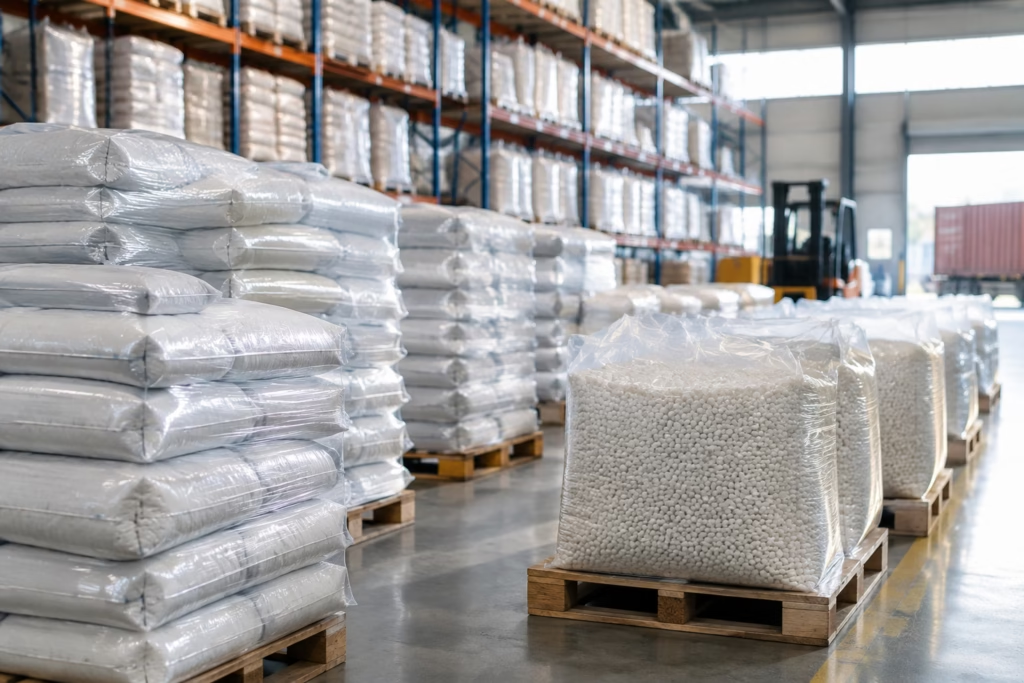
For overseas buyers, the ideal supplier is one that can connect application needs with compounding reality. That means formulation development, sample support, documentation, and commercial planning all working together. At Poly Maro, we support this workflow by helping customers define the target properties, choose the resin family, and validate whether the material can meet the actual processing and performance requirements.
We also support OEM/ODM supply needs when customers want consistent grades for long-term production. That includes discussion of reinforcement level, heat resistance, impact balance, electrical performance, and the practical limitations of molding and delivery. In projects where suppliers need to align engineering and purchasing expectations, material selection should be treated as a business decision and a technical decision at the same time.
For buyers who want to align technical and commercial judgment earlier in the process, our team often recommends starting with a clear review of material options, application conditions, and supply requirements. That is usually the fastest way to reduce risk, especially when the project involves export compliance, molded-part consistency, or a customer-facing launch schedule.
Conclusion
Overseas buyers working with a plastic compound manufacturer in China usually care most about risk control: can the supplier deliver the right material, keep it consistent, communicate clearly, support documentation, and scale the sample into real production? Price matters, but it should be weighed against technical depth, lead-time reliability, and the supplier’s ability to support the full project lifecycle.
If you evaluate suppliers with those priorities in mind, you will be able to separate a simple quotation source from a true manufacturing partner. For engineering plastics in particular, that distinction often determines whether a project becomes stable and repeatable or expensive and uncertain.
FAQs
What is the most important factor when choosing a plastic compound manufacturer in China?
The most important factor is usually consistent technical fit across sample, process, and mass production. Overseas buyers should look for a supplier that understands the application, can explain the trade-offs in the formulation, and can show stable batch control rather than only offering a low price.
How can I tell whether a sample is suitable for mass production?
A sample is suitable for mass production when it was made under repeatable conditions, matches the intended formulation, and performs well under your own molding setup. Buyers should check process guidance, verify key properties, and confirm that the supplier can reproduce the same grade in bulk.
What documents should I request from a supplier before placing an order?
At minimum, ask for a technical data sheet, safety data sheet, and certificate of analysis. Depending on your market and end-use, you may also need compliance declarations or supporting files for REACH, RoHS, or other customer-specific requirements.
Why do some Chinese suppliers give a good sample but struggle in mass production?
This often happens when the sample was optimized in a limited setting but not built around a repeatable production process. Differences in raw materials, line settings, drying, or compounding control can cause the mass-produced material to behave differently from the approved sample.
How should overseas buyers compare two suppliers with similar prices?
Compare them on documentation quality, technical communication, sample repeatability, process guidance, and supply stability. A slightly higher price may be justified if the supplier reduces risk in production, qualification, and long-term delivery.
What should I ask if my project needs custom properties like flame retardancy or glass fiber reinforcement?
Ask how the modification changes strength, impact behavior, flowability, shrinkage, and processing window. You should also confirm sample validation method, expected MOQ, lead time, and whether the supplier can maintain consistency after the project scales.