
When teams evaluate a plastic compound, the first question is often whether it will run fast on the molding line. That is important, but it is only part of the picture. In practice, processability plastic compound decisions affect scrap, startup loss, cycle time, surface quality, tool wear, part consistency, and even customer acceptance. Those factors add up quickly, so a material that looks cheaper on the quote sheet can become more expensive once it enters real production.
From our manufacturing perspective at Poly Maro, the most useful way to think about processability is as a business-cost lever. Polymer rheology, flow stability, and processing window control whether a compound can be molded, extruded, dried, packed, and scaled with predictable economics. NIST’s work on polymer rheology and manufacturing quality is a good reminder that manufacturability is tied to part quality and commercialization, not just line speed.
Why processability is a business-cost issue, not only a shop-floor issue
Procurement teams sometimes compare compounds by resin price, while engineers focus on mechanical properties, and production teams focus on machine uptime. Processability sits in the middle of all three. If a compound is hard to dry, unstable in the melt, sensitive to shear, or narrow in molding window, the total cost of ownership rises even if the material itself is not expensive.
We often see four hidden cost buckets:
- Scrap and rework from short shots, flash, sink, warp, splay, burn marks, or color inconsistency.
- Time loss from longer setup, dryer delays, slower cycle times, and repeated parameter tuning.
- Tooling pressure from unstable filling, venting problems, excessive pressure, or uneven packing.
- Commercial risk from cosmetic defects, dimensional drift, or customer complaints after launch.
That is why a process-friendly compound can be the lower-cost choice even when the unit price is higher. The right decision is rarely about the cheapest pellet. It is about the lowest stable cost per acceptable part.
What processability means in plastic compounds
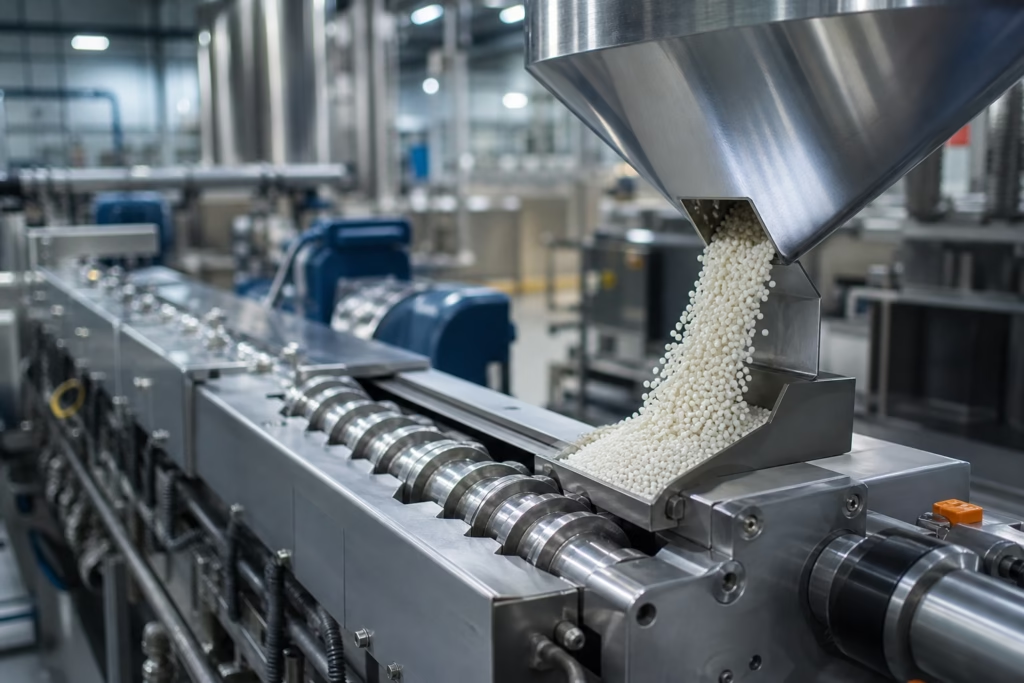
For a compound, processability is not one single number. It is a combination of flowability, thermal stability, drying behavior, shrinkage profile, and how wide the molding or extrusion window is under normal factory conditions. A material may flow easily but warp badly. Another may look strong on a datasheet but be sensitive to moisture or heat history. A truly processable material is one that can be made consistently across shifts, machines, and lots.
Key elements of processability
| Processability factor | What it affects | Typical business impact |
|---|---|---|
| Flowability | Cavity fill, pressure demand, weld line quality | Cycle time, shot stability, scrap risk |
| Drying behavior | Moisture-sensitive defects, hydrolysis, bubbles | Setup time, appearance, mechanical consistency |
| Thermal stability | Degradation during residence time and regrind use | Color drift, odor, loss of properties, downtime |
| Shrinkage and warpage control | Dimensional accuracy and assembly fit | Tool adjustments, rejection rates, customer returns |
| Molding window | Robustness to temperature, pressure, and cooling variations | Lower tuning effort, higher line utilization |
In other words, a compound’s processability determines how much hidden labor and risk a production team must absorb to keep output within spec.
How processability plastic compound choices affect cycle time and machine utilization
Cycle time is not only determined by cooling time. Fill speed, pack behavior, gate freeze, venting, and part ejection all matter. A material with stable flow and predictable shrinkage can often be packed and cooled more confidently, which means fewer interruptions and shorter effective cycles. On the other hand, a difficult compound may force processors to slow down just to avoid flash, burn marks, or incomplete fill.
That slowdown has a cost beyond the machine itself. Lower throughput means higher labor cost per part, more energy per unit, and less available capacity for other orders. If a plant operates near capacity, a compound that improves runnability can create real economic value by freeing machine hours.
There is also a hidden utilization issue during startup and changeover. A difficult compound may require more purging, more trial shots, and more first-article correction. Those minutes and kilograms accumulate into measurable money, especially for high-mix production. For buyers comparing a custom plastic compound vs standard grade, this is one of the clearest reasons to look beyond the quoted resin price.
Why difficult processing increases scrap, rework, and startup loss
Scrap is one of the fastest ways processability turns into cost. A compound that is slightly unstable can create a chain reaction: the operator adjusts the barrel temperature, then the cavity pressure shifts, then the part shrinks differently, then the cosmetic finish changes, and finally quality rejects the lot. None of this looks dramatic in isolation, but across a month it can consume a large amount of material and labor.
Common process-driven scrap sources include:
- Moisture-related defects such as bubbles, silver streaks, and brittle parts.
- Flow imbalance that creates short fill, weld line weakness, or weight variation.
- Warpage that prevents assembly or forces secondary trimming.
- Surface issues such as gloss inconsistency, flow lines, or visible fiber print-through.
- Thermal degradation from long residence time or excessive regrind exposure.
When a compound is more forgiving, operators spend less time chasing defects. That reduces the labor burden of quality control and makes production more repeatable from lot to lot. Processability is therefore not just a line-speed topic; it is a waste-reduction topic.
How processability influences surface appearance, dimensional consistency, and customer acceptance
Many parts are rejected not because they fail mechanically, but because they fail visually or dimensionally. A housing, connector, cover, or appliance component may meet the load requirement and still be unacceptable if the surface looks rough or the dimensions drift outside assembly tolerance.
Surface quality is often tied to how the compound fills the mold. If melt flow is inconsistent, the flow front can leave visible lines, haze, or uneven gloss. If the material is too sensitive to shear, it may show defects that are hard to remove by parameter adjustment alone. For teams dealing with appearance-related losses, it helps to review material-related molding surface defect issues early in the selection process.
Dimensional consistency matters just as much. Low warpage and predictable shrinkage reduce assembly problems, secondary machining, and gauge rejection. When a part fits consistently, downstream operations become simpler. That can be more valuable than a small raw material saving because it protects the entire production chain.
How mold compatibility and process window affect tooling risk and maintenance cost
A compound that runs well in one cavity or on one machine may be troublesome elsewhere if the process window is narrow. Tool geometry, venting, gate design, wall thickness, and cooling layout all influence how processable a material feels on the floor. If a resin needs very tight control to avoid flash or short shots, that creates more risk for new molds and high-volume programs.
For engineering teams, the key question is not only whether the material can fill the cavity, but whether it can keep filling it after reasonable wear, operator change, and lot-to-lot variation. A broader process window usually lowers maintenance pressure because the tool does not need constant micro-adjustment. It also lowers the chance of unplanned downtime when a machine condition changes.
This becomes even more important when temperature resistance is part of the specification. In programs that need higher heat performance, it is smart to review heat-resistant plastic compound options together with molding behavior, because the most heat-resistant grade is not automatically the most economical if it is too difficult to process.
Why easy processing can lower total ownership cost even if the material price is higher
Many buyers initially focus on the price per kilogram. That is understandable, but it can be misleading. A compound that costs more upfront may still produce lower total cost if it improves yield, reduces cycle time, and lowers the chance of customer rejection.
We recommend thinking in terms of cost per acceptable part. That equation includes:
- material cost
- machine time
- labor time
- scrap and rework
- maintenance and tooling interruptions
- quality losses and returns
When those elements are combined, a process-friendly compound often wins. In some projects, the savings come from speed. In others, they come from reduced scrap or less post-processing. The best choice is the one that keeps stable output with the least operational friction.
At Poly Maro, we frequently advise buyers to test a compound in the actual process conditions rather than comparing datasheet numbers in isolation. The lowest quote is not always the lowest total cost, especially when mold filling, drying, and part consistency are part of the real production picture.
Comparing molding efficiency material options: where faster processing saves money and where it does not
Not every application benefits equally from faster processing. A thinner-wall housing, connector shell, or clip may gain a lot from a compound with strong flow and stable shrinkage. A thick structural component may care more about stiffness, creep resistance, or heat retention than raw flow rate. The right balance depends on the part and the business goal.
| Application pattern | What processability usually changes | Where savings appear |
|---|---|---|
| Thin-wall electronics parts | Filling, surface finish, cosmetic consistency | Less scrap, fewer short shots, higher output |
| Precision assemblies | Shrinkage, warpage, tolerance control | Lower rejection and better fit |
| High-heat components | Thermal stability, residence-time tolerance | Lower degradation and startup loss |
| Long-run production programs | Lot consistency, dryer sensitivity, regrind tolerance | Higher utilization and fewer line stops |
In some cases, a more flowable grade lowers cost because it shortens cycles and improves fill. In other cases, too much flow can create flash, sink, or weak weld lines, which increases cost instead of reducing it. Faster processing helps only when it still produces an acceptable part.

Key property trade-offs: processability versus strength, heat resistance, stiffness, flame retardancy, and appearance
Every compound choice involves trade-offs. If a formulation is optimized heavily for flowability, it may sacrifice stiffness or heat resistance. If it is reinforced for strength, it may become harder to fill or more abrasive to the mold. If flame retardancy is added, process window and surface appearance may change. There is no universal winner; there is only the best balance for a specific part and production method.
That is why selection should be guided by end-use function, not a single property. For example, if a component must survive high temperature and maintain dimensional stability, the process-friendly version of a high-performance compound may be the right cost choice. If a part must resist impact, the tougher formulation may reduce breakage in both molding and service, even if it needs more careful processing. For a one-step view of why these trade-offs matter, buyers often compare a compound against an application-specific target such as a why extrusion and injection molding need different material selection logic discussion before finalizing the grade.
Common trade-off patterns
- Higher flow vs higher strength: easier filling may reduce reinforcement efficiency.
- Higher heat resistance vs broader molding window: some heat-stable systems need tighter drying and temperature control.
- Better impact resistance vs higher shrink variation: toughened compounds can change stiffness and warp behavior.
- Better appearance vs more additives: functional additives can influence gloss, color, or surface uniformity.
Application examples where processability has the biggest cost impact
Processability matters in every production program, but the cost impact is especially visible in a few common applications.
Electronics and electrical parts
Connectors, housings, terminals, and structural electrical parts often require stable flow, good insulation, and repeatable dimensions. If the compound is hard to process, the cost of reject rates can rise quickly because tolerance and appearance are both important.
Automotive and transportation parts
Automotive components are often produced in high volume, so small process gains can create large annual savings. Here, dimensional stability, heat resistance, and consistent surface appearance all matter. When a part needs a more demanding balance of temperature performance and processability, specialized formulations such as heat-resistant plastic compound options should be evaluated with real mold data, not just lab values.
Appliance and industrial equipment parts
Large housings, covers, and internal structural components often reveal warpage and sink issues. Processability directly affects assembly fit, cosmetic quality, and the amount of trimming or rework needed before shipment.
High-volume precision molded parts
Small parts may seem inexpensive, but they are often made in massive quantities. In that environment, a tiny reduction in cycle time or scrap can create meaningful annual savings. A consistent compound also makes automatic molding cells easier to run.
How to evaluate processability before purchase: datasheets, trial molding, and sample validation
Datasheets are useful, but they never tell the full story. A good technical data sheet can show tensile strength, flexural modulus, heat deflection temperature, and melt flow behavior, yet those values do not fully reveal how the compound will behave on your machine, with your mold, and under your production constraints. In fact, standards-based melt flow testing is only one part of evaluation; ASTM’s melt flow rate test guidance is helpful for comparing flow consistency, but it should not be treated as a complete proxy for processability or total cost.
Our recommended evaluation flow is simple:
- Check the datasheet for process-relevant properties, not only mechanical values.
- Ask about drying and molding conditions before sample use.
- Run trial molding or extrusion on the real equipment whenever possible.
- Inspect first-article parts for weight stability, appearance, shrinkage, and fit.
- Compare lot-to-lot behavior if the project will run at scale.
If the application is sensitive, ask the supplier about expected processing window, recommended moisture handling, and likely regrind tolerance. The point is not to chase a perfect lab result. The point is to verify whether the material creates a stable production process.
Common sourcing mistakes when buyers focus only on unit resin price
We see the same mistakes often. The first is selecting a compound because it is cheaper per kilogram, without checking whether it will require more drying time, slower cycles, or higher reject rates. The second is assuming one grade can serve every process, even though the selection logic for injection molding and extrusion can be very different. The third is ignoring how surface defects affect customer perception and final acceptance.
Another common mistake is comparing materials only by MFR or one mechanical property. That can lead to poor choices because flow number alone does not capture moisture sensitivity, warpage risk, or thermal stability. Buyers should also review supplier consistency, batch control, and support quality, especially when the material is being customized for a specific part.
When internal teams disagree, a structured framework helps. Our article on purchasing vs engineering material selection framework is useful for aligning cost, performance, and production reality before a final approval is made.
A practical TCO checklist for selecting a processability plastic compound
Before purchase approval, we suggest using a total cost of ownership checklist instead of a simple price comparison. The checklist does not need to be complicated, but it should reflect the actual factory workload.
- Does the compound fill the part reliably at the intended cycle time?
- Does it need special drying or narrow temperature control?
- How sensitive is it to moisture, residence time, and regrind?
- Will it create cosmetic defects that affect customer acceptance?
- Does it hold dimensions well enough to protect assembly fit?
- Will it increase tool wear, venting demands, or maintenance needs?
- Can the plant produce enough acceptable parts per shift to meet demand?
- Is the supplier able to support sample validation and production consistency?
If the answer to any of these questions is uncertain, the apparent cost advantage may not survive trial production. A good compound should lower operational friction, not merely look good on a purchase order.
How Poly Maro supports custom compounding when processability must be balanced with performance
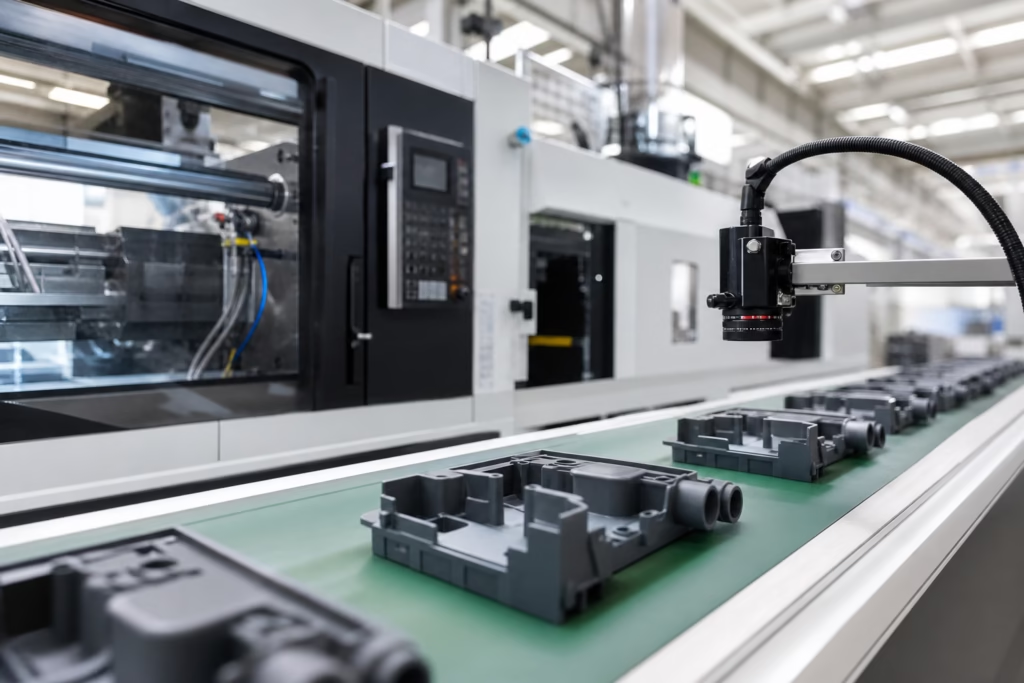
At Poly Maro, we approach formulation as a balancing exercise. Some customers need better flow without losing stiffness. Others need heat resistance without making the mold difficult to fill. Others need impact improvement, dimensional stability, or appearance control while keeping production stable. In those cases, the compound should be developed around the real process and part requirements, not around a generic grade description.
That is why development discussions usually cover part geometry, wall thickness, drying method, cycle target, tool condition, acceptable shrink range, cosmetic standards, and shipment volume. The goal is to define a compound that is not only technically acceptable, but economically practical. For teams planning a custom program, the question is often whether the improvement in processability justifies development cost and qualification effort. Our guide on custom plastic compound development ROI guide helps structure that decision in a commercial way.
When those inputs are clear, we can recommend a formulation path that balances production stability and end-use performance. That may include reinforcement, impact modification, heat resistance tuning, or surface-related adjustments. The right answer is usually not the most aggressive formulation. It is the one that runs consistently, meets specification, and keeps the full cost of production under control.
Conclusion
Processability is not just a production convenience. It is a major contributor to total cost in plastic compounds because it shapes scrap, cycle time, startup loss, dimensional consistency, surface quality, and tooling risk. A cheap material that is hard to run can become an expensive material very quickly. A slightly higher-priced compound that processes cleanly can protect yield, reduce labor, and improve customer satisfaction.
For engineers and procurement teams, the best approach is to evaluate processability plastic compound choices in the same way you evaluate mechanical performance: by testing them in the real application, with the real equipment, against the real cost target. That is where the true value becomes visible.
FAQs
Is processability more important than raw material price?
Not always, but it often has a bigger effect on total cost than the listed resin price. If a compound reduces scrap, shortens cycle time, or improves stability, it can lower cost per acceptable part even when the purchase price is higher.
What processability problems usually create the most cost?
The biggest hidden costs usually come from scrap, startup loss, slow cycle times, and dimensional instability. Cosmetic defects can also be costly when the part has appearance requirements or strict customer acceptance criteria.
How should we evaluate a plastic compound before mass production?
Review the datasheet, confirm drying and molding conditions, and run trial molding on the actual machine and mold if possible. Then check part weight, appearance, shrinkage, fit, and repeatability across multiple shots or lots.
Does higher flow always mean better processability?
No. Higher flow can help filling, but it can also increase flash, reduce strength, or create other defects if the formulation is not balanced. Processability should be judged by stable part production, not by one flow value alone.
Can a custom compound improve both processability and performance?
Yes, if the formulation is designed around the application. Depending on the part, a custom compound can improve flow, reduce warpage, or increase impact resistance while still meeting the required heat, stiffness, or appearance targets.
What should procurement ask suppliers about processability?
Ask about drying requirements, recommended processing window, lot consistency, sample validation support, and expected behavior in your specific molding or extrusion process. These questions help reduce sourcing risk and avoid surprises after approval.