
Choosing an impact resistant plastic compound is not the same as choosing the highest-strength resin on a datasheet. In drop-prone parts, the real question is how the material absorbs shock, manages stress concentration, and behaves under the actual part geometry and temperature conditions.
For sourcing and formulation conversations, it helps to start with the available material families and compare how each one balances toughness, stiffness, and processing fit in a real production setting.
Why strength and impact resistance are not the same thing
Tensile strength describes how much pulling force a material can carry before failure. Impact resistance describes how well it survives a sudden load, such as a drop, hit, or snap event. A resin can look strong in a tensile test and still crack early if it is too brittle or if the part design concentrates stress.
That difference matters because impact failures usually happen in seconds. The material has very little time to deform, redistribute stress, or absorb energy. In practice, this means a part with very high rigidity may feel solid but perform poorly when dropped on a corner or edge.
In many engineering programs, the right answer is an impact-modified compound that is tuned for the application rather than a generic high-strength resin.
What people really mean by drop resistant plastic
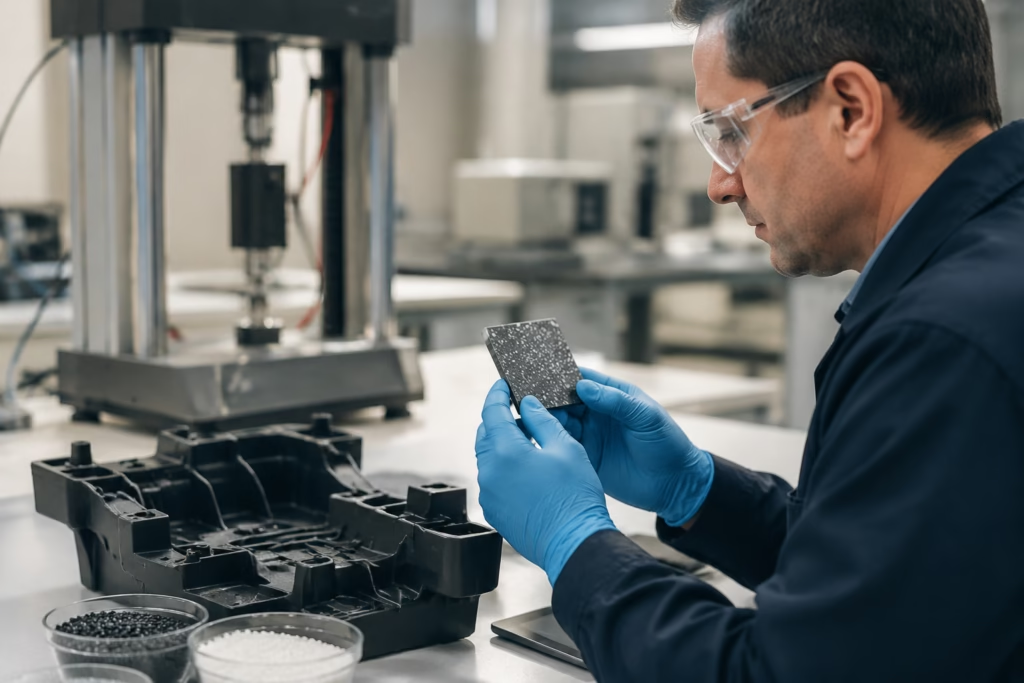
When buyers ask for a drop-resistant plastic part, they are usually describing a combination of traits: crack resistance, edge durability, controlled deformation, and the ability to keep working after a shock event. The part may not need to be the strongest possible; it needs to survive the specific abuse pattern in the field.
For example, a housing dropped from waist height may need to resist corner cracking, while a tool accessory may need to avoid brittle fracture after repeated knocks. These are different failure modes, so the material selection logic should be different too.
Manufacturers such as Poly Maro often evaluate these needs by looking at both material and process variables together, because resin choice alone cannot explain the final impact result.
How to evaluate an impact resistant plastic compound beyond one number
A single impact value rarely tells the full story. To judge a compound properly, compare how it behaves across several dimensions:
- Notched and unnotched impact behavior: notches represent real stress concentrators in molded parts.
- Ductility versus brittleness: a material that stretches a little before breaking often survives sudden loads better.
- Temperature sensitivity: some compounds become noticeably more brittle in cold conditions.
- Wall thickness dependence: impact results can shift when parts become thin or thick.
- Processing window: a tough resin that is difficult to mold consistently can still fail in production.
For that reason, material approval should include the actual part geometry whenever possible, not just lab coupons. If your design team is comparing body, cover, or enclosure materials, a polycarbonate grade may be a useful benchmark because it is often selected where toughness and transparency or stiffness balance are important.
Typical tough engineering plastic options and where they fit
Different tough plastics solve different problems. PC is often chosen when impact resistance is a primary need and dimensional control still matters. PC/ABS is commonly used when a project needs a more balanced blend of toughness, processability, and surface finish. Impact-modified materials built around other resin systems can also work well when cost, stiffness, or chemical exposure changes the decision.
In many real projects, the question is not which material is strongest, but which one retains enough toughness after design, tooling, and processing effects are included. That is why a PC/ABS blend is often evaluated alongside PC when the application involves housings, covers, and consumer or industrial enclosures.
| Material family | Typical strength point | Impact-performance tendency | Common fit |
|---|---|---|---|
| PC | High toughness with good rigidity | Strong drop resistance, especially for structural housings | Protective covers, enclosures, guards |
| PC/ABS | Balanced toughness and processability | Good everyday impact performance with easier molding | Appliances, electronics, equipment housings |
| Impact-modified compound | Tailored toughness for the application | Can be tuned for better shock behavior in specific parts | Custom parts, brackets, covers, functional components |
How temperature changes impact performance
Temperature often changes impact behavior more than buyers expect. A part that looks acceptable at room temperature may become much less forgiving in a cold warehouse, outdoor installation, or refrigerated environment. Low temperature usually reduces ductility, which makes crack initiation more likely during a drop.
Heat can also matter, although in a different way. As temperature rises, some materials soften, which can reduce the part’s ability to support loads after impact. This is why the same resin may perform well in one environment and poorly in another.
When the application must cover broad temperature swings, it is worth testing the same compound in the actual use range instead of assuming the datasheet impact number will hold everywhere. For a quick comparison of trade-offs between tough options, the PC vs. PC/ABS discussion is often useful for aligning material behavior with processing and end-use expectations.
Why part design can matter more than the material name
Even a very tough resin can fail if the part design creates high stress at corners, ribs, bosses, weld lines, or sharp transitions. In impact events, geometry controls where the energy goes. Thin walls, abrupt thickness changes, and poor rib placement can make a good material look weak.
Loading direction also matters. A part may survive a flat-face drop but fail when the impact lands on an edge, corner, or attachment point. The same compound can therefore appear inconsistent unless the test orientation matches the real-world abuse pattern.
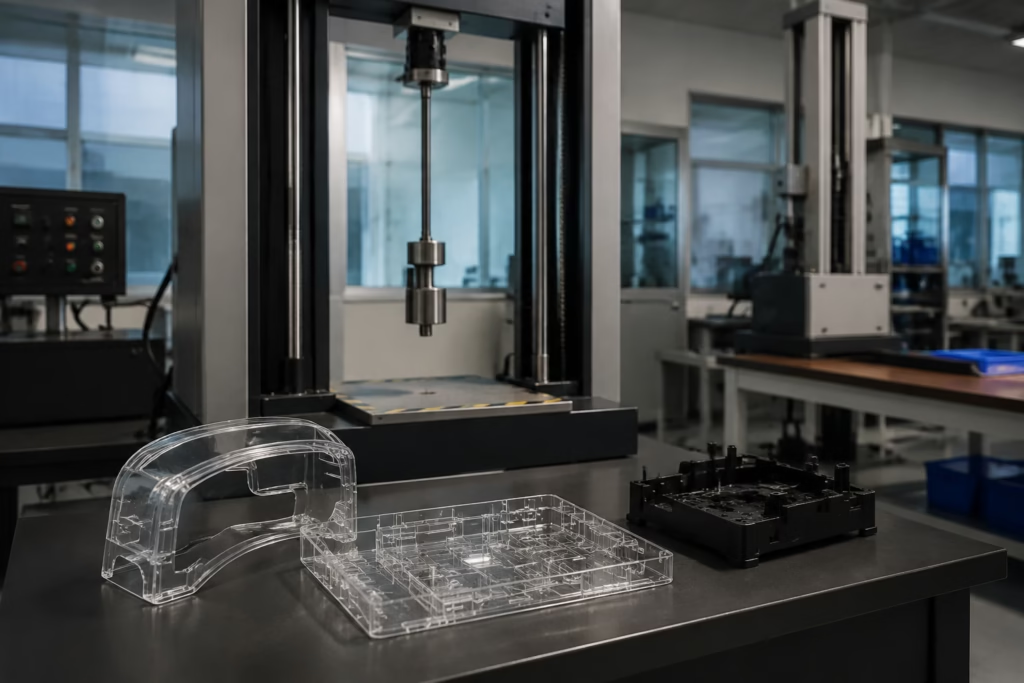
For that reason, material selection should be paired with design review. If the structural shape is fixed, you may need to compensate with a tougher compound, better wall balance, or a more forgiving geometry. In other cases, a modest design change delivers more benefit than a higher-cost resin upgrade.
Key factors to compare before you choose
Before locking in an impact resistant plastic compound, compare the part on the following terms:
- Thickness: thin sections can fail differently than thick sections.
- Geometry: corners, cutouts, ribs, and bosses all affect stress flow.
- Stress concentration: sharp transitions often trigger cracks first.
- Loading direction: the impact angle can change the outcome completely.
- Temperature range: low-temperature brittleness is a common surprise.
- Processing consistency: orientation, weld lines, and moisture can influence impact results.
In practice, the best selection is the one that still meets function after these variables are included. If the project requires a custom balance between toughness and other properties, a controlled compound formulation is often more reliable than a standard off-the-shelf grade.
Common mistakes when selecting tough engineering plastic
One common mistake is choosing a resin because it has a high tensile value, then expecting it to survive drops automatically. Another is testing only a flat coupon and ignoring the molded part shape. A third is overlooking temperature, especially for parts used outdoors or in cold storage.
Another frequent issue is comparing materials without considering processing. Moisture, melt conditions, gate location, and weld line placement can all change impact behavior. In other words, the same material can look tough in one tool and brittle in another.
To avoid those traps, procurement and engineering teams should ask whether the part needs stiffness, recoverable deformation, or resistance to crack propagation after a sudden hit. The answer often points to a more specific material choice than simply asking for the strongest option available.
A practical selection checklist for drop, shock, and abuse
Use this checklist when comparing options for an impact-prone part:
- Define the real failure mode: crack, chip, snap, dent, or loss of function.
- Confirm the impact direction: face, edge, corner, or repeated abuse.
- Test at the service temperature range, not only at room temperature.
- Review part geometry for stress concentration and weld line risk.
- Compare actual molded parts, not only raw resin properties.
- Check whether stiffness, surface finish, or chemical exposure also matter.
- Choose the material that best fits the full use case, not just the highest strength number.
For custom programs, that checklist is often the point where a custom-formulated compound outperforms a generic material. When the application is highly specific, the formulation should follow the load case rather than the other way around.
In practice, that is where a manufacturer like Poly Maro can help align material selection with the demands of molding, performance, and production repeatability.
Conclusion
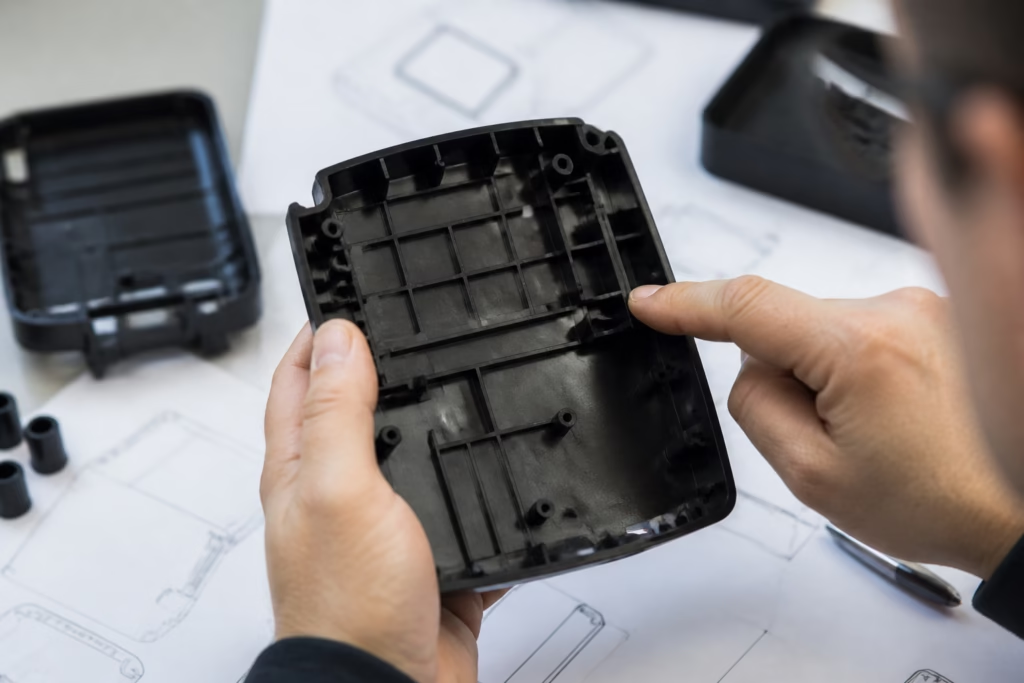
Choosing an impact resistant plastic compound is about more than strength. The best material is the one that resists cracking, absorbs shock in the real loading direction, and still performs across the actual temperature and geometry conditions of the part. A higher tensile number can help in some cases, but it does not automatically deliver better drop performance.
For engineers and buyers, the most reliable approach is to compare material toughness, part design, and processing together. That is how you avoid over-specifying strength while still getting the impact behavior the application really needs.
FAQ
Is a higher tensile strength always better for drop resistance?
No. Tensile strength measures resistance to pulling, while drop resistance depends on how a material absorbs sudden impact energy. A stiffer or stronger resin can still be brittle and fail early if the part geometry concentrates stress.
What is the difference between impact resistance and toughness?
Impact resistance is the ability to survive a sudden hit, while toughness is the broader ability to absorb energy before failure. They are related, but a material can score well in one area and still behave differently in a real part.
Why do some plastics fail at low temperatures?
Many plastics become less ductile when cold, which makes crack initiation easier during impact. That is why a material that performs well indoors may become more brittle in outdoor or refrigerated use.
Is PC always the best choice for impact-prone parts?
Not always. PC is often a strong option for toughness, but the final choice depends on geometry, temperature, processability, chemical exposure, and cost-performance balance. PC/ABS or another impact-modified compound may fit better in some designs.
How important is part design in drop performance?
Very important. Sharp corners, thin walls, weld lines, and abrupt thickness changes can create stress points that cause failure even when the material itself is tough.
Should I test the raw resin or the molded part?
Test the molded part whenever possible. Raw resin data is useful for screening, but molded geometry, processing conditions, and orientation can change impact behavior significantly.